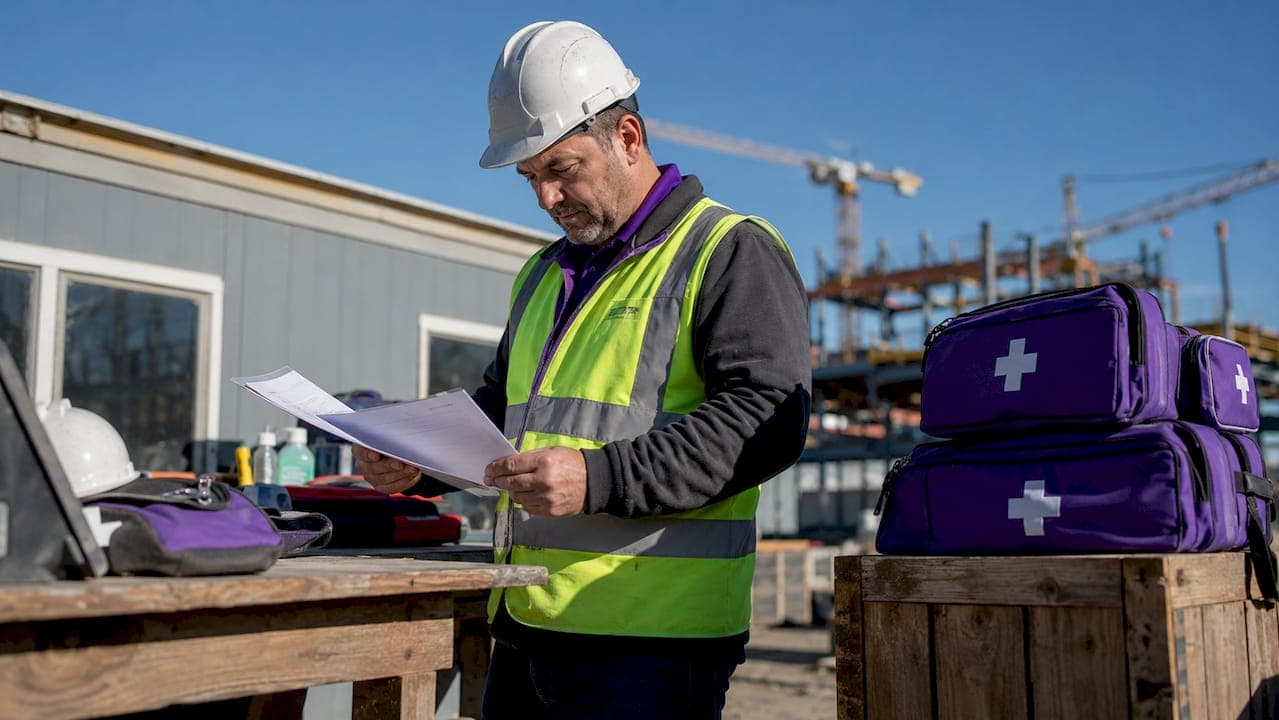
Construction site first aid level requirements define the minimum certifications, personnel ratios, and equipment mandated by law based on crew size, hazard classification, and distance from medical care. These are not optional guidelines. They are legal obligations enforced under frameworks including OSHA 29 CFR 1926.50, CSA Z1210:24, Ontario's Regulation 1101, and the Alberta OHS Code. Getting them wrong exposes your site to fines, audit failures, and preventable fatalities. This guide gives construction site managers and safety officers a clear, practical framework for determining the right coverage, certifications, and equipment for every site condition.
What are the construction site first aid level requirements?
Construction site first aid level requirements are determined by three variables: the maximum number of workers per shift, the hazard classification of the work, and the travel time to the nearest medical facility. No single factor alone defines your obligation. All three interact.
The two foundational certification levels recognized across Canadian provinces and aligned with CSA Z1210:24 are:
- Basic First Aid (8 hours): Required for sites with 5 or fewer workers under Ontario's Regulation 1101. Covers wound care, CPR, and basic emergency response.
- Intermediate First Aid (16 hours): Required for sites with 6 or more workers. Covers trauma management, spinal precautions, and more complex emergency scenarios.
In the United States, OSHA 29 CFR 1926.50 mandates that at least one trained first aider be present per crew when a medical facility is not "near" the site. OSHA does not define a specific certification level by name, but the practical standard aligns with Basic to Intermediate training.
Alberta uses a matrix approach. The Alberta OHS Code cross-references hazard level, headcount, and distance to define both kit type and personnel certification. High-hazard sites require Intermediate-certified first aiders regardless of crew size at certain thresholds. That means a five-person crew doing demolition work may need the same certification level as a 20-person crew doing light framing.
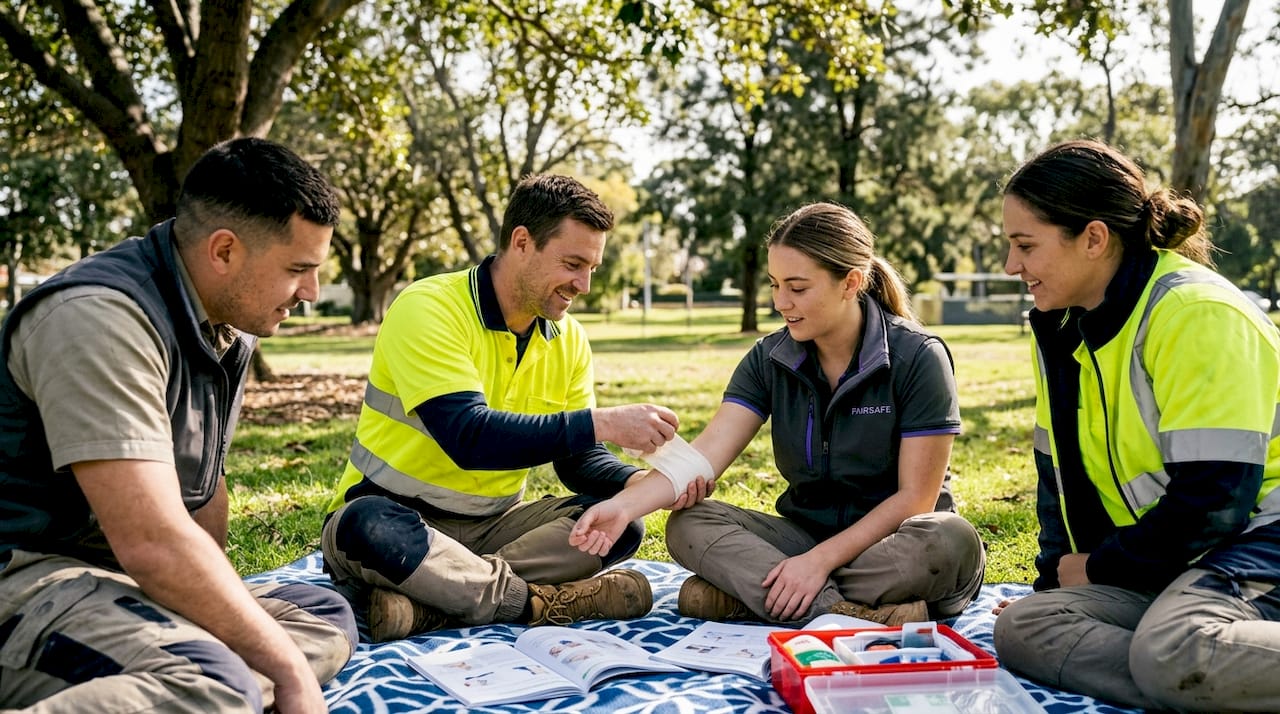
Coverage must be physically present on all active shifts and in all active site zones. You cannot aggregate coverage across shifts or floors. If your site runs two shifts, each shift needs its own qualified first aider on location.
Pro Tip: Check your project contract before finalizing training plans. General contractors and project owners often impose first aid certification requirements that exceed the legal minimum. Discovering this after training is complete costs time and money.
What first aid kit types does a construction site need?
Kit requirements follow the same three-factor logic as personnel requirements. The CSA standard defines two primary kit classifications relevant to construction:
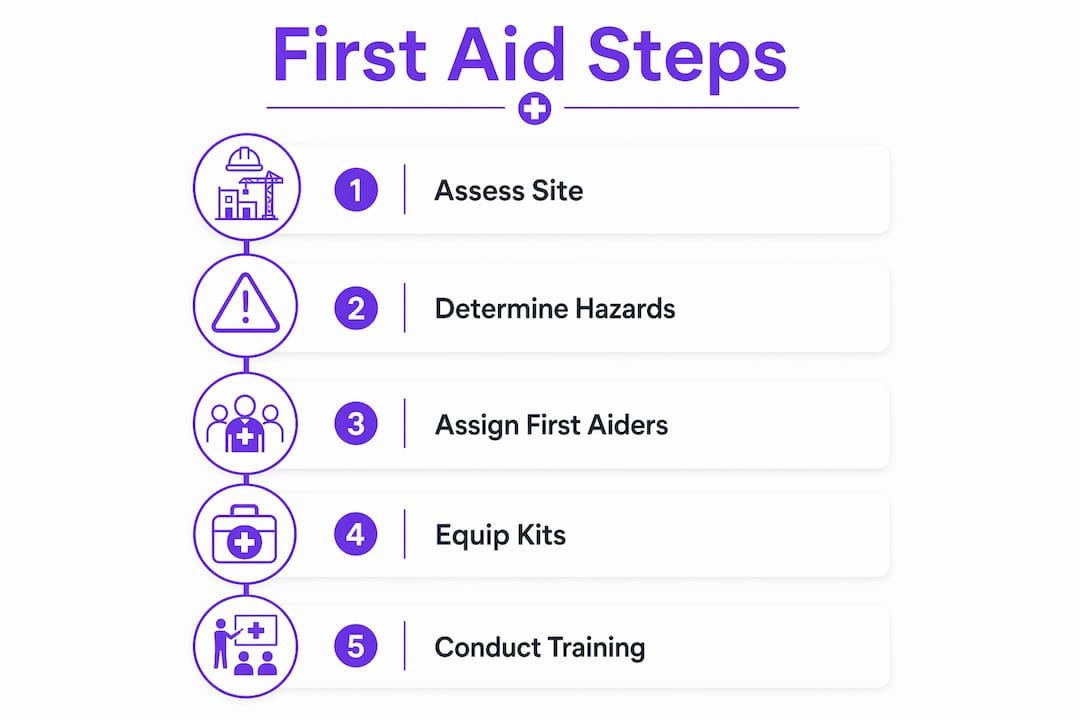
| Kit Type | Hazard Level | Typical Contents | Site Application |
|---|---|---|---|
| CSA Type 2 | Low to medium hazard | Wound dressings, bandages, gloves, CPR mask, eyewash | Standard commercial construction |
| CSA Type 3 | High hazard or isolated | All Type 2 items plus trauma pads, tourniquets, splints, cervical collars, blankets | Demolition, excavation, remote sites |
Type 3 kits are required for high-hazard environments and isolated sites under Alberta OHS regulations. This applies even when crew size is small. The nature of the work, not just the headcount, drives the kit classification.
Kit quantity scales with crew size. A site with 5 workers needs one appropriately sized kit. A site with 50 workers across multiple zones needs multiple kits positioned so that no worker is more than a short walk from one. Isolated or high-hazard sites also require stretchers and emergency blankets as supplementary equipment.
Container standards matter too. Kits must be stored in weatherproof, sealed containers that are clearly labeled and accessible to all workers. A kit locked in a site trailer office does not meet the accessibility requirement.
Pro Tip: Assign one person per shift to inspect kits at the start of each workday. Log the inspection date and any items replaced. This record becomes your first line of defense during a WorkSafe BC or OSHA audit.
What training and certification options meet construction standards?
The recognized certifications for construction site first aiders span a range of formats and delivery methods. The most widely accepted programs in North America include:
- American Heart Association (AHA) HeartSaver: Covers CPR, AED use, and basic first aid. Accepted under OSHA standards.
- American Red Cross Standard First Aid: Covers wound care, fractures, medical emergencies, and CPR. Widely recognized across US jurisdictions.
- ASHI (American Safety and Health Institute): Offers both Basic and Advanced First Aid tracks aligned with OSHA and ANSI standards.
- Provincial programs (Canada): Courses aligned with CSA Z1210:24 and delivered by WorkSafe BC-approved providers, St. John Ambulance, and Red Cross Canada.
Course duration runs 4–8 hours for Basic to Intermediate levels, with costs typically in the $50–$100 range per participant. Certification cards are valid for 2 years, after which renewal training is required.
The difference between Basic and Intermediate training is not just duration. Intermediate courses cover spinal injury management, advanced wound care, and multi-casualty triage scenarios that Basic courses do not. For construction sites with heavy equipment, fall hazards, or excavation work, Intermediate training is the appropriate standard even when the legal minimum is Basic.
Contextualized training that reflects site-specific hazards improves skill retention and emergency readiness. A course that uses construction scenarios, not generic office examples, produces first aiders who respond faster and more accurately under real conditions.
Verify that any course you select is explicitly recognized by OSHA or your provincial regulator before booking. Keep certificates on file and set calendar reminders for renewal 60 days before expiry. Auditors check both the certification level and the expiry date.
What are the requirements for isolated or high-hazard sites?
Sites located more than 40 minutes from a medical facility carry a higher legal and practical burden. Sites over 40 minutes from medical care require advanced equipment including stretchers and splints, and may require advanced personnel such as a registered nurse or paramedic, particularly when crew size reaches 100 or more workers.
The requirements for these sites go beyond kit upgrades:
- Advanced first aid personnel: Sites with 100+ workers in isolated locations must have an Advanced First Aider, registered nurse, or paramedic on site during all active shifts.
- Dedicated first aid room: Large isolated sites require a designated first aid room with a cot, running water, and specific equipment inventories defined by regulation.
- Enhanced communication: Sites must have a reliable method to contact emergency services, whether satellite phone, radio, or a documented emergency response protocol.
- Hazard-specific equipment: Sites with chemical exposure risks require eyewash stations. Sites with fall hazards require spinal immobilization equipment.
Hazard level strongly influences both kit type and staff certification needs, independent of crew size. A two-person crew doing confined space work in a remote location may legally require more coverage than a 30-person crew on a suburban residential build.
A formal first aid risk assessment is the correct starting point for any isolated or high-hazard site. The assessment documents hazard type, maximum workers per shift, and travel time to the nearest emergency department. It becomes the justification for your staffing and equipment decisions during an audit.
Pro Tip: Map your site's topography and shift patterns before finalizing your first aid plan. A site that spans multiple levels or remote zones may need multiple first aiders even when total headcount would normally require only one.
Key Takeaways
Construction site first aid compliance requires matching personnel certification, kit type, and staffing ratios to hazard level, crew size, and site isolation, not headcount alone.
| Point | Details |
|---|---|
| Three-factor rule | Crew size, hazard level, and distance from medical care all determine your first aid requirements. |
| Certification levels | Basic First Aid (8 hours) covers small low-hazard sites; Intermediate (16 hours) is required for larger or higher-risk crews. |
| Kit classification | CSA Type 2 kits suit standard builds; CSA Type 3 kits are mandatory for high-hazard or isolated sites. |
| Shift coverage | A qualified first aider must be physically present on every active shift and in every active site zone. |
| Certification validity | Most recognized certifications are valid for 2 years; schedule renewals 60 days before expiry to stay audit-ready. |
Why headcount alone will get you cited
By FAIR A. R.
After years of working with construction sites across Metro Vancouver and beyond, the most common compliance failure I see is not ignorance of the rules. It is the belief that counting heads is enough. A site manager tallies 12 workers, books one Intermediate first aider, and considers the box checked. Then an inspector asks about the hazard classification, the distance to the nearest hospital, and the coverage plan for the night shift. The answers are usually incomplete.
The regulations are built around risk, not just numbers. A first aid risk assessment that documents hazard type, shift patterns, and geography is not a bureaucratic exercise. It is the document that protects you when something goes wrong and an investigator asks what planning you did beforehand.
The other pattern I see regularly is treating certification renewals as a low-priority administrative task. Two-year certificates expire quietly. When an auditor pulls your records and finds three expired cards on a 10-person crew, the conversation gets expensive fast. Build renewal tracking into your project safety plan from day one, not as an afterthought in month 22.
First aid compliance is not a checkbox. It is a live system that requires active management across every shift, every zone, and every project phase. The sites that handle it well treat it the same way they treat scaffold inspections: scheduled, documented, and non-negotiable.
— FAIR A. R.
Fairsafe supports construction site safety compliance
Construction site managers in Metro Vancouver trust Fairsafe to deliver certified first aid coverage that meets WorkSafe BC requirements without the complexity of managing it alone.
Fairsafe provides certified first aid attendants trained to Intermediate and Advanced levels, along with site consultation to match your coverage plan to your specific hazard classification and crew size. Whether your site is a standard commercial build or a remote high-hazard project, Fairsafe's team deploys quickly and prices transparently. There are no hidden fees and no guesswork about whether your coverage meets the standard. Contact Fairsafe to confirm your site's requirements and get compliant coverage in place before your next inspection.
FAQ
What determines first aid requirements on a construction site?
Requirements are set by three factors: maximum workers per shift, hazard classification of the work, and travel time to the nearest medical facility. All three must be assessed together, not in isolation.
How many first aiders does a construction site need?
Ontario's Regulation 1101 requires one Basic First Aider for 5 or fewer workers and one Intermediate First Aider for 6 or more. Larger or isolated sites may require multiple certified personnel across all active shifts and zones.
How long is a construction first aid certification valid?
Most recognized certifications, including AHA HeartSaver and Red Cross Standard First Aid, are valid for 2 years. Renewal training is required before expiry to maintain compliance.
What is the difference between a CSA Type 2 and Type 3 first aid kit?
A CSA Type 2 kit covers basic wound care for low to medium hazard sites. A CSA Type 3 kit adds trauma supplies including tourniquets, splints, and cervical collars, and is required for high-hazard or isolated construction sites.
Does OSHA specify a required first aid certification level for construction?
OSHA 29 CFR 1926.50 requires at least one trained first aider per crew when a medical facility is not near the site, but does not mandate a specific certification name. In practice, Basic to Intermediate level training from recognized providers such as AHA, Red Cross, or ASHI satisfies this requirement.