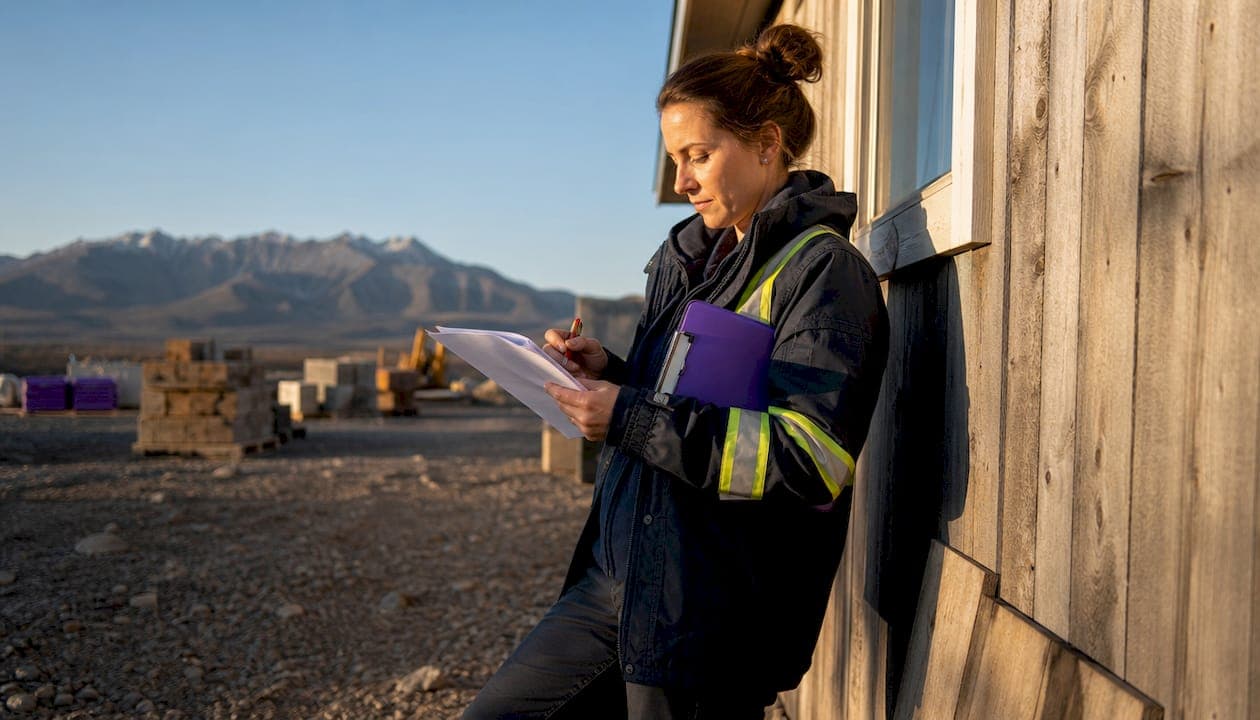
A first aid plan for a remote construction site is a documented, site-specific protocol that defines trained personnel, certified supplies, emergency transport methods, and communication systems to deliver immediate medical response when the nearest hospital is far away. Construction managers operating in isolated locations face a fundamentally different risk profile than urban site supervisors. Distance from medical care, unreliable communications, and high-hazard work combine to make a weak emergency response plan a life-threatening liability. The Alberta OHS Code, CSA Z1220-17, and SafeBuild Canada guidance all set binding standards that shape what your plan must include and how it must be practiced.
What are the regulatory and training requirements for first aid coverage at remote construction sites?
Site classification drives every training decision you make. Regulators determine first aid requirements by combining three variables: distance from the nearest medical facility, site hazard level, and total workforce size. Sites more than 20–40 minutes from medical care require Level 3 (Advanced) first aid training and a documented emergency transport plan. That threshold is not a guideline. It is a legal floor.
Headcount rules add another layer of obligation. Sites with 50–99 workers must have at least three intermediate first aiders on site at all times. Sites with 200 or more workers require a dedicated first aid room staffed with advanced-level personnel, effective as of june 2026. These numbers mean that a single certified worker calling in sick can put your entire site out of compliance.
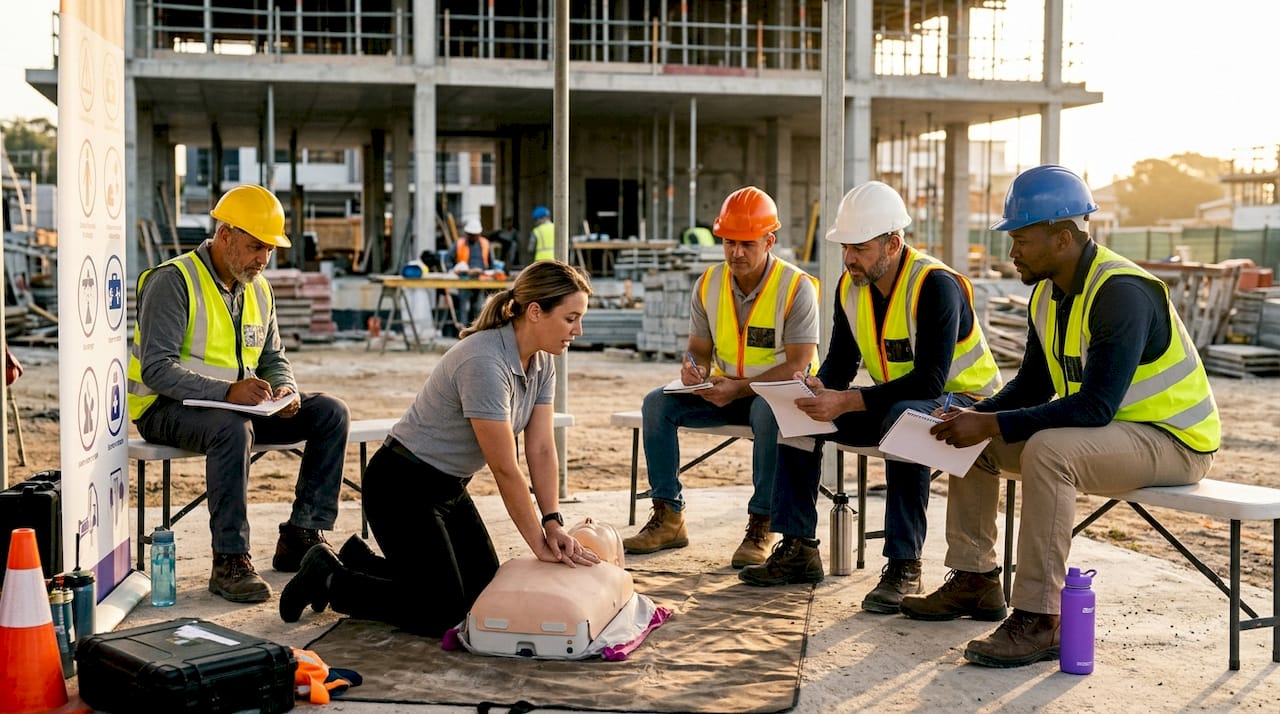
Training levels follow a clear hierarchy. Basic first aid covers minor injuries and CPR. Intermediate training adds wound management, fracture care, and patient assessment. Advanced (Level 3) training prepares attendants to manage multi-trauma patients, administer oxygen, and make transport decisions independently. Remote sites with high hazard ratings require Level 3 attendants because a paramedic may be an hour away by air.
First aid attendants must hold current certification and be physically present on site during all working hours, including breaks and shift changes. Expired certifications do not count toward compliance, regardless of the attendant's experience level.
Pro Tip: Assign first aid roles to job positions, not to individual workers. When a position turns over, the replacement must meet the same certification standard before starting work. This keeps coverage consistent through absences and high-turnover periods.
| Site size (workers) | Hazard level | Minimum training level | Minimum attendants |
|---|---|---|---|
| 1–9 | Low | Basic | 1 |
| 10–49 | Moderate | Intermediate | 1 |
| 50–99 | High | Intermediate | 3 |
| 100–199 | High/Remote | Advanced (Level 3) | 2 + backup |
| 200+ | Any | Advanced + first aid room | Dedicated staff |
What first aid supplies and equipment must be on a remote construction site?
Supply selection is not optional or discretionary. High-hazard and remote worksites must use CSA Z1220-17 Type 3 first aid kits containing trauma-grade supplies for wound packing, splinting, and burn management. Using an undersized or outdated kit creates both a compliance violation and a direct safety failure. Regulators treat kit deficiencies as seriously as missing personnel.
A Type 3 kit for remote construction goes well beyond adhesive bandages. The following supplies are required or strongly recommended for isolated, high-hazard environments:
- Hemostatic wound packing gauze and pressure bandages
- Rigid and malleable splints for fracture immobilization
- Sterile eye wash station or portable eye wash bottles
- Burn dressing kits rated for chemical and thermal burns
- Automated external defibrillator (AED) with spare pads and battery
- Cervical collars in multiple sizes
- Thermal emergency blankets
- Oxygen delivery equipment with non-rebreather masks
- Stretcher or folding litter rated for rough terrain
Kit placement matters as much as kit contents. Place first aid stations within a two-minute walk of every active work zone. On large sites, that means multiple stations, not one central cabinet. Each station must be clearly marked, weatherproof, and locked against unauthorized access while remaining accessible to certified attendants.
Pro Tip: Schedule a full kit inventory check every time the site layout changes. New work zones, added subcontractors, or expanded footprints all create gaps between where workers are and where supplies are stored.
| Component | Basic kit | Intermediate kit | Advanced (Type 3) kit |
|---|---|---|---|
| Adhesive bandages and gauze | Yes | Yes | Yes |
| Wound packing gauze | No | Limited | Yes |
| Splints | No | Yes | Yes (rigid + malleable) |
| AED | No | Recommended | Required |
| Oxygen delivery | No | No | Yes |
| Burn dressing kit | No | Basic | Full chemical/thermal |
| Stretcher | No | No | Yes |
| Cervical collars | No | No | Yes |
How do you develop an emergency transportation and communication plan?
An emergency transportation plan is a legal requirement, not a best practice. This plan must be completed before work begins and must specify the exact method of transport, the equipment available, and the precise GPS coordinates of the site. Remote sites often lack a standard civic address, which means emergency dispatchers cannot locate them without coordinates.
Transport mode selection depends on injury severity and site access. Use the following decision framework:
- Minor to moderate injuries: Transport by site vehicle with a certified attendant accompanying the patient to the nearest clinic or hospital.
- Serious injuries with stable vitals: Use a stretcher-equipped vehicle or ambulance if road access exists. Notify the receiving facility in advance.
- Critical injuries or no road access: Arrange air evacuation. Pre-identify the nearest helicopter landing zone and confirm it with your transport provider before the project starts.
- Multiple casualties: Activate your mass casualty protocol. Designate a triage officer and a communication officer immediately.
- Unknown or deteriorating condition: Default to the highest available transport level and reassess en route.
Communication failures kill people on remote sites. GPS tracking, man-down detection apps, and wearable monitors enhance response speed, but they do not replace a trained human making decisions. Satellite phones and two-way radios must be available at every first aid station and carried by supervisors in areas with no cellular coverage.
Assign a named communication officer for every shift. That person is responsible for contacting emergency services, relaying GPS coordinates, and updating the receiving facility on patient condition. Do not leave this role to whoever is available when an incident happens.
- Post GPS coordinates and the nearest hospital route at every site entrance and first aid station
- Test all communication devices weekly, including satellite phones
- Store emergency contact numbers in laminated format at every station
- Confirm air evacuation arrangements with your provider at the start of each project phase
Pro Tip: Run a full evacuation drill at least once per project phase. Time the response from incident call to patient handoff. If the time exceeds your transport plan's target, identify the bottleneck and fix it before a real emergency exposes it.
What are the best practices for maintaining a first aid-ready workforce?
Documented plans alone do not save lives. Crew knowledge and supervisory confidence in the first 60 minutes after an incident determine whether an injury becomes a fatality. That means training must be ongoing, practical, and tied to real site conditions rather than generic classroom content.
38% of construction site deaths are linked to inadequate safety training. That figure reflects a systemic failure to translate certification into practiced skill. Certification renewal schedules and drill programs close that gap.
Build your workforce readiness program around these practices:
- Certification tracking: Maintain a live register of every attendant's certification level and expiry date. Flag renewals 90 days in advance.
- Backup role assignment: Every first aid position must have a designated backup who meets the same certification standard.
- New worker briefings: Brief every new subcontractor and visitor on emergency procedures, assembly points, and communication protocols on their first day.
- Cross-training: Train supervisors to perform patient assessment and stabilization even if they are not the designated first aider.
- Mental resilience: Include psychological first aid in your training program. Workers who respond to traumatic incidents need structured support to remain effective.
Pro Tip: Use scenario-based training instead of lecture-only sessions. Present your crew with a realistic incident, assign roles, and time the response. Scenario training builds the decision-making speed that matters most when a real emergency unfolds.
Changes in site hazard level, workforce size, or distance to care require an immediate reassessment of your first aid coverage and supply inventory. Many employers update their plan once at project start and never revisit it. That approach creates compliance gaps as the site evolves.
Key Takeaways
A compliant first aid plan for a remote construction site requires certified personnel at the correct training level, CSA Z1220-17 Type 3 supplies, a legally documented transport plan, and a crew that has practiced the response before an incident occurs.
| Point | Details |
|---|---|
| Training level follows distance | Sites more than 20–40 minutes from medical care require Level 3 Advanced first aid attendants. |
| Assign roles to positions | Tie certification requirements to job titles so coverage holds through turnover and absences. |
| Use CSA Z1220-17 Type 3 kits | High-hazard remote sites require trauma-grade supplies including AEDs, oxygen, and stretchers. |
| Document transport before day one | Emergency transportation plans with GPS coordinates are legally required before work begins. |
| Practice beats paperwork | Regular drills and scenario training build the crew confidence that saves lives in the first 60 minutes. |
What I've learned about first aid plans that most site managers get wrong
Most first aid plans I review are compliance documents, not operational tools. They sit in a binder, satisfy an audit, and collect dust until something goes wrong. The managers who run genuinely safe remote sites treat their plan as a living document that changes every time the site changes.
The single biggest gap I see is the disconnect between the person who wrote the plan and the crew who must execute it. A supervisor who has never walked through an evacuation scenario will hesitate at exactly the wrong moment. That hesitation costs minutes. On a remote site, minutes are the difference between a serious injury and a fatality.
Technology is a genuine asset, but I've watched sites over-invest in GPS apps and wearables while under-investing in the human layer. A man-down alert is useless if the person receiving it doesn't know the evacuation route or can't reach the patient because the stretcher is locked in a trailer on the other side of the site.
The sites that perform best share one trait: their supervisors make confident decisions in the first 60 minutes without waiting for instructions. That confidence comes from practiced drills, clear role assignments, and a safety culture where every worker knows the plan, not just the safety officer. Build that culture first. The technology and the paperwork will support it.
— FAIR A. R.
Fairsafe provides certified first aid coverage for remote construction sites
Remote sites demand more than a signed form and a kit on a shelf. Fairsafe delivers certified first aid attendants trained to WorkSafe BC standards, including Level 3 Advanced personnel for high-hazard and isolated worksites across Metro Vancouver and beyond.
Fairsafe offers on-site training programs, rapid deployment of certified attendants, and transparent pricing with no hidden fees. Whether you need a full first aid coverage plan, a compliance assessment, or specialized training for your supervisors, Fairsafe's team responds fast and arrives prepared. Contact Fairsafe to discuss your site's specific requirements and get a clear quote before your next project phase begins.
FAQ
What is a first aid plan for a remote construction site?
A first aid plan for a remote construction site is a documented protocol specifying trained personnel, certified supplies, transport methods, and communication systems to deliver immediate medical response in isolated locations. It must comply with applicable regulations such as the Alberta OHS Code and CSA Z1220-17 before work begins.
What training level is required for remote construction sites?
Sites located more than 20–40 minutes from medical care require Level 3 Advanced first aid training for designated attendants. Sites with 50 or more workers must maintain multiple certified attendants on site at all times, including during breaks and shift changes.
What supplies does a remote construction first aid kit need?
High-hazard remote sites must use CSA Z1220-17 Type 3 kits containing hemostatic wound packing gauze, rigid splints, AEDs, oxygen delivery equipment, burn dressing kits, cervical collars, and a terrain-rated stretcher. Basic kits do not meet compliance requirements for isolated or high-hazard environments.
Is an emergency transportation plan legally required?
Yes. An emergency transportation plan must be completed before work starts and must include the transport method, equipment, and exact GPS coordinates of the site. Air evacuation arrangements must be confirmed in advance for sites without reliable road access.
How often should first aid drills be conducted on remote sites?
Drills should be conducted at least once per project phase, with scenario-based exercises that simulate real evacuation conditions. Timing the response from incident call to patient handoff reveals gaps in the plan before a real emergency does.