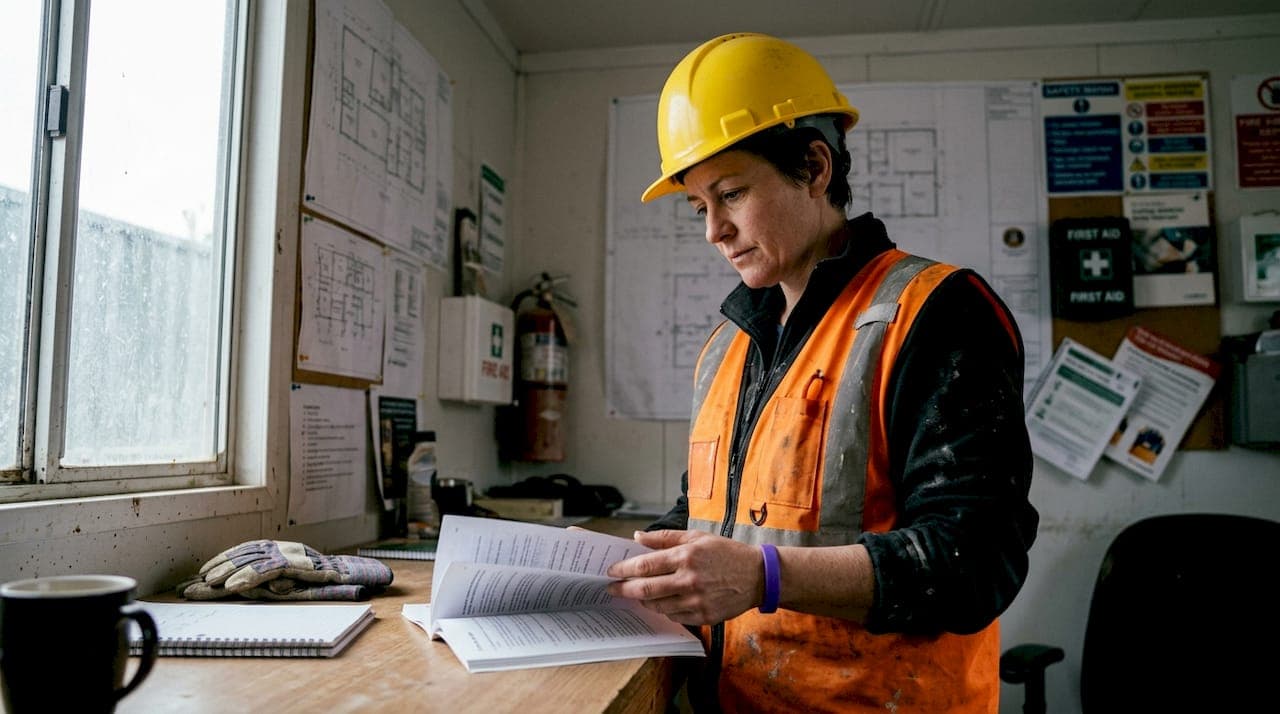
First aid in construction is defined as the immediate, trained emergency care that prevents minor injuries from becoming fatal and keeps sites legally compliant. Construction sites rank among the most hazardous workplaces in North America, where falls, lacerations, crush injuries, and electrical shocks occur without warning. The role of first aid in construction extends well beyond a stocked kit on a shelf. It is a system of trained personnel, clear protocols, compliant equipment, and practiced emergency plans that together determine whether an injured worker survives the first critical minutes. Regulatory bodies like OSHA and WorkSafe BC set binding minimums, and site managers who treat those minimums as the ceiling rather than the floor put workers and their organizations at serious risk.
What are the first aid training requirements for construction workers?
Certification requirements for construction workers are set by OSHA and reinforced by provincial and state regulators. OSHA 29 CFR 1926.50 mandates a trained first aid provider on-site whenever a medical facility is not easily accessible. That standard applies to the vast majority of active construction sites, which are rarely located next to hospitals. For electrical work involving 50 volts or more, OSHA requires two trained persons when two or more employees are working together.
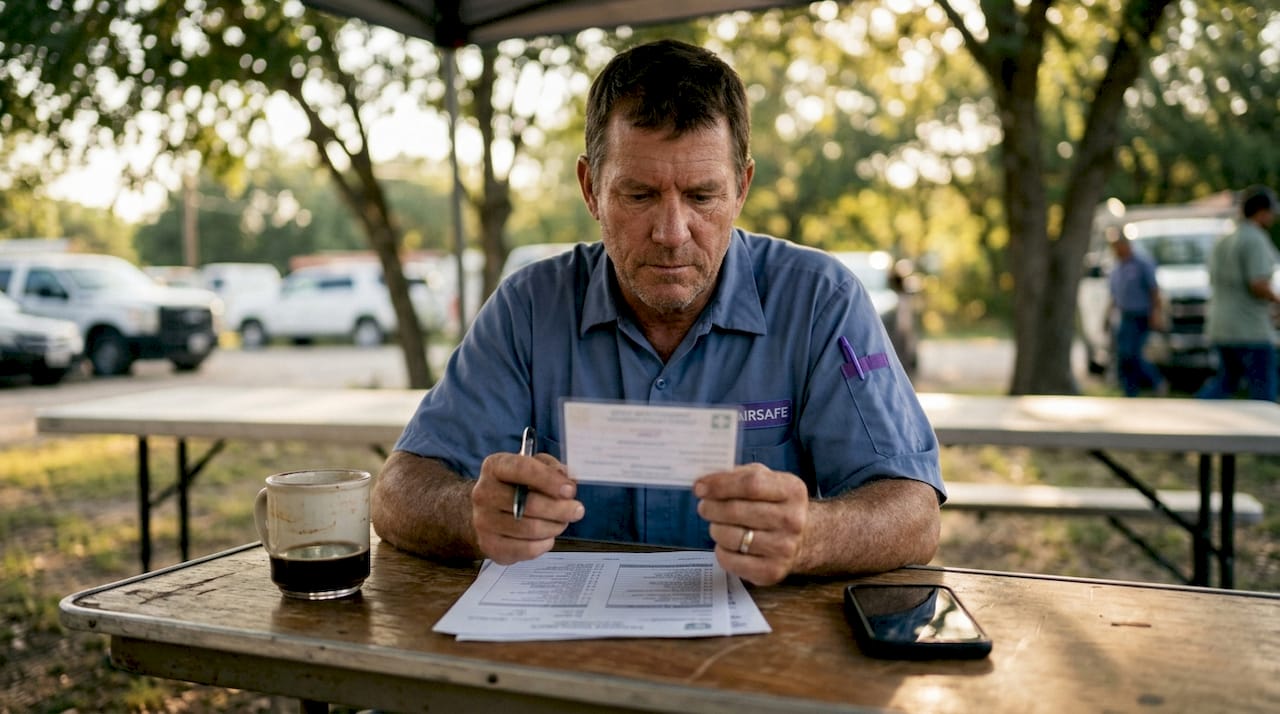
Standard first aid and CPR certifications typically cost $50–$100, take 4–8 hours to complete, and remain valid for two years. That two-year window matters for scheduling: site managers need to track expiry dates across their entire crew to avoid gaps in coverage. Letting certifications lapse is one of the most common and most preventable compliance failures on active sites.
Not all certifications are equal. High-hazard construction environments, including those involving confined spaces, heavy machinery, or work at height, benefit from advanced trauma training beyond standard first aid courses. The distinction between a standard course and an advanced trauma course is the difference between knowing how to apply pressure to a wound and knowing how to manage a tension pneumothorax until paramedics arrive.
The industry is also raising the bar on who must hold certification:
- Large contractors now require first aid certification for all workers as a mobilization prerequisite, not just designated attendants.
- Foreman and lead roles increasingly list current first aid and CPR certification as a strict requirement, with pay differentials of $3–$6 per hour linked to holding valid credentials.
- Subcontractors working under a general contractor must meet the same certification standards as direct employees.
- Renewal cycles must be tracked proactively, not reactively, to maintain continuous compliance.
Pro Tip: Build certification expiry dates into your project management software alongside equipment inspections. A lapsed first aid card is a compliance gap that WorkSafe BC and OSHA inspectors will flag immediately.
How are first aid attendant ratios applied on construction sites?
First aid attendant ratio rules vary by jurisdiction, but the core principle is consistent: the number of certified attendants on site must scale with worker count, hazard level, and distance from medical care. Jurisdictions like NSW use fixed ratios, requiring one first aider per 25 workers. Alberta applies a three-variable formula that considers hazard classification, hospital distance, and total worker count to calculate the legal minimum per shift.
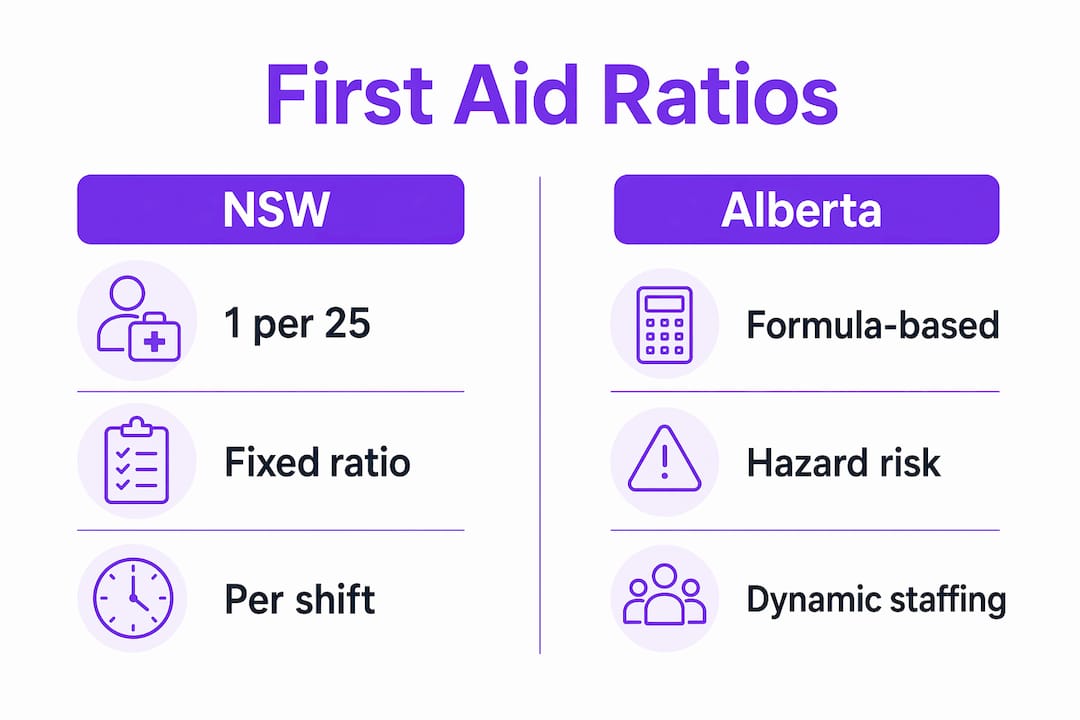
The table below compares how two major regulatory frameworks approach construction first aid ratio rules:
| Factor | NSW (Fixed Ratio) | Alberta (Formula-Based) |
|---|---|---|
| Ratio method | 1 first aider per 25 workers | Hazard level + distance + worker count |
| High-hazard sites | Same ratio, higher-risk context | Requires more attendants and advanced kits |
| Large sites (200+ workers) | Dedicated first aid room required | Dedicated room and advanced personnel required |
| Night shift coverage | Ratio applies per shift | Ratio applies per shift |
| Kit standard | Jurisdiction-specific | CSA Z1220-17, Type 3 for high-hazard |
One detail that catches many site managers off guard: compliance applies per shift, not per project. The minimum number of certified attendants must be present during every shift, including night shifts and weekend crews. A site that runs 24-hour operations needs to staff first aid coverage across all three rotations, not just the day shift.
Large projects with 200 or more workers may require a dedicated first aid room and advanced care personnel on site. That threshold is not a suggestion. It is a legal requirement that triggers additional obligations around room specifications, equipment standards, and attendant qualifications.
Pro Tip: When planning a new project, calculate your first aid attendant ratio for each shift independently. A crew of 30 on days and 15 at night still requires certified coverage at night, even if the ratio looks comfortable during peak hours.
What are the essential duties of a first aid attendant on a construction site?
First aid attendant duties on a construction site cover far more than responding to injuries. The role is defined by four core responsibilities: immediate care, equipment maintenance, documentation, and communication.
Immediate care tasks form the most visible part of the job. Attendants must be prepared to manage bleeding control, perform CPR, and operate an automated external defibrillator (AED) without hesitation. Speed matters more than almost any other variable in the first minutes after a serious injury. Trained personnel reduce fatalities and complications precisely because they act before paramedics arrive.
The following responsibilities define the full scope of the role:
- Assess and treat injuries immediately. This includes bleeding control, fracture stabilization, burn management, and CPR or AED use when cardiac events occur.
- Inspect and restock first aid kits regularly. Alberta's updated regulations require kits to meet CSA Z1220-17 standards, including expanded trauma supplies for high-hazard environments.
- Document every incident. Post-incident reports create a legal record and identify patterns that can prevent future injuries.
- Coordinate emergency transport. Attendants must know the fastest route to the nearest trauma center and have a site-specific transport plan ready before an emergency occurs.
- Communicate procedures to all workers. Posting and communicating first aid procedures to workers with diverse language backgrounds is a legal obligation, not a courtesy. A kit that workers cannot locate or access is functionally useless.
- Maintain the first aid station. This includes signage, supply levels, AED battery checks, and ensuring the station is accessible at all times.
General contractors hold legal responsibility for first aid station maintenance and attendant coverage across all workers on site, including subcontractors. That responsibility cannot be delegated away through contract language. If a subcontractor's worker is injured and the site lacks compliant first aid coverage, the general contractor faces the regulatory consequence.
How does first aid training improve construction site safety culture?
First aid training does more than satisfy a regulatory checkbox. It changes how crews respond under pressure, and that behavioral shift has measurable effects on outcomes. Training more than designated attendants, including broad crew familiarization with bleeding control and AED use, significantly improves emergency response times and worker confidence.
The reason is straightforward. When only one person on a 30-person crew knows how to use an AED, the device is only as useful as that person's proximity to the victim. When a third of the crew has basic familiarization training, the response network expands dramatically. Broad crew familiarization reduces hesitation and speeds up aid delivery in the critical minutes before paramedics arrive.
The operational benefits extend beyond emergency response:
- Workers who receive first aid training report higher confidence in their own safety on site, which correlates with lower rates of risk-taking behavior.
- Certification is increasingly tied to supervisory eligibility and wage premiums, giving workers a direct career incentive to stay current.
- Sites with clear, posted emergency protocols and multilingual communication tools experience faster, more coordinated responses when incidents occur.
- First aid investment signals to workers that management takes safety seriously. That signal affects retention, morale, and the overall safety culture of the organization.
Treating first aid as a proactive investment rather than a compliance cost is the defining difference between sites that manage emergencies well and those that do not. First aid functions as a system, not merely a collection of supplies. The training, the personnel, the equipment, and the communication plan must all work together for the system to deliver results when it matters most.
Key Takeaways
Effective first aid on construction sites requires trained personnel, compliant ratios, clear protocols, and site-wide communication working together as one system.
| Point | Details |
|---|---|
| OSHA mandates on-site coverage | A trained first aid provider is required whenever medical facilities are not easily accessible. |
| Ratios apply per shift | Certified attendant minimums must be maintained on every shift, including nights and weekends. |
| Advanced training fills critical gaps | High-hazard sites need trauma-level training beyond standard first aid and CPR courses. |
| General contractors carry full liability | Legal responsibility for first aid coverage extends to all workers on site, including subcontractors. |
| Crew-wide familiarization speeds response | Training beyond designated attendants reduces hesitation and improves outcomes in the first critical minutes. |
Why compliance alone is not enough on a construction site
I have worked with site managers who run tight, well-documented first aid programs and still get caught flat-footed during an actual emergency. The reason is almost always the same: they built their program around the inspection checklist, not around the reality of how emergencies unfold on a live site.
Regulatory minimums are a floor. They tell you the least you can do without facing a fine. They do not tell you how to get a worker with a femoral bleed stabilized before the ambulance arrives 20 minutes away. That gap between compliance and readiness is where serious injuries become fatalities.
The most effective sites I have seen share three traits. First, they train beyond the designated attendant. When a foreman, two laborers, and the site supervisor all know how to use an AED and apply a tourniquet, the response network covers the whole site. Second, they build language into their emergency plan. A posted procedure in English only is not a procedure for a multilingual crew. Third, they treat the transport plan as a living document. Road access changes as a project progresses, and the route to the nearest trauma center needs to reflect current site conditions, not the plan drawn up at mobilization.
Investing in first aid beyond the minimum is not charity. It is risk management. A single serious injury that escalates due to delayed or inadequate response costs far more in downtime, liability, and workforce trust than a comprehensive training program ever will.
— FAIR A. R.
Fairsafe provides certified first aid coverage for construction sites
Construction sites in Metro Vancouver operate under WorkSafe BC requirements that demand certified, responsive first aid coverage across every shift and every crew size. Fairsafe delivers exactly that, with certified first aid attendants trained to WorkSafe BC standards, transparent pricing, and rapid deployment for projects of any scale.
Fairsafe serves general contractors, subcontractors, and site managers who need dependable coverage without the administrative burden of managing certifications in-house. From single-day mobilizations to long-term project staffing, Fairsafe provides the personnel and compliance support to keep your site protected and inspection-ready. Clients including the Musqueam Indian Band have relied on Fairsafe for fast response and professional service. Contact Fairsafe to discuss your site's specific first aid requirements and get a transparent quote.
FAQ
What does OSHA require for first aid on construction sites?
OSHA 29 CFR 1926.50 requires a trained first aid provider on-site whenever a medical facility is not easily accessible. For electrical work at 50 volts or more, two trained persons are required when two or more employees are present.
How is the first aid attendant ratio calculated for a construction crew?
The ratio depends on jurisdiction. NSW requires one first aider per 25 workers, while Alberta uses a formula based on hazard level, hospital distance, and worker count. Both frameworks require the ratio to be met on every shift, including night shifts.
How do I verify first aid certification for construction workers?
Certification cards issued by accredited training providers show the course completed, the issuing organization, and the expiry date. Most WorkSafe BC and OSHA-compliant certifications are valid for two years and must be renewed before expiry to maintain continuous coverage.
What are the duties of a first aid attendant on a construction site?
First aid attendant duties include immediate injury treatment, CPR and AED use, kit inspection and restocking, post-incident documentation, emergency transport coordination, and communicating procedures to all workers on site.
Does the general contractor have to provide first aid for subcontractors?
Yes. General contractors hold legal responsibility for first aid coverage across all workers on site, including subcontractors. This obligation cannot be transferred through contract language alone.