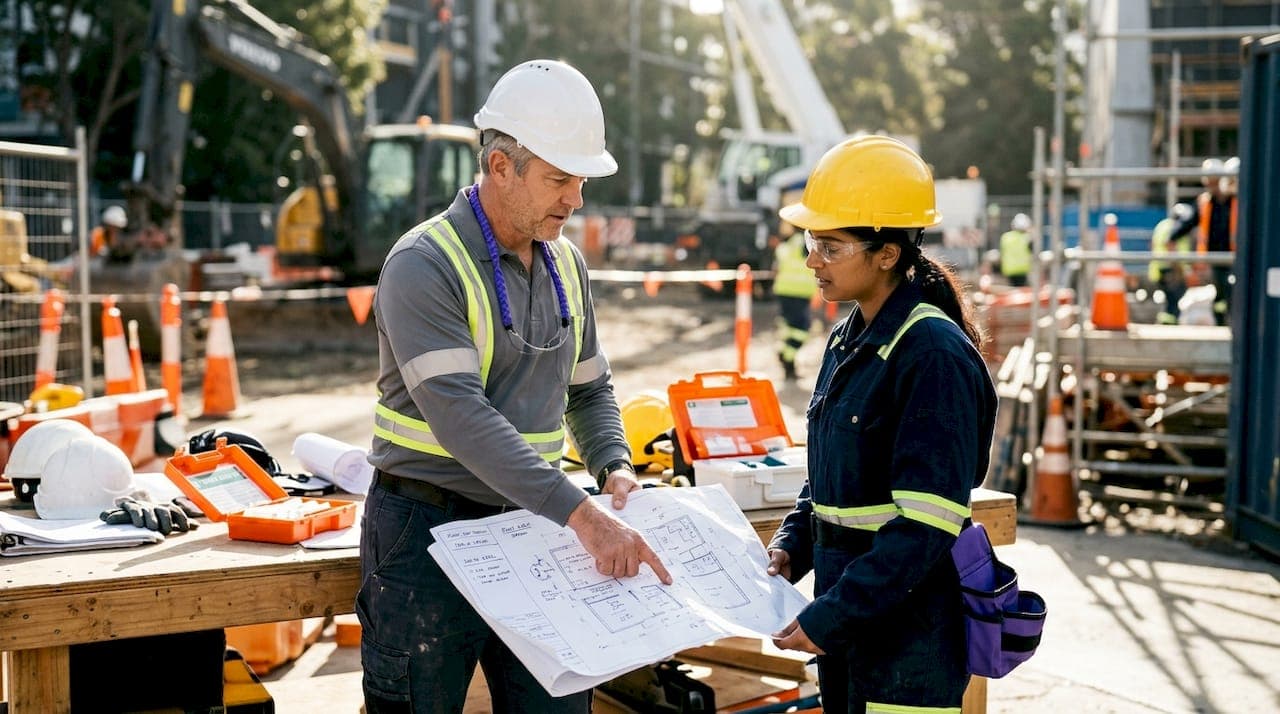
Why First Aid Coverage Matters for Event and Construction Permits in British Columbia
First aid coverage is not just a box to check before a construction project, community festival, film shoot, sports tournament, or public event. In British Columbia, first aid planning is part of the legal and operational safety framework that helps determine whether a site can operate responsibly.
For construction sites, industrial work, remote jobs, and multi-employer worksites, WorkSafeBC requires employers and prime contractors to assess the workplace and provide the correct first aid equipment, supplies, facilities, attendants, and emergency transportation when required.
For public events, medical planning is often reviewed through municipal permit processes, venue requirements, park board requirements, emergency planning reviews, or site safety checklists. Requirements can vary by city and event type, but the expectation is consistent: organizers must show that they have considered medical risk, emergency access, communication, and response capability before the public arrives.
In Metro Vancouver, the Fraser Valley, and across B.C., strong first aid planning can be the difference between a smooth approval process and a last-minute scramble.
First aid in B.C. is regulated differently than in the United States
Many online articles refer to OSHA, but OSHA does not regulate British Columbia workplaces. In B.C., workplace first aid requirements fall under WorkSafeBC and the B.C. Occupational Health and Safety Regulation.
That matters because copying a U.S.-based safety article can create the wrong impression for B.C. clients, contractors, municipalities, and event organizers. The correct question is not, “What does OSHA require?” The correct question is:
What does WorkSafeBC require for this workplace, and what does the local permit authority or venue require for this event?
For a construction site, the answer usually starts with a written first aid assessment. For a public event, it usually starts with an event safety plan, site map, first aid plan, and emergency access plan.
What WorkSafeBC requires for construction and worksite first aid
WorkSafeBC requires employers to determine the level of first aid required for each workplace. This is not supposed to be guessed or copied from another site. It must be based on the actual workplace.
A proper B.C. first aid assessment considers:
-
The maximum number of workers present
-
The workplace hazard rating
-
The locations of workers
-
Whether the workplace is remote or less accessible
-
How long it may take to reach medical treatment
-
The types of injuries that are reasonably likely to occur
-
Barriers that may delay first aid response
-
The equipment, facilities, attendants, and transportation needed
This is especially important in construction, civil work, forestry, utilities, film production, industrial yards, and remote locations where access may be limited or ambulance response may be delayed.
A small low-risk office and a remote high-risk worksite do not need the same first aid setup. A downtown construction project and a rural utility project may also require different coverage, even if they have the same number of workers.
Why a written first aid assessment matters
A written first aid assessment protects the employer, the prime contractor, the workers, and the client. It shows that first aid coverage was selected based on the real conditions of the site.
A strong assessment answers practical questions:
Where is the first aid station?
Who is the designated first aid attendant?
What level of certification does the attendant hold?
Is there a first aid room, dressing station, or mobile treatment centre requirement?
Is emergency transportation required?
How will the attendant communicate with workers?
How will an injured worker be moved if access is blocked?
What is the route to ambulance handoff or hospital care?
How often are supplies inspected?
Who keeps first aid records?
These details matter because first aid compliance is not only about having a kit on-site. It is about whether the injured worker can receive prompt care and be transported to medical treatment when needed.
First aid procedures must be communicated
A first aid plan is only useful if workers know how to use it. WorkSafeBC expects written first aid procedures to be current and communicated at the workplace.
Good procedures should explain:
-
What first aid equipment and services are available
-
Where the first aid station or room is located
-
How workers call for first aid
-
How the attendant responds
-
Who calls for emergency transportation
-
What routes are used in and out of the workplace
-
How barriers to access will be handled
-
What authority the first aid attendant has during treatment
-
How injuries are reported and recorded
For construction sites, this information should be part of orientation, toolbox talks, site postings, and supervisor briefings. For larger or changing worksites, it should be reviewed regularly because site access, hazards, and crew size can change quickly.
First aid for multi-employer construction sites
Many construction sites in B.C. involve several employers working at the same time. In those situations, the prime contractor has a key role in coordinating first aid coverage for the whole workplace.
This is where many projects make mistakes. One subcontractor may have a first aid attendant, another may have a small kit, and the general contractor may assume everything is covered. But if there is no coordinated assessment, no clear communication system, and no shared emergency plan, the site may still have a compliance gap.
A proper first aid plan should account for all workers on-site, not just one company’s crew. It should also identify who is responsible for maintaining coverage as the project changes.
Event permits and first aid planning in British Columbia
Public event first aid requirements are different from construction site requirements, but the planning principle is similar: the organizer must show that medical risk has been considered.
Municipalities and venue operators may ask for an event safety plan, medical plan, emergency contact list, site map, traffic plan, fire access plan, security plan, insurance documents, and communication procedures.
For events in Vancouver, special event planning materials include event medical planning as part of the safety review process. Organizers may also be asked whether the event needs medical personnel on-site and how close the nearest hospital is.
This means first aid planning should not be left until the week before the event. By then, the permit authority, venue, security provider, production team, or insurance provider may already be asking for details.
What should be included in an event first aid plan?
A professional event first aid plan should be specific to the event, not generic. A 200-person indoor meeting, a 1,000-person outdoor soccer tournament, and a multi-day festival all have different risks.
A strong event first aid plan should include:
-
Event name, date, location, and operating hours
-
Estimated attendance
-
Type of event and activity risk
-
First aid provider contact information
-
Number and level of first aid personnel
-
First aid station location
-
Mobile response plan if the site is large
-
AED location
-
Emergency access routes
-
Ambulance handoff location
-
Communication method between organizers and first aid
-
Incident documentation process
-
Weather, terrain, crowd, alcohol, sports, or heat risk considerations
-
Lost child or vulnerable person process if applicable
For outdoor events, medical planning should also consider shade, water access, crowd flow, field access, vehicle access, and whether the first aid team can move quickly through the site.
Why risk-based planning is better than simple headcount ratios
A common mistake is assuming that first aid coverage should be based only on the number of people attending. Headcount matters, but it is not the only factor.
A 500-person seated ceremony in a controlled indoor venue is not the same as a 500-person outdoor sports tournament in summer heat. A 300-person community event with elderly attendees may require different planning than a 300-person music event with alcohol service. A construction site 10 minutes from a hospital is different from a remote worksite where access is limited.
Good planning considers:
-
Crowd size
-
Event duration
-
Age and health profile of attendees
-
Alcohol or substance risk
-
Weather exposure
-
Terrain and site layout
-
Sports, stunts, tools, equipment, or physical activity
-
Distance to hospital
-
Ambulance access
-
Road closures or traffic restrictions
-
Availability of AEDs and oxygen
-
Ability to document and escalate incidents
This is why professional first aid providers build coverage around the actual risk profile, not just the attendance number.
First aid is also a documentation issue
Many organizations focus on staffing but forget documentation. That creates problems during permit review, inspections, insurance reviews, or post-incident investigations.
A first aid provider should be able to support the client with clear documentation, including:
-
Proof of certification
-
First aid plan
-
Site map or station location
-
Equipment list
-
Daily supply inspection
-
Incident report process
-
Emergency contact list
-
Communication and escalation process
-
Shift coverage schedule
For construction, documentation should align with WorkSafeBC expectations. For events, documentation should align with the permit authority, venue, or organizer requirements.
The best first aid plan is simple, clear, and easy to explain. If workers, staff, security, and organizers do not understand how to call first aid, the plan is not ready.
Common first aid mistakes that delay permit readiness
Permit and site readiness problems usually come from preventable mistakes.
The most common mistakes include:
-
Waiting until the last minute to book first aid
-
Using a generic medical plan from another event
-
Not matching coverage to the actual site risk
-
Forgetting to include emergency access routes
-
Not identifying the nearest ambulance handoff point
-
Not confirming attendant certification level
-
Not checking first aid supplies before the event
-
Not documenting incidents properly
-
Not briefing staff on how to call for first aid
-
Assuming a small kit is enough for a high-risk site
-
Assuming public event first aid and workplace first aid are the same
These mistakes can create liability, confusion, and delays. More importantly, they can slow down care when someone is injured.
What first aid coverage may look like in practice
Every site is different, but first aid coverage may include:
-
A certified first aid attendant
-
Basic, intermediate, or advanced first aid coverage
-
A first aid station or treatment area
-
AED deployment
-
Oxygen and trauma supplies where appropriate
-
Mobile response for larger sites
-
Emergency transport planning
-
Incident documentation
-
Daily check-ins with the site supervisor or event lead
-
Coordination with security, fire, ambulance, and organizers
For higher-risk or larger events, coverage may include multiple attendants, a field coordinator, nurses, EMRs, PCPs, or additional response equipment depending on the event’s needs and the organizer’s requirements.
Why early budgeting matters
First aid should be included as a safety line item from the beginning. When organizers or contractors treat it as an afterthought, they often end up rushing to find coverage close to the permit deadline.
Early planning helps determine:
-
How many attendants are needed
-
What level of certification is required
-
Whether an AED, oxygen, or advanced kit should be deployed
-
Whether a fixed station or mobile response is better
-
Whether the site needs emergency transport planning
-
Whether documentation is needed for a permit submission
-
Whether the plan must be reviewed by the venue or municipality
The cost of proper first aid coverage is usually small compared to the cost of delaying a permit, stopping work, or responding poorly to a serious incident.
What I have learned from field experience
In the field, the biggest issue is usually not that people do not care about safety. The issue is that first aid gets treated as something to arrange after everything else is already planned.
That approach creates pressure. The site map is already done. The permit is already submitted. The security plan is already written. The event schedule is already locked. Then someone asks, “Who is doing first aid?”
By that point, the first aid provider has to fit into a plan that may not have considered patient access, station placement, ambulance routes, or communication.
The better approach is to bring first aid into the planning stage early. When first aid is included early, the plan becomes cleaner, safer, and easier to defend if questions come up.
First aid is not only about responding after something happens. It is about building a system that is ready before anything happens.
FAIRSAFE’s approach to first aid coverage in B.C.
FAIRSAFE provides dependable first aid and safety coverage for events, construction sites, film-related work, and industrial settings across Metro Vancouver and the Fraser Valley.
Our approach is built around practical readiness:
-
Certified first aid attendants
-
Professional first aid equipment
-
AED availability
-
Oxygen and advanced supplies when required
-
Clear communication with organizers and site supervisors
-
Fast deployment for short-notice coverage
-
Transparent pricing
-
Documentation support for permit and site requirements
-
Owner-led service with real field experience
FAIRSAFE has supported community events, sports coverage, and worksite safety needs, including service for the Musqueam Indian Band. Whether the job is a public event, remote worksite, construction project, or high-risk activity, the goal is the same: provide reliable first aid coverage that protects people and supports compliance.
Key takeaways
First aid coverage in B.C. should be based on WorkSafeBC requirements, local permit expectations, and the actual risks of the site or event.
For construction and worksites, employers must complete a proper first aid assessment and provide the required equipment, facilities, attendants, procedures, and transportation where needed.
For public events, permit authorities and venues often expect clear medical planning, emergency access, communication, and incident response procedures.
The best first aid plans are site-specific, documented, easy to communicate, and ready before the work or event begins.
FAIRSAFE helps event organizers, contractors, and site managers build first aid coverage that is practical, professional, and ready for real conditions in British Columbia.
FAQ
Does OSHA apply to first aid requirements in British Columbia?
No. OSHA is a United States agency. In British Columbia, workplace first aid requirements are regulated through WorkSafeBC and the B.C. Occupational Health and Safety Regulation.
Is first aid required on construction sites in B.C.?
Yes. Employers must assess the workplace and provide the required first aid equipment, supplies, facilities, attendants, and services based on the number of workers, workplace hazard rating, accessibility, and other site conditions.
Do public events in B.C. need first aid coverage?
Many public events need a first aid or medical plan as part of permit, venue, park, insurance, or safety requirements. The exact requirement depends on the municipality, venue, event size, activity risk, and site layout.
What should an event first aid plan include?
An event first aid plan should include staffing, certification levels, first aid station location, AED location, communication procedures, emergency access routes, ambulance handoff location, incident reporting, and site-specific risks such as heat, alcohol, sports, terrain, or crowd density.
Is an AED always required at events?
Not every event has the same requirement, but AED availability is strongly recommended for many public events, sports tournaments, higher-risk activities, and larger gatherings. The decision should be based on risk, response time, venue requirements, and the medical plan.
How often should first aid plans be reviewed?
For worksites, the first aid assessment should be reviewed when conditions change and at least annually. For events, the plan should be reviewed before each event because attendance, layout, weather, access, and risks can change.
Why hire a professional first aid provider?
A professional provider helps with more than staffing. They bring equipment, documentation, communication planning, incident reporting, and experience responding to real situations. That helps organizers and contractors stay prepared, compliant, and ready for emergencies.
Where does FAIRSAFE provide first aid coverage?
FAIRSAFE provides first aid and safety services across Metro Vancouver, the Fraser Valley, and surrounding B.C. communities, including events, construction sites, film-related work, industrial sites, and short-notice coverage needs.
FAIRSAFE First Aid & Safety Solutions
Metro Vancouver & Fraser Valley, British Columbia
https://www.fairsafe.ca/FairsafeFairsafe First Aid and Safety SolutionsFairsafeSafetyFirst aidB.C.