
A safety coverage zone is a designated area where access, activity, or equipment operation is regulated to prevent accidents and maintain compliance with established safety standards. The industry term for this concept is "safeguarded zone" or simply "safety zone," and both phrases appear throughout EPA, OSHA, and ISO frameworks. For event planners, construction managers, and community organizers, understanding what a safety coverage zone requires is the difference between a compliant site and a costly liability. The US EPA and federal code 33 CFR 165 codify three primary zone types: Exclusion, Contamination Reduction, and Support. Each carries distinct access rules, personnel requirements, and regulatory obligations.
What is a safety coverage zone and how is it defined?
A safety coverage zone is defined as a geographic or physical boundary where specific rules govern who can enter, what activities are permitted, and what protective equipment is required. This definition holds across industries from maritime emergency response to construction sites to public events. The zone exists to create a physical buffer between hazards and unprotected people.
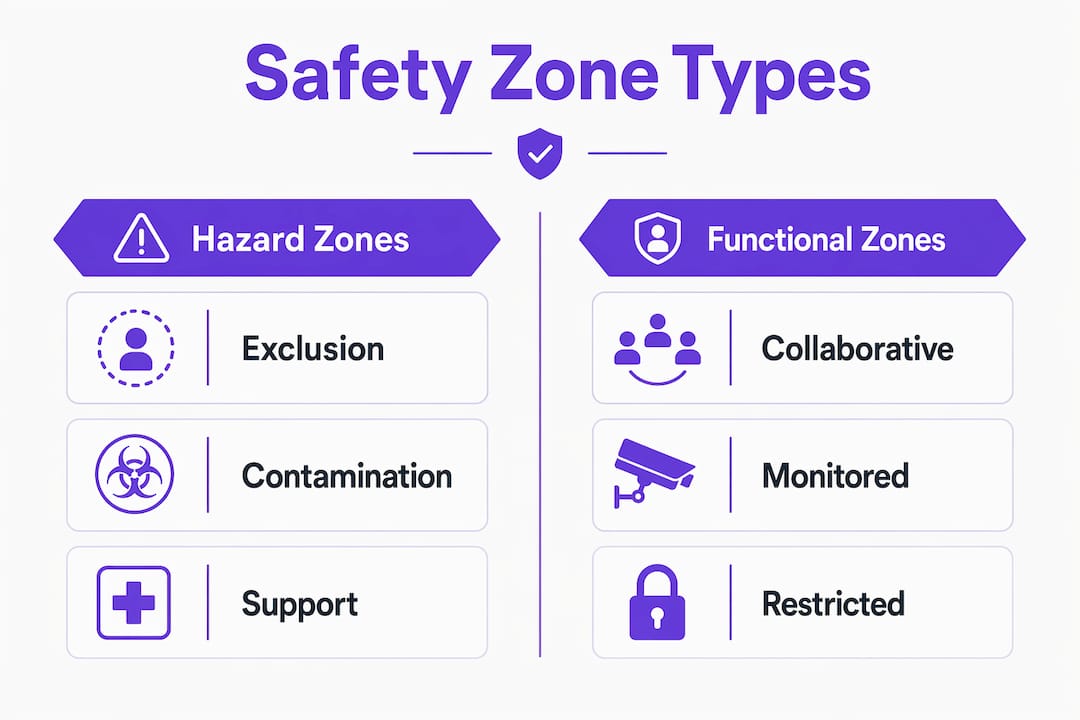
The three foundational zone types recognized by the EPA are the Exclusion Zone (also called the Hot Zone), the Contamination Reduction Zone (Warm Zone), and the Support Zone (Cold Zone). The Exclusion Zone contains the highest hazard level and permits only trained, fully protected personnel. The Contamination Reduction Zone acts as a transition area where decontamination procedures occur. The Support Zone is the outermost ring, where command, medical support, and logistics operate safely.
These categories are not limited to hazardous material incidents. Construction sites use equivalent logic when separating active machinery areas from pedestrian walkways. Event planners apply the same principle when designating backstage areas, crowd barriers, and first aid stations. The underlying safety zone definition is consistent: restrict access based on risk level.
Pro Tip: Map your zones before any equipment arrives on site. Retroactive zone planning after setup creates gaps that physical barriers cannot fully correct.
What are the main types of safety coverage zones?
Safety zones fall into two broad categories: operational zones defined by hazard proximity, and functional zones defined by the type of activity they protect. Both categories appear across industrial, construction, maritime, and event contexts.
Hazard-proximity zones
The EPA's three-tier model (Exclusion, Contamination Reduction, Support) is the standard for emergency response and hazardous material sites. Federal maritime law under 33 CFR 165 uses the same logic to establish restricted water areas around vessels, infrastructure, and security operations. Construction sites typically adapt this model by labeling areas as restricted, controlled, and open access.

Functional and technology-specific zones
ISO/TS 15066 defines robot safety zones for industrial settings: Collaborative, Monitored, and Restricted. These zones regulate the speed and separation distance between robotic equipment and human operators. ISO 13855 provides the formulas used to calculate safe stopping distances based on equipment speed. This matters for construction managers who work near automated machinery or heavy equipment with proximity sensors.
The table below summarizes the most common zone types, their typical hazards, and the governing standards.
| Zone Type | Typical Hazard | Governing Standard |
|---|---|---|
| Exclusion (Hot Zone) | Chemical, biological, or physical hazard | EPA, OSHA |
| Contamination Reduction (Warm Zone) | Secondary exposure risk | EPA, 33 CFR 165 |
| Support (Cold Zone) | Low direct hazard, logistics and command | EPA, OSHA |
| Restricted (Robotic) | Automated equipment collision | ISO/TS 15066, ISO 13855 |
| Monitored (Robotic) | Speed-regulated human-robot proximity | ISO/TS 15066 |
| Maritime Safety Zone | Vessel traffic, security perimeter | 33 CFR 165, US Coast Guard |
Each zone type carries its own documentation requirements. Misclassifying a zone or failing to post correct signage exposes site managers to enforcement action and insurance complications.
How do legal and regulatory frameworks impact safety coverage zones?
Safety zones legally impose stricter rules than standard work areas, including lower speed limits, restricted access, and harsher penalties for violations. This applies across school zones, maritime zones, construction work zones, and event perimeters. The legal weight of a designated zone is not symbolic. It changes the enforcement landscape for everyone on site.
Different government levels establish and enforce these zones with varying authority. Federal agencies like OSHA, the EPA, and the US Coast Guard set baseline standards. State and local authorities layer additional restrictions on top of those baselines. A construction manager in Metro Vancouver, for example, must satisfy both federal requirements and WorkSafe BC regulations simultaneously.
Key regulatory obligations for site planners include:
- Documented risk assessments completed before zone boundaries are established
- Physical demarcation using barriers, signage, and color-coded markings that meet OSHA or local code requirements
- Access control logs recording who entered restricted zones and when
- Change control documentation any time zone parameters are modified after initial validation
Changing safety zone parameters after initial validation without updated documentation invalidates regulatory compliance certificates under OSHA, CE, and ISO standards. This can halt operations legally until recertification is complete.
Designated safety zones carry legal weight that standard work areas do not. Precise boundary demarcation is not a best practice. It is a compliance requirement with direct enforcement consequences.
What practical guidelines and technologies support effective zone implementation?
Effective safety coverage zone implementation starts with physical controls and layers technology on top. Physical barriers are the foundation. Impact-rated handrails and caged zones provide positive separation that painted lines alone cannot guarantee, particularly in high-traffic loading and unloading areas. Heavy-duty barriers can stop a 7-ton vehicle at low speeds, protecting personnel during material handling operations.
Technology extends what physical barriers cannot do on their own. AI-powered video analytics and computer vision now monitor zone boundaries in real time, flagging breaches before an incident occurs. Safety laser scanners detect human presence within a defined radius and can trigger automatic equipment shutdowns. These systems move safety management from reactive to proactive.
Cost is a real factor in technology selection. Safety laser scanner solutions, including multiple units for full coverage plus professional configuration, validation, and documentation, can total $20,000–$50,000 per cell. For event planners and community organizers working with tighter budgets, a combination of physical barriers, trained personnel, and clear visual markings delivers strong compliance at a fraction of that cost.
Best practices for any site include:
- Physical barriers first: Use impact-rated fencing or handrails in high-risk areas before relying on painted lines or cones
- Visual markings: Color-code zones consistently (red for exclusion, yellow for controlled access, green for open areas)
- Documented risk assessments: Complete these before setup and update them when site conditions change
- On-site validation: Walk every zone boundary after setup to confirm barriers align with the documented plan
- Trained personnel: Station certified first aid attendants and safety monitors at zone entry points
Pro Tip: Safety laser scanners require professional validation after any configuration change. Budget for re-validation time and cost before modifying zone parameters mid-project.
Dynamic safety zones that adjust based on equipment speed increase flexibility but require more complex configuration and higher upfront costs. For most event and construction applications, static zones with clear physical demarcation remain the most practical and cost-effective approach.
How can planners and managers effectively manage safety zones on site?
Site-specific zone management requires translating regulatory requirements into practical, day-to-day operations. The approach differs meaningfully between event planning, construction management, and community organizing, even though the underlying safety zone definition stays the same.
-
Conduct a pre-event or pre-construction hazard assessment. Identify every hazard present: crowd density, heavy equipment, electrical systems, chemical storage, or vehicle traffic. Each hazard type determines which zone classification applies.
-
Define zone boundaries on a site map. Draw Exclusion, Controlled, and Open Access zones on a scaled site plan before setup begins. Share this map with all stakeholders, contractors, and emergency responders.
-
Coordinate with regulatory authorities early. Contact OSHA, WorkSafe BC, or the relevant local authority to confirm zone classifications and documentation requirements. For maritime or public road events, engage the US Coast Guard or local traffic authority as applicable.
-
Brief all personnel on zone rules. Every person on site, including volunteers and vendors, must know which zones they are authorized to enter and what protective equipment each zone requires.
-
Assign zone monitors. Designate trained personnel to patrol zone boundaries throughout the event or project. Certified first aid attendants positioned at zone entry points serve a dual function: access control and immediate medical response.
-
Plan for dynamic changes. Construction phases shift hazard locations. Event crowds move unpredictably. Build a process for updating zone boundaries in real time, including a chain of command for approving changes and updating documentation immediately.
Pro Tip: For multi-day events or phased construction projects, conduct a zone review at the start of each day. Conditions change overnight, and a five-minute walkthrough prevents hours of incident response.
Community organizers often underestimate the complexity of zone management for public gatherings. A farmers market or outdoor festival carries real crowd-crush, vehicle access, and medical emergency risks. Applying the same zone logic used on construction sites, scaled appropriately, produces a measurably safer event.
Key Takeaways
A safety coverage zone is a legally defined, physically demarcated area that regulates access and activity based on hazard level, and compliance requires documented risk assessments, proper physical barriers, and trained on-site personnel.
| Point | Details |
|---|---|
| Three core zone types | EPA and OSHA recognize Exclusion, Contamination Reduction, and Support zones as the baseline classification system. |
| Legal enforcement is real | Violating zone rules carries stricter penalties than standard work area violations, including fines and operational shutdowns. |
| Physical barriers come first | Impact-rated barriers provide separation that painted lines cannot guarantee in high-traffic or low-visibility areas. |
| Documentation protects compliance | Any zone parameter change after initial validation requires updated documentation to maintain OSHA, CE, and ISO certifications. |
| Technology extends coverage | AI video analytics and safety laser scanners enable real-time boundary monitoring beyond what personnel alone can achieve. |
The case for treating safety zones as living systems
I have reviewed safety plans for events and construction sites where zone boundaries were drawn once, printed, and never revisited. That approach fails almost every time. Conditions change. Equipment moves. Crowds shift. A zone that was accurate at 8:00 AM on day one may be dangerously misaligned by noon on day two.
The shift from static painted boundaries to dynamic, sensor-enabled safeguarded spaces is real and accelerating. But I would caution against assuming technology replaces the fundamentals. I have seen sites with expensive laser scanner systems that lacked basic impact-rated barriers in their highest-risk areas. The scanner detects a breach. The barrier stops the vehicle. You need both.
The most common misconception I encounter is that a safety zone is a compliance checkbox. It is not. A well-designed zone actively changes behavior. People move differently when they see a physical barrier versus a painted line. Drivers slow down in posted work zones because the legal and physical environment demands it. That behavioral shift is the actual safety outcome you are managing toward.
Documentation is the part most planners underestimate. Changing zone parameters without updated records invalidates certifications and exposes the organization to liability. Treat every zone modification as a formal change request, not a field adjustment. That discipline is what separates a compliant site from a legally vulnerable one.
— FAIR A. R.
Fairsafe's first aid and safety coverage support
Event planners, construction managers, and community organizers in Metro Vancouver have a direct resource for compliant safety zone implementation.
Fairsafe provides certified first aid attendants and safety personnel trained to WorkSafe BC standards, with rapid deployment and transparent pricing. Fairsafe's team positions certified staff at zone entry points, conducts on-site safety monitoring, and supports documentation requirements for compliant zone management. Clients including the Musqueam Indian Band have relied on Fairsafe for dependable, affordable safety coverage across community events and industrial worksites. Whether you are planning a public festival, managing a construction phase, or organizing a community gathering, Fairsafe delivers the certified personnel your safety zones require.
FAQ
What is the safety zone definition used by regulators?
A safety zone is a designated geographic area with restricted access and stricter rules to mitigate elevated risk. The EPA and federal code 33 CFR 165 codify three primary types: Exclusion, Contamination Reduction, and Support zones.
How does a coverage area explanation differ by industry?
The core meaning of coverage zone stays consistent across industries: a bounded area with specific access and activity rules based on hazard level. The classification labels and governing standards differ, with EPA and OSHA applying in emergency response and construction, and ISO/TS 15066 applying in robotics and industrial automation.
What are the penalties for violating a designated safety zone?
Violations in designated safety zones carry stricter penalties than standard work area infractions, including fines, operational shutdowns, and potential criminal liability. The specific penalty structure depends on the governing authority, whether federal, state, or local.
Do safety coverage guidelines require physical barriers or just markings?
Physical barriers are required in high-risk areas because painted lines and cones cannot guarantee positive separation. Impact-rated handrails and caged zones provide the physical stop that visual markings alone cannot deliver, particularly where vehicle traffic or heavy equipment is present.
How often should safety zone boundaries be reviewed on an active site?
Zone boundaries should be reviewed at the start of each work day or event day, and immediately after any change in site conditions, equipment placement, or crowd patterns. Any modification to zone parameters must be documented to maintain OSHA, CE, and ISO compliance certifications.