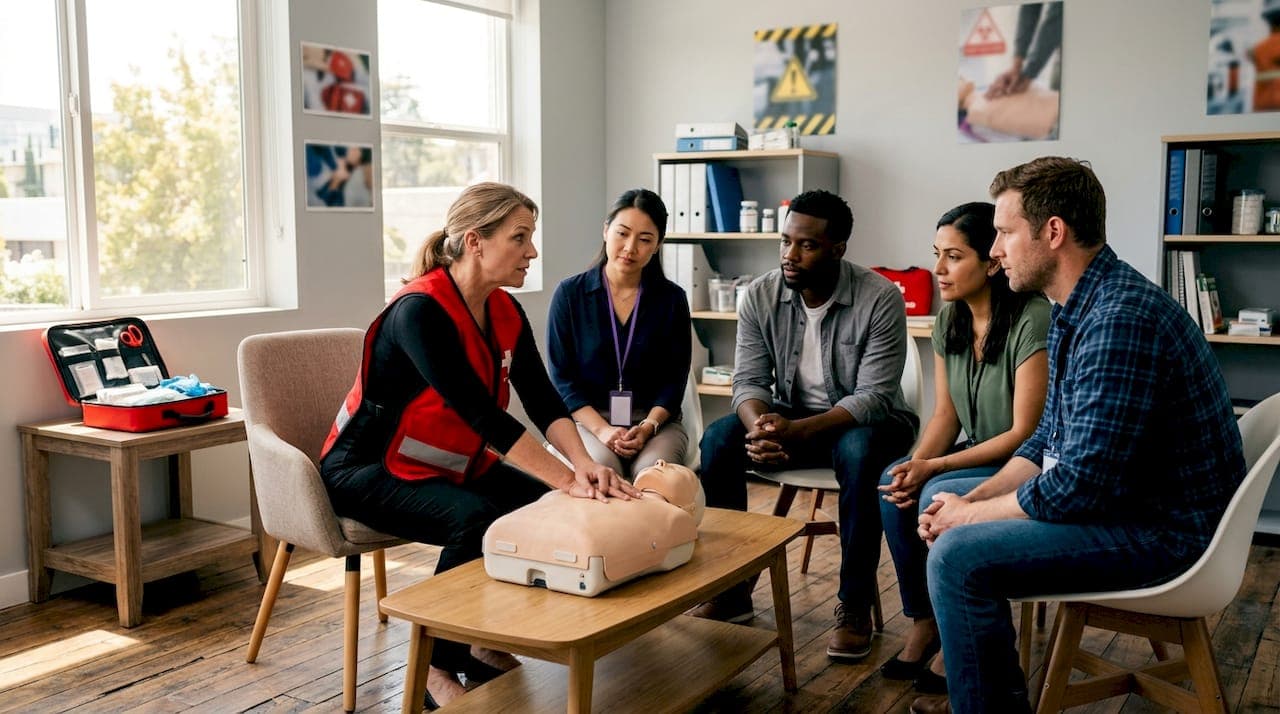
On-site first aid is defined as the provision of trained personnel, certified equipment, and designated facilities at a worksite to deliver immediate medical care before emergency services arrive. In British Columbia, this is not optional. WorkSafeBC's Occupational Health and Safety (OHS) Regulation mandates that every employer assess and maintain on-site first aid coverage appropriate to their workplace. The requirements cover construction sites, industrial facilities, film productions, events, and any location where workers are present. Getting this right protects your workers and keeps your business compliant.
What is on-site first aid under WorkSafeBC regulations?
On-site first aid is the organised system of people, equipment, and facilities that an employer maintains at a worksite to respond to injuries and medical emergencies. The standard industry term for this system is "occupational first aid," and WorkSafeBC uses this language throughout its OHS Regulation. Both terms describe the same legal obligation: employers must be ready to treat injured workers on the spot, not just call 911 and wait.
WorkSafeBC's OHS Regulation Schedule 3-A requires employers to assess three variables to determine the level of first aid coverage required:
- Hazard rating: Classified as Low, Moderate, or High based on the nature of work and injury risk.
- Number of workers per shift: The count of workers present during any single shift, not the total workforce.
- Travel time to the nearest hospital: The time it takes to transport an injured worker to definitive medical care.
These three factors together determine what equipment, how many certified attendants, and what type of facility an employer must provide. A low-hazard office with five workers and a hospital two minutes away has very different obligations than a high-hazard construction site in the Fraser Valley with 30 workers and a 45-minute drive to the nearest emergency room.
Annual assessments are required whenever operations change significantly, and joint health and safety committees or worker representatives must be involved in the process. This is not a one-time exercise. Employers who expand their workforce, change work locations, or alter the nature of hazards must reassess and update their first aid plan accordingly.
Pro Tip: Document every first aid assessment in writing, including the date, the variables assessed, the committee members involved, and the resulting coverage decisions. WorkSafeBC inspectors can request this documentation during a site visit.
What certification levels are required for first aid personnel in BC?
Certified first aid attendants are the backbone of any on-site medical assistance programme. British Columbia adopted a CSA-aligned certification structure effective november 1, 2024, which updated training hour requirements and consolidated certification levels.
The two primary certification tiers for workplace first aid in BC are:
- Basic First Aid (Emergency First Aid): Covers immediate life-threatening emergencies, CPR, AED use, and basic wound care. Training is now set at 7 hours under the updated CSA-aligned standard.
- Intermediate First Aid (Standard First Aid): A more thorough programme covering patient assessment, spinal injuries, medical emergencies, and multi-casualty response. Training hours were reduced from 35 to 14 hours under the 2024 update.
The reduction in Intermediate First Aid training hours reflects a nationwide simplification that aligns provincial standards with CSA Z1210 without reducing the core competencies employers rely on. Employers benefit from shorter training cycles and lower costs, while workers still receive recognised, nationally consistent certification.
One compliance detail that catches many employers off guard: a certified first aider must be physically present during every shift, including nights, weekends, and statutory holidays. Having a certified employee on payroll is not enough. If that person is absent, the employer must arrange coverage before the shift begins.
First aid attendants also carry a specific authority under WorkSafeBC rules. They must not be assigned duties that would interfere with their ability to respond to an emergency. A certified attendant cannot be buried in a task that prevents them from reaching an injured worker within a reasonable time.
Pro Tip: When onboarding first aid personnel worksite coverage, confirm their certification expiry date before their first shift. Expired certifications are a common compliance gap that WorkSafeBC inspectors flag.
What facilities and equipment does your worksite need?
The physical infrastructure of on-site first aid falls into two categories under BC regulations: dressing stations and first aid rooms. Understanding the difference helps employers allocate resources correctly and avoid over or under-investing in facilities.

| Feature | Dressing station | First aid room |
|---|---|---|
| Typical application | Moderate hazard, smaller worker counts | High hazard, larger worker counts, or remote sites |
| Facility size | Compact, dedicated space for basic treatment | Larger room with full treatment capacity |
| Equipment level | Standard first aid kit, basic supplies | Full equipment including stretcher, oxygen, AED |
| Staffing | Certified first aider on shift | Occupational First Aid (OFA) attendant, often OFA Level 3 |
| Water requirement | Potable water nearby | Potable water and handwashing facilities on-site |
A dressing station serves moderate-hazard workplaces where worker counts and hazard levels do not trigger the higher threshold. A first aid room is required when hazard ratings, worker numbers, or site remoteness increase the risk profile. Both types of facility must be located near work areas, kept clean and sanitary, have potable water, clear signage, and enough space to treat an injured worker lying flat.
Remote and less accessible worksites carry additional obligations. Emergency transportation must be capable of safely carrying an injured worker and an attendant, with suitable communication equipment and weather protection. For sites where hospital access exceeds two hours, overnight care capability with appropriate staffing and facilities is legally required under WorkSafeBC rules. This applies to many remote construction and resource industry sites across BC's interior and northern regions.
First aid kits for businesses must also be inspected routinely. Supplies must be clean, dry, within their expiry dates, and ready for immediate use. A kit that has not been checked in six months is a liability, not a safety measure.
Pro Tip: Post a clear, laminated sign at every first aid station listing the attendant's name, their certification level, and the emergency contact number. This takes five minutes and removes confusion during a real emergency.
How to implement and maintain effective on-site first aid programs
A compliant first aid programme does not happen by accident. Employers who build it systematically avoid the gaps that lead to WorkSafeBC orders and, more importantly, to preventable harm.
-
Conduct a documented site assessment. Use WorkSafeBC's Schedule 3-A framework to assess hazard rating, worker count per shift, and hospital travel time. Record the outcome in writing and have your joint health and safety committee or worker representative sign off on it.
-
Develop written first aid procedures. Your written procedures must cover which equipment is on-site, who the certified attendants are, how workers summon help, and how emergency transportation is arranged. Update these procedures whenever your workforce, location, or work type changes.
-
Confirm attendant presence before every shift. Build a check-in process that confirms a certified first aider is physically on-site before work begins. For temporary worksite first aid solutions, this means having a reliable staffing arrangement in place for absences, vacations, and last-minute gaps.
-
Run annual first aid drills. WorkSafeBC mandates annual drills to test whether first aid procedures work and whether workers know how to summon help. A drill also reveals gaps in communication, signage, or equipment placement that a paper review would miss.
-
Inspect and restock first aid kits on a schedule. Assign a specific person to inspect kits monthly. Replace any expired or depleted supplies immediately. Keep a log of each inspection with the date and the inspector's name.
-
Plan for temporary and multi-location worksites. Construction projects, film shoots, and events often involve workers at multiple locations or short-term sites. Each active location with workers present requires its own first aid coverage. A first aid plan for remote sites must account for travel time, terrain, and communication access specific to that location.
The importance of on-site first aid extends beyond regulatory compliance. Workplaces with well-maintained programmes respond faster to injuries, reduce the severity of outcomes, and demonstrate to workers that their safety is taken seriously.
Key takeaways
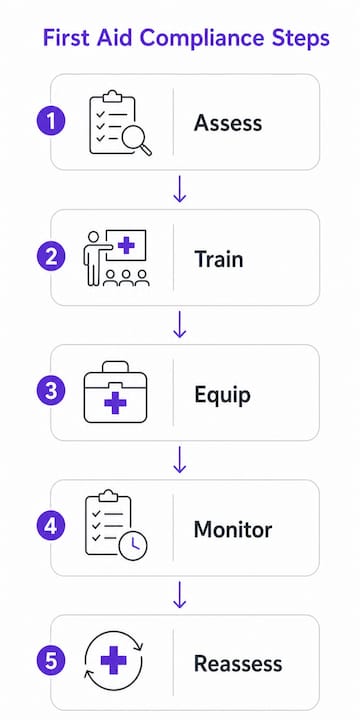
On-site first aid in BC requires trained attendants physically present on every shift, facilities matched to hazard and worker count, and annual documented assessments under WorkSafeBC's OHS Regulation Schedule 3-A.
| Point | Details |
|---|---|
| Three-variable assessment | Hazard rating, worker count, and hospital travel time determine your required first aid level. |
| Attendant presence is mandatory | A certified first aider must be physically on-site every shift, not just listed on payroll. |
| Two facility types | Dressing stations suit moderate-hazard sites; first aid rooms are required for higher risk or remote locations. |
| Updated certification hours | Basic First Aid is now 7 hours; Intermediate First Aid is 14 hours under the 2024 CSA-aligned standard. |
| Annual drills and assessments | WorkSafeBC requires yearly drills and documented reassessments whenever operations change significantly. |
What I've learned about on-site first aid compliance in BC
Most employers I speak with understand that they need first aid coverage. Where things go wrong is in the details. The most common gap I see is the assumption that having a certified employee on staff satisfies the requirement. It does not. If that person is on vacation, off sick, or assigned to a different location, the worksite is out of compliance from the moment the shift starts.
The second gap is treating the Schedule 3-A assessment as a one-time task. Workplaces change. A crew that started at 10 workers grows to 35. A project moves from a Metro Vancouver lot to a site in the Fraser Valley with a longer hospital drive. Each of those changes triggers a reassessment obligation, and most employers do not realise it until an inspector points it out.
The third thing I'd push back on is the idea that compliance is just about meeting the minimum table. Terrain, weather, and actual emergency transport logistics matter. A worksite that technically meets the travel-time threshold on paper may have a road that is impassable in winter. That is a real risk that the table does not capture, and it is the employer's responsibility to account for it.
Involving workers in the annual assessment process changes the quality of the outcome. Workers know where the blind spots are. They know which areas are hardest to reach, which communication systems fail, and which procedures are unclear. That knowledge makes the programme better.
— FAIR A. R.
Fairsafe provides certified first aid coverage across BC
BC employers who need qualified first aid attendants for construction sites, industrial projects, events, or short-term coverage can contact Fairsafe for responsive, compliant staffing.
Fairsafe is a WorkSafeBC-registered first aid and safety temp agency serving Metro Vancouver, the Lower Mainland, the Fraser Valley, and communities across British Columbia. We supply certified OFA attendants, OFA Level 3 attendants, Emergency Medical Responders, and event medics for single shifts, multi-day projects, and long-term contracts. Our staff arrive with the qualifications your worksite requires, and we can confirm coverage before your shift begins. Whether you need one attendant for a last-minute absence or a full medical team for a large project, Fairsafe is ready to help. Reach out through fairsafe.ca to discuss your coverage needs.
FAQ
What is on-site first aid?
On-site first aid is the organised system of trained personnel, certified equipment, and designated facilities that an employer maintains at a worksite to deliver immediate medical care before emergency services arrive. In BC, this is governed by WorkSafeBC's OHS Regulation.
How does WorkSafeBC determine first aid requirements?
WorkSafeBC uses Schedule 3-A to assess three factors: workplace hazard rating, number of workers per shift, and travel time to the nearest hospital. These variables together determine the required attendant certification level, equipment, and facility type.
Does a certified first aider need to be on-site every shift?
Yes. WorkSafeBC requires a certified first aider to be physically present during every shift, including nights, weekends, and holidays. Having a certified employee on payroll but absent from the site does not satisfy the requirement.
What is the difference between a dressing station and a first aid room?
A dressing station is a lower-level facility suited to moderate-hazard workplaces with smaller worker counts. A first aid room is a more substantial facility required when hazard ratings, worker numbers, or site remoteness increase beyond the dressing station threshold.
How often must employers reassess their first aid programme?
Employers must conduct a documented first aid assessment annually and whenever significant workplace changes occur, such as changes in workforce size, work location, or the nature of hazards. Joint health and safety committees or worker representatives must be involved in the process.