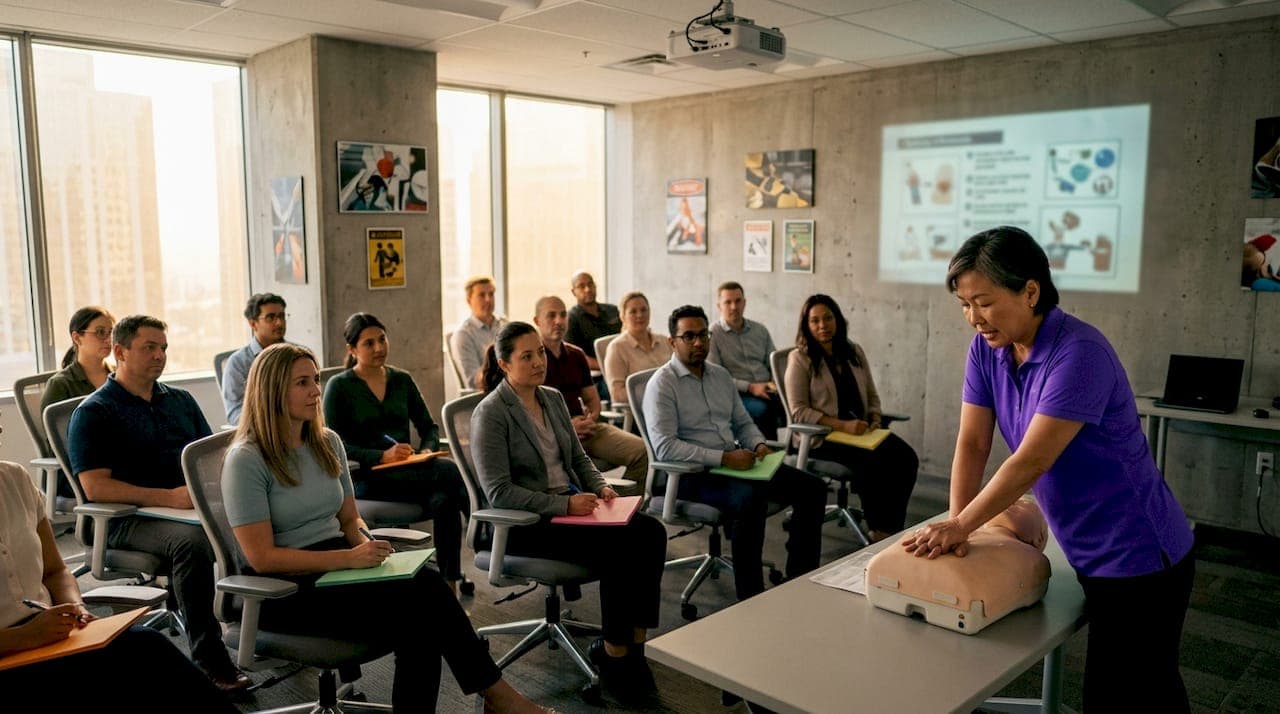
First aid in the workplace is a legally mandated, culture-shaping practice that directly affects employee safety, confidence, and teamwork. Under WorkSafeBC Part 3 regulations and the CSA Z1210 standard, every BC employer must maintain trained first aid personnel on every shift, written first aid plans, and properly stocked kits. The role of first aid in workplace culture extends well beyond compliance. Organisations that treat first aid as a shared competency build a proactive safety mindset, reduce injury severity, and demonstrate genuine care for their people. For employers and HR professionals, that distinction between a compliance checkbox and a cultural commitment is where real safety outcomes are won or lost.
What are the legal requirements for workplace first aid in BC in 2026?
Canadian workplace first aid is legally mandatory in 2026, with updated federal and provincial requirements covering written plans, trained personnel on every shift, and properly maintained kits. Failure to comply risks stop-work orders and legal liability, even when no injury has occurred. That last point matters: WorkSafeBC does not wait for an incident to issue penalties.
The certification level required for your worksite is determined by what BC practitioners call the "logic of 3": hazard rating, worker count, and hospital travel time. A low-hazard office with fewer than 50 workers and a hospital within 20 minutes may require only an Emergency First Aid attendant. A high-hazard construction site with more than 100 workers and a hospital more than 20 minutes away requires an OFA Level 3 attendant. Many employers underestimate their hazard class, particularly when worker counts are low, and that gap creates both safety and compliance risk.
Beyond personnel, WorkSafeBC regulations specify the physical infrastructure required based on workplace class:
- Dressing stations are required for lower-hazard workplaces with fewer workers and close hospital access.
- First aid rooms are required for higher-hazard or larger workplaces, equipped with a cot, running water, and specified supplies.
- Written first aid plans must be documented, accessible to all employees, and reviewed regularly.
- Kit inspections must be conducted on a scheduled basis with records maintained.
- AED units (automated external defibrillators) are required in many workplace classes and must be registered and maintained.
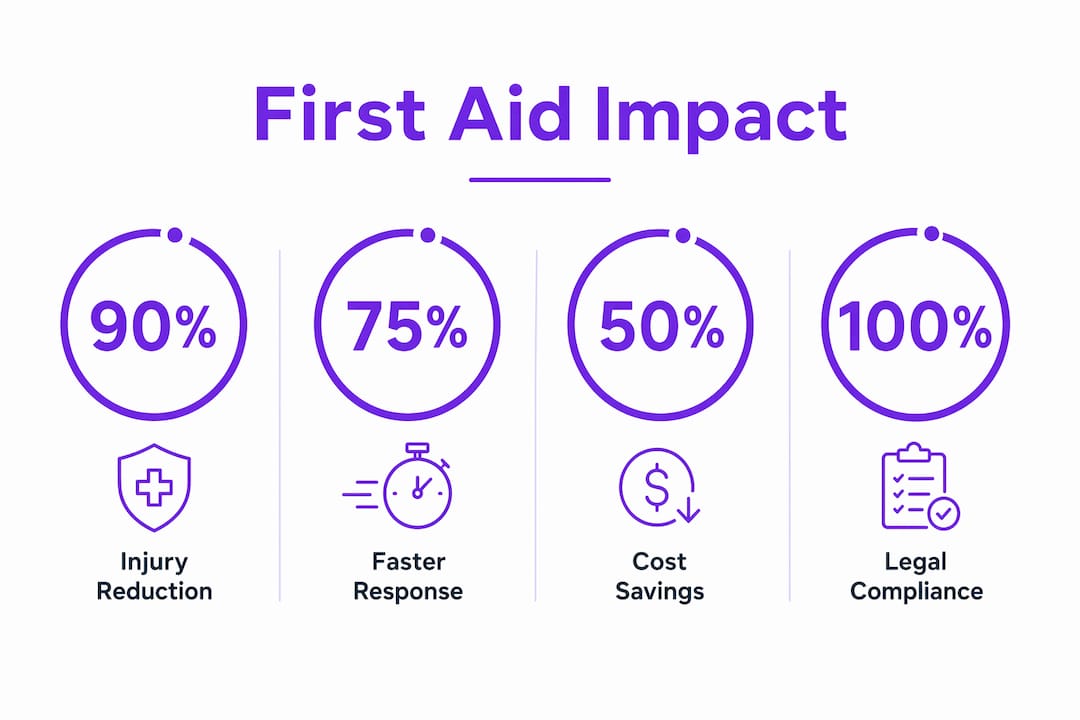
Well-maintained first aid programs reduce costs tied to Workers' Compensation Board claims, penalties, and lost-time incidents. Faster emergency responses also save lives and improve recovery outcomes. Compliance is not just a legal obligation. It is a direct investment in operational continuity.
Pro Tip: Review your WorkSafeBC first aid assessment annually, not just when you hire new staff. Changes in worker count, worksite location, or job hazard class can shift your required certification level overnight.
How does first aid training influence workplace safety culture?
First aid training builds a shared responsibility mindset, turning trained responders into early-warning sensors for hazards and boosting employee confidence across the worksite. This cultural shift is the most undervalued benefit of a well-run first aid programme. When workers know that trained colleagues are present and visible, anxiety about workplace injury drops and incident reporting increases.

Visible first aid responders do more than respond to emergencies. Their presence signals that the organisation takes safety seriously. Designated responders reinforce responsibility, improve incident reporting rates, and lower injury severity by intervening early. That visible commitment changes how employees perceive their employer's duty of care.
Training formats have also evolved. Blended learning options now allow workers to complete theoretical components online and practical assessments in person. This reduces off-site time while maintaining full certification compliance under WorkSafeBC. For HR professionals managing shift-based or project-based teams across Metro Vancouver and the Fraser Valley, blended formats make scheduling far more practical.
The cultural benefits of first aid training include:
- Increased employee confidence in emergency situations
- Stronger incident reporting behaviour across all levels of staff
- Shared ownership of safety protocols rather than top-down enforcement
- Reduced injury severity through early and competent intervention
- Greater trust in management's commitment to employee welfare
First aid training acts as an administrative control that psychologically safeguards workers and builds a culture of incident reporting and safety awareness. That psychological dimension is rarely discussed in compliance conversations, but it is where culture is actually formed.
What is the role of mental health first aid in workplace safety culture?
Work-related psychological injuries are costlier and more complex than physical ones, requiring integration of psychological health first aid to prevent long-term absenteeism and disability. Employers must prioritise both physical and psychological first aid in their emergency response plans. This is no longer optional guidance. It is an expectation embedded in the CSA Z1003 National Standard of Canada for Psychological Health and Safety in the Workplace.
Mental Health First Aid (MHFA) is a critical administrative control under Canadian National Standards that equips staff to provide early intervention, fulfilling Duty of Care obligations and reducing long-term disability risk. MHFA training teaches leaders and frontline workers to recognise signs of mental distress, respond with appropriate support, and refer colleagues to professional resources. It reduces stigma and builds psychological safety across the organisation.
Post-incident trauma support is as important as the immediate physical response. Ignoring trauma after a workplace incident increases presenteeism and raises the risk of further safety failures. Integrated physical and mental first aid is the standard that protects both people and operations.
Post-incident trauma support prevents presenteeism and recurring safety failures among employees. An employee who witnesses a serious incident but receives no psychological follow-up is more likely to underperform, avoid reporting near-misses, and disengage from safety protocols. That pattern compounds risk over time.
For HR professionals in BC, embedding MHFA into your first aid programme is a practical way to meet your Duty of Care obligations while building a workplace where people feel genuinely supported. Construction sites, industrial worksites, and film productions in the Lower Mainland all carry psychosocial risks that physical first aid alone cannot address.
How does first aid preparedness build teamwork and emergency response?
First aid preparedness builds teamwork by assigning clear roles, practising response procedures, and creating shared accountability for safety outcomes. When every team member knows who the designated first aid responder is and what to do in an emergency, response time drops and confusion disappears. That clarity is itself a form of team cohesion.
The practical steps that build this cohesion follow a clear sequence:
- Designate and communicate responders. Post the names and locations of all certified first aid attendants in visible areas across the worksite.
- Conduct regular drills. Scheduled drills reinforce response procedures and identify gaps before a real emergency occurs.
- Assign supporting roles. Designate who calls emergency services, who controls the scene, and who retrieves the first aid kit or AED.
- Debrief after every incident. Even minor incidents warrant a structured debrief to identify what worked and what needs improvement.
- Rotate training opportunities. Offering first aid certification to a wider group of employees deepens the safety culture and reduces single-point-of-failure risk.
First aid responders' visible presence promotes safety culture by reinforcing responsibility, improving incident reporting, and lowering injury severity. A worksite where multiple trained responders are present and known to all staff is a worksite where people feel safer and perform better. For construction and industrial employers across BC, that operational confidence translates directly into fewer lost-time incidents.
Pro Tip: Recognise your first aid responders publicly. A brief acknowledgement at a team meeting or a note in a company newsletter signals that their certification is valued, not just required. Recognition sustains engagement far better than obligation alone.
For employers managing first aid in construction or industrial settings, the teamwork benefits of a well-structured first aid programme extend to operational continuity. When a serious incident occurs and the response is swift and coordinated, downtime is minimised and recovery is faster.
What practical steps can employers take to embed first aid into workplace culture?
Embedding first aid into workplace culture requires deliberate planning, not just compliance paperwork. The employers who do this well treat first aid as an ongoing programme rather than a one-time certification event. The following steps reflect current best practice for BC workplaces in 2026.
- Conduct a formal risk assessment. Use the WorkSafeBC hazard classification system to determine the correct certification level, kit requirements, and facility needs for your specific worksite.
- Schedule regular training refreshers. First aid certifications expire. Build renewal dates into your HR calendar and use blended learning formats to reduce disruption.
- Make responder roles visible. Use signage, staff directories, and onboarding materials to ensure every employee knows who the certified responders are and where the first aid station is located.
- Maintain documentation rigorously. Keep first aid records, kit inspection logs, and incident reports current and accessible. WorkSafeBC inspectors expect to see these on request.
- Integrate mental health first aid. Add MHFA training to your programme alongside physical first aid to address the full spectrum of workplace health risks.
- Reward and recognise responders. Acknowledge the extra responsibility that certified first aid attendants carry. Recognition sustains commitment and encourages others to pursue certification.
The table below summarises the key programme elements and their primary purpose:
| Programme element | Primary purpose |
|---|---|
| WorkSafeBC risk assessment | Determines required certification level and facility class |
| Blended learning first aid training | Maintains certification with minimal operational disruption |
| Visible responder identification | Builds employee confidence and speeds emergency response |
| Documentation and kit inspections | Demonstrates compliance and supports incident investigation |
| Mental Health First Aid training | Addresses psychosocial risks and fulfils Duty of Care |
| Responder recognition programme | Sustains engagement and encourages wider participation |
For employers managing on-call first aid coverage across multiple shifts or remote sites, the documentation and responder identification elements are especially critical. A gap in coverage is a compliance failure, and it is also a signal to your workforce that safety is not the priority you claim it to be.
Key takeaways
First aid is the most direct signal an organisation sends about how much it values its people, and that signal shapes every aspect of workplace safety culture.
| Point | Details |
|---|---|
| Legal compliance is non-negotiable | WorkSafeBC requires trained personnel, written plans, and maintained kits on every shift. |
| Certification level depends on three factors | Hazard rating, worker count, and hospital travel time determine your required OFA level. |
| Training builds culture, not just competence | Visible first aid responders increase incident reporting and reduce injury severity across the worksite. |
| Mental health first aid is now expected | CSA Z1003 and Duty of Care obligations require employers to address psychological as well as physical risks. |
| Recognition sustains the programme | Acknowledging certified responders publicly keeps engagement high and encourages wider participation. |
First aid as a cultural signal, not just a compliance requirement
I have worked alongside employers across Metro Vancouver and the Fraser Valley who treat first aid as a box to tick before an inspection. Their programmes are technically compliant. Their workers, however, do not feel safer because of them. The kits are stocked, the certificates are filed, and the culture is indifferent.
The organisations that get this right do something different. They talk about first aid at onboarding. They post their responders' names at the entrance. They debrief after incidents, not just to file a report, but to learn. That behaviour tells every employee that safety is a shared value, not a regulatory burden.
What I find most compelling in 2026 is the growing recognition that mental health first aid belongs in the same conversation as physical first aid. Psychological injuries cost more, take longer to recover from, and are far more likely to recur without proper post-incident support. Employers who integrate MHFA into their safety programmes are not just meeting a standard. They are building a workplace where people actually want to stay.
The practical advice I give every HR professional I work with is this: treat your first aid programme as a living part of your safety culture. Review it annually. Recognise your responders. Train more people than the minimum requires. The return on that investment shows up in lower claims, higher retention, and a workforce that trusts you.
— FAIR A. R.
Fairsafe supports your workplace first aid programme in BC
Fairsafe provides certified first aid and safety staffing across Metro Vancouver, the Lower Mainland, and the Fraser Valley, helping employers meet WorkSafeBC requirements while building a genuine safety culture.
Whether you need an OFA Level 3 attendant for a construction site, an Emergency Medical Responder for an event, or short-term coverage during employee absences, Fairsafe matches your worksite's hazard class and shift requirements with qualified, certified personnel. Our team understands the compliance demands that BC employers face in 2026, and we structure every placement to support your first aid and safety needs from day one. Contact Fairsafe at fairsafe.ca to discuss your coverage requirements and get a straightforward quote.
FAQ
What does WorkSafeBC require for workplace first aid in 2026?
WorkSafeBC requires every BC employer to maintain trained first aid personnel on every shift, a written first aid plan accessible to all employees, and properly stocked and inspected kits. The required certification level depends on hazard rating, worker count, and hospital travel time.
How does first aid training improve workplace safety culture?
First aid training builds shared responsibility by turning certified responders into visible safety leaders who increase incident reporting and reduce injury severity. Employers who invest in training beyond the minimum see measurable improvements in employee confidence and safety engagement.
What is Mental Health First Aid and why does it matter for employers?
Mental Health First Aid (MHFA) is a training programme that equips staff to recognise and respond to signs of mental distress in the workplace. Under the CSA Z1003 National Standard, MHFA is recognised as an administrative control that supports Duty of Care obligations and reduces long-term disability risk.
How does first aid preparedness build teamwork?
Designated first aid responders, clear communication of roles, and regular drills create shared accountability that strengthens team cohesion. When every employee knows who to call and what to do in an emergency, response is faster and confusion is eliminated.
What happens if a BC employer does not comply with first aid regulations?
Non-compliance with WorkSafeBC first aid regulations can result in stop-work orders and legal liability, even if no injury has occurred. Employers also face increased Workers' Compensation Board claims and reputational risk when first aid programmes are inadequate.