
First aid coverage for small events is defined as the planned deployment of trained personnel, equipment, and emergency procedures to protect attendees from injury or medical crisis. Every event organizer carries a duty of care toward attendees, regardless of crowd size. Industry standards like the Purple Guide, which is the recognized reference for event safety in the UK and widely cited internationally, set the baseline for what responsible medical planning looks like. Proper first aid coverage for a small event means having identified first aiders, a stocked kit, knowledge of the nearest automated external defibrillator (AED), and a written emergency plan. These four elements form the minimum acceptable standard, and skipping any one of them creates both a safety gap and a legal exposure.
What are the essential elements of first aid coverage for small events?
Adequate event medical coverage rests on four core components. Each one serves a specific function, and none of them is optional once you accept responsibility for an event.
- A qualified first aider or coordinator. At minimum, one person must be trained and designated to manage medical incidents. This person coordinates emergency help, triages injuries, and communicates with public EMS if needed.
- A properly stocked first aid kit. First aid kits meeting British Standard BS8599 are recommended for public events, with contents selected based on the likely injuries from your specific activities. A kit for a corporate networking event differs from one for an outdoor sports day.
- AED access and location knowledge. Your first aider must know exactly where the nearest AED is located before the event starts. Seconds matter in cardiac arrest, and searching for a defibrillator during an emergency is not acceptable.
- A written medical and emergency plan. This document names the first aider, maps the first aid station, lists emergency contact numbers, and outlines the procedure for calling 911 or local EMS.
These components align with the minimum requirements cited by industry advisory bodies for small gatherings. They also form the foundation that licensing authorities and insurers expect to see documented before an event is approved.
Pro Tip: Write your emergency plan as a one-page reference card and post it at the first aid station. Staff can read it in 60 seconds, which is exactly the time available in a real emergency.
How to assess the first aid needs of your small event
Crowd size alone is a poor predictor of medical needs. Several risk factors influence the level of cover required, and relying on headcount as your only measure is one of the most common planning errors.
A risk-based approach, as mandated by the Purple Guide and widely adopted by safety advisory bodies, asks you to evaluate your event across multiple dimensions. Work through these factors before you finalize your medical plan:
- Event type and activities. A seated conference carries far lower risk than a fun run, a food festival with open flames, or a children's sports day. Physical activity, equipment, and crowd movement all increase the probability of injury.
- Duration. Longer events increase fatigue, dehydration, and the statistical likelihood of a medical incident. A four-hour outdoor market needs more planning than a one-hour indoor meeting.
- Attendee demographics. Events with elderly attendees, young children, or people with known medical conditions require higher readiness. A corporate gala with a mixed age group is a different risk profile than a youth sports tournament.
- Alcohol presence. Alcohol increases the frequency and severity of medical incidents. Any event serving alcohol should automatically move up one tier in its risk assessment.
- Weather and outdoor exposure. Heat, cold, and wet conditions each create specific medical risks. Outdoor summer events require heat illness protocols; winter events need hypothermia awareness.
- Venue access. Remote or enclosed venues slow EMS response times. If public ambulances cannot reach your venue within eight minutes, you need a higher level of on-site coverage.
A "one medic per X people" rule is outdated. Expert risk assessments consider varied risk indicators including alcohol, weather, and activity type. Applying a fixed ratio without evaluating these factors produces coverage that is either dangerously thin or unnecessarily expensive.
The difference between a Tier 1 low-risk event and an elevated-risk event is not just the number of first aiders. It is the type of training they hold, the equipment they carry, and whether a paramedic or ambulance standby is required. Getting a professional medical risk assessment before you finalize your plan is the most reliable way to land in the right tier.
Recommended staffing and equipment for small event first aid coverage
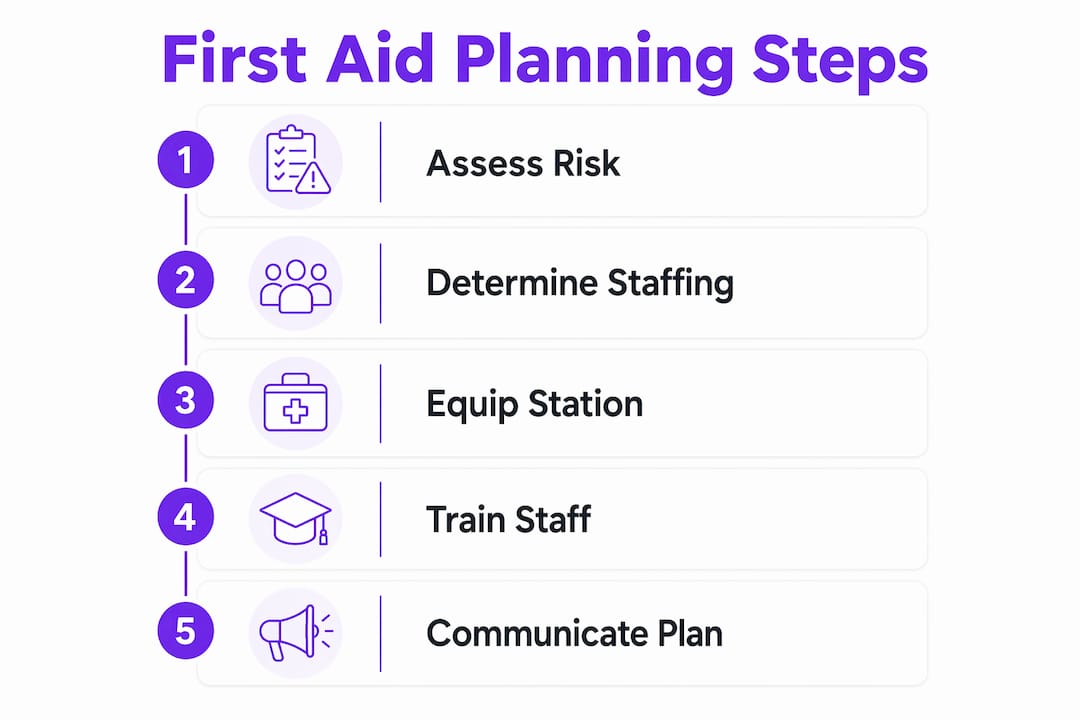
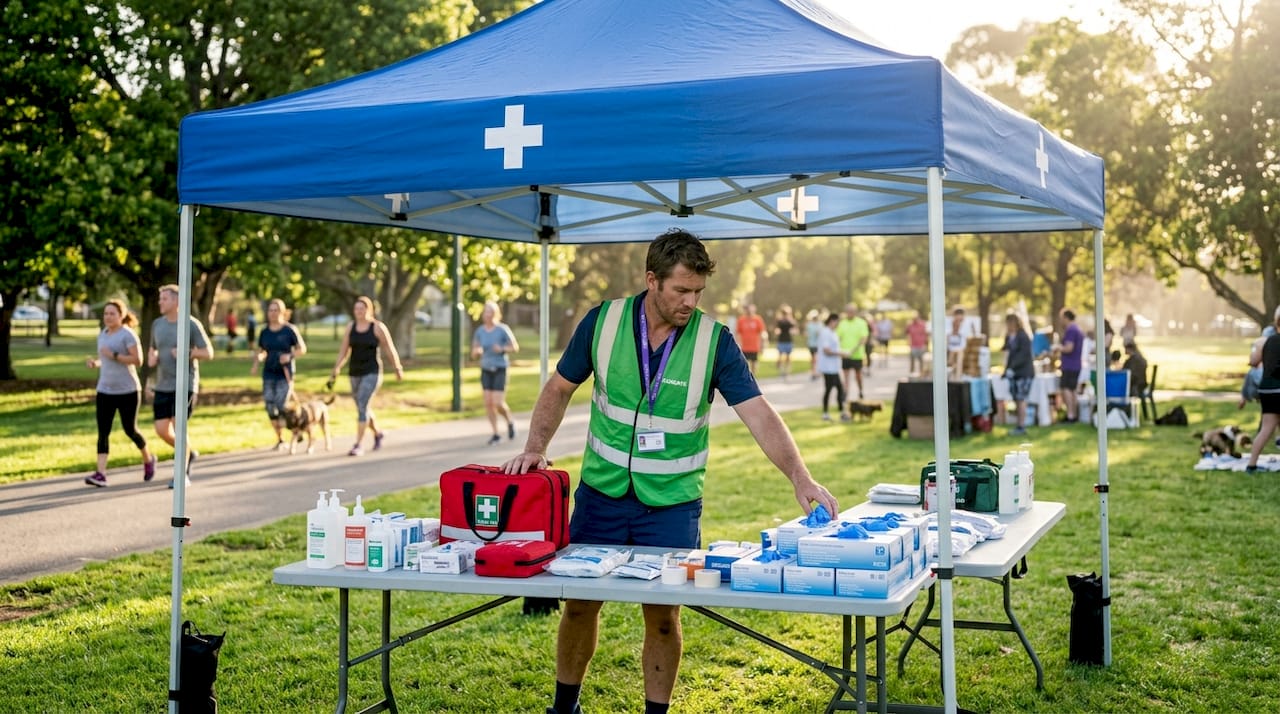
For events with fewer than 500 attendees, 1–2 qualified first aiders are the standard minimum for low-risk settings. That number rises as risk factors increase, and some events require paramedics, physician oversight, or a dedicated ambulance on standby.
| Attendee count | Risk level | Recommended staffing |
|---|---|---|
| Under 100 | Low | 1 certified first aider |
| 100–500 | Low to moderate | 1–2 certified first aiders |
| 100–500 | Elevated (alcohol, outdoor, physical) | 2 first aiders + paramedic consideration |
| Any size | Remote or high-risk venue | Ambulance standby required |
Equipment requirements follow the same risk-based logic. A basic setup for a small indoor event includes:
- A BS8599-compliant first aid kit (or regional equivalent) stocked for likely injuries
- At least one AED, positioned and signed at the first aid station
- Oxygen and a bag-valve mask for events with elevated cardiac risk
- A stretcher or carry chair if the venue has stairs or limited wheelchair access
- Clear signage directing attendees to the first aid station
Your first aid station should be visible, accessible, and staffed for the full duration of the event. Coordinate with local EMS in advance so they know your venue layout and your on-site medical contact. Event ambulance services provide immediate stabilization and emergency transport, but they are not a replacement for on-site first aid coverage. They are a supplement for high-risk or remote situations.
Pro Tip: Brief your entire event staff, not just your first aider, on where the first aid station is and how to call for help. A volunteer who can direct a distressed attendee to the right location in 10 seconds is worth more than the best-equipped kit that nobody can find.
Common mistakes to avoid when arranging first aid coverage
Most first aid failures at small events trace back to a small set of avoidable decisions. Recognizing these patterns before your event is the most direct way to prevent them.
- Assuming public EMS will cover you. First aid teams are proactive with medical monitoring and stabilization; public EMS is reactive and should not replace event first aid coverage. Calling 911 is a last resort, not a plan.
- Booking too late. Qualified first aiders and medical providers book up, especially during peak event seasons. Last-minute arrangements produce gaps in coverage, higher costs, and providers who have not had time to review your site.
- Using a generic quote instead of a risk assessment. Off-the-shelf pricing packages are not tailored to your event's specific hazards. A bespoke medical risk assessment produces coverage that actually fits your situation.
- Underestimating activity-related risks. A small event with a climbing wall, a bouncy castle, or a catered barbecue carries risks that a headcount-only approach will miss entirely.
- Failing to document and communicate the plan. A medical plan that exists only in the organizer's head is not a plan. Every staff member with a safety role must receive a written briefing before the event opens.
Hiring professional on-site first aid coverage helps meet duty-of-care obligations, minimize liability, reduce response times, and prevent premature event cancellation. That last point matters more than planners often realize. An event shut down by an avoidable medical incident costs far more than the first aid coverage that could have prevented it.
How does first aid coverage reduce event liability and affect insurance?
The event organizer holds ultimate duty of care and accountability for medical provision, regardless of whether they outsource to a professional provider. That accountability does not transfer when you hire a vendor. It means you must verify that your provider is qualified, documented, and site-specific in their approach.
Proper first aid coverage demonstrates that you took reasonable steps to protect attendees. That demonstration matters in three specific contexts:
- Event insurance policies. Insurers assess risk when pricing event liability coverage. Documented first aid plans and certified on-site personnel signal lower risk, which can influence premiums favorably. The role of first aid in insurance premiums is direct: better preparation reduces the insurer's exposure.
- Licensing and permit approvals. Licensing authorities often require formal medical risk assessments and plans as part of event permitting. Submitting a documented plan early accelerates approval and reduces the chance of last-minute conditions being imposed.
- Legal defense. If an attendee is injured and pursues a claim, a documented medical plan, certified first aiders, and a proper equipment setup are evidence that you met your duty of care. The absence of any of these is evidence that you did not.
Event medical services form a core part of a risk management strategy, helping gain authority approvals and reduce liability. Planners who treat first aid as a compliance checkbox rather than a genuine safety investment tend to discover the difference only after something goes wrong. Understanding the role of first aid in permits before you apply saves time, money, and stress.
Key Takeaways
Effective first aid coverage for small events requires a risk-based plan, certified personnel, compliant equipment, and written documentation reviewed before the event opens.
| Point | Details |
|---|---|
| Risk-based planning is mandatory | Crowd size alone does not determine coverage needs; evaluate activity type, duration, alcohol, weather, and venue access. |
| Four minimum elements | Every small event needs a qualified first aider, a stocked kit, AED access, and a written emergency plan. |
| Staffing scales with risk | Low-risk events under 500 attendees need 1–2 certified first aiders; elevated risk requires paramedic consideration. |
| Public EMS is not a plan | On-site first aid teams are proactive; 911 is reactive and cannot substitute for event-specific medical coverage. |
| Documentation protects you | Written medical plans support insurance claims, permit approvals, and legal defense if an incident occurs. |
Why I never let a small event go without a written medical plan
Event planners often tell me that their event is "too small" to need formal first aid coverage. I have heard that reasoning applied to a 60-person corporate dinner, a 200-person community fair, and a private outdoor wedding. In every case, the organizer was thinking about probability. They were not thinking about consequence.
The probability of a serious medical incident at a small event is low. The consequence of being unprepared when one happens is not. I have seen events shut down mid-afternoon because the organizer had no documented procedure and panicked when a guest collapsed. I have seen insurance claims denied because there was no certified first aider on record. These outcomes are not bad luck. They are the predictable result of treating first aid as an afterthought.
My advice is simple: start your medical planning at the same time you start your venue search. Get a risk assessment from a qualified provider before you finalize your budget. Write the plan, brief your staff, and post it at the first aid station. The cost of doing this right is modest. The cost of getting it wrong is not.
— FAIR A. R.
Fairsafe provides certified first aid coverage for your event
Planning a small event in Metro Vancouver and need certified first aid coverage you can count on? Fairsafe delivers professional first aid attendants, risk-assessed medical plans, and compliant equipment setups for public and private events of all sizes.
Fairsafe's team holds WorkSafe BC certifications and responds quickly, so you get qualified personnel without the wait or the guesswork that comes with last-minute arrangements. Transparent pricing means you know exactly what you are paying for before you sign anything. Whether you are organizing a community gathering, a corporate function, or a private celebration, Fairsafe builds a coverage plan around your specific event. Visit Fairsafe's event first aid services to request a quote or ask about availability for your date.
FAQ
What is first aid coverage for a small event?
First aid coverage for a small event is the planned deployment of trained personnel, equipment, and emergency procedures to manage medical incidents on-site. The minimum standard includes one qualified first aider, a stocked kit, AED access, and a written emergency plan.
How many first aiders do I need for a small event?
For fewer than 500 attendees, 1–2 qualified first aiders are the standard minimum for low-risk events. Events with alcohol, physical activities, or outdoor exposure require additional personnel or paramedic support.
Can I rely on 911 instead of hiring a first aider?
Public EMS is reactive and should not replace on-site event first aid coverage. Relying solely on 911 is a major liability and licensing risk, and it leaves attendees without immediate care during the critical minutes before an ambulance arrives.
Does first aid coverage affect my event insurance premium?
Documented first aid plans and certified on-site personnel demonstrate lower risk to insurers, which can reduce event liability premiums. The role of first aid in insurance premiums is direct: better preparation reduces the insurer's exposure and strengthens your coverage terms.
How early should I arrange first aid coverage for my event?
Event organizers must start medical planning early to secure quality providers and integrate medical provisions into safety documentation. Booking at least four to six weeks before your event date gives providers time to conduct a proper risk assessment and prepare a site-specific plan.