Certified first aid staff are defined as workers who hold a valid, WorkSafeBC-recognised qualification under the CSA Z1210 standard, covering Basic, Intermediate, or Advanced tiers. For BC employers in construction, events, and industrial settings, sourcing low cost first aid certified staff does not mean cutting corners. It means understanding exactly which certification tier your worksite requires, conducting a proper written assessment, and working with a vetted temp agency that handles compliance on your behalf. The 2026 transition from legacy OFA levels to CSA-aligned certification tiers has changed what "qualified" means, and employers who miss that shift face real regulatory exposure.
What are the WorkSafeBC first aid certification requirements for temporary staff?
WorkSafeBC regulations require a written first aid assessment that defines the minimum certification level based on workplace class, hazard rating, worker count, and hospital travel time. That assessment is not optional. It is the document that justifies every staffing decision you make.
Workplace classification and hazard ratings
WorkSafeBC classifies worksites into four classes (Class 1 through Class 4) and assigns a hazard rating of low, moderate, or high. A Class 1 low-hazard office with five workers has very different requirements from a Class 4 high-hazard construction site with 50 workers in a remote location. The combination of class and hazard rating determines the minimum certification tier under Schedule 3-A of the BC OHS Regulation.

The new CSA Z1210 certification tiers
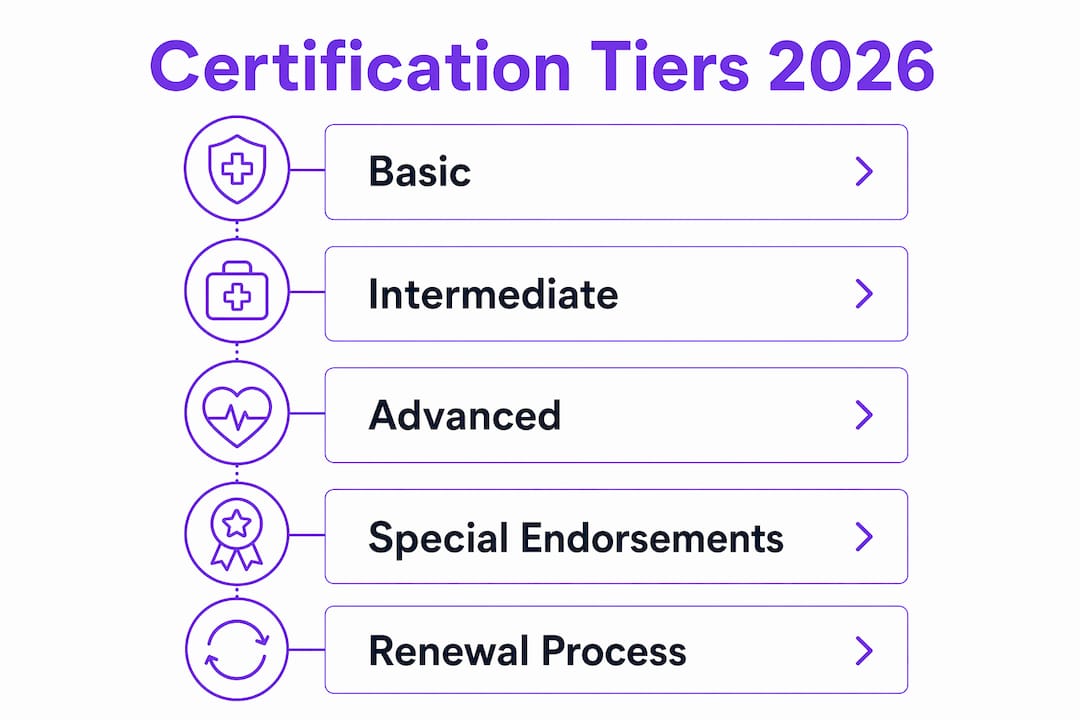
BC completed its transition mid-2026 from traditional OFA levels to three CSA-aligned tiers:
- Basic First Aid: A one-day course covering emergency response fundamentals. Suitable for low-hazard, low-worker-count environments.
- Intermediate First Aid: A condensed 16-hour course covering more complex patient assessment and care. Previously required a five-day OFA Level 2 course.
- Advanced First Aid: The highest tier, required for high-hazard or remote worksites with significant travel time to hospital.
Pre-2026 OFA certificates remain valid until their expiry date. After expiry, only CSA Z1210-aligned certificates are accepted. Employers hiring temporary staff must confirm which tier applies before the first shift begins.
Medical and transportation endorsements
Some worksites require attendants to hold additional endorsements beyond the base certificate. Transportation endorsements apply when workers must be transported by vehicle rather than ambulance. Medical endorsements may be required for remote or high-hazard sites. Verified competence, not just certificate possession, ensures compliance. Employers must check that endorsements match their site's emergency response plan.
Pro Tip: Request a copy of the attendant's certificate and any endorsements before the assignment starts. Do not assume the agency has already matched the credentials to your specific site requirements.
How to conduct a first aid assessment to determine staffing needs affordably
A written first aid assessment is the foundation of cost-effective staffing. It tells you exactly what you need, which prevents both under-staffing (a compliance risk) and over-staffing (a budget waste). WorkSafeBC mandates that this document be kept onsite and available for inspection at all times.
Follow these steps to complete a compliant assessment:
- Identify your workplace class. Use the BC OHS Regulation Schedule 3-A table to determine whether your site is Class 1, 2, 3, or 4 based on the type of work performed.
- Assign a hazard rating. Review the tasks, equipment, and materials on your site. Assign low, moderate, or high based on injury potential.
- Count workers per shift. Use the maximum number of workers present at any one time, not the total headcount across all shifts.
- Measure hospital travel time. Calculate the time from your worksite to the nearest hospital emergency department. Sites more than 20 minutes from a hospital face higher certification requirements.
- Determine the minimum certification tier. Cross-reference your class, hazard rating, worker count, and travel time against Schedule 3-A to find the required tier.
- Document and date the assessment. Sign it, store it onsite, and attach copies of all relevant certificates.
Review the assessment annually or whenever your workplace conditions change. A new contract, a change in crew size, or a shift to a more hazardous task all trigger a reassessment. Employers with proactive first aid programmes that integrate continuous assessment and updated documentation report fewer compliance issues and better safety outcomes.
Pro Tip: Build your assessment into your project startup checklist. For construction sites, complete it before mobilisation so your first aid staffing is confirmed before work begins.
What are the best practices for hiring affordable certified first aid temporary staff in BC?
Hiring through a vetted temp agency helps employers avoid recruitment, benefits, and payroll administration costs. You pay only for hours worked. The agency carries workers' compensation coverage, which reduces your liability exposure significantly.
What to look for in a first aid temp agency
Not all agencies offer the same level of compliance rigour. When evaluating a provider, confirm the following:
- The agency holds a valid WorkSafeBC clearance letter and can provide it on request.
- All staff hold current CSA Z1210-aligned certificates, not expired OFA tickets.
- CPR and AED endorsements are confirmed for each worker placed.
- The agency carries commercial general liability and professional liability insurance.
- The agency can match the certification tier to your specific site class and hazard rating.
Fairsafe meets all of these criteria and serves employers across Metro Vancouver, the Lower Mainland, the Fraser Valley, and other BC regions. For construction-specific requirements, the construction site first aid guide outlines the certification levels that apply to different project types.
Avoiding the risks of bargain staffing
Treating first aid staffing as a cost to minimise rather than a safety priority is a documented compliance risk. Hiring under-qualified personnel for high-hazard sites exposes employers to WorkSafeBC penalties and insurance invalidation. The cost of a penalty or a workplace incident far exceeds the cost of placing the correct certification tier from the start.
An effective first aid hiring strategy balances cost savings through temp agencies with rigorous vetting. Verify certificates, endorsements, and insurance coverage before every assignment, not just the first one.
How to maintain compliance and readiness when using certified first aid temp staff
Compliance does not end at the hiring stage. Employers must maintain documentation, keep certifications current, and communicate first aid procedures to all workers on site.
Follow this readiness protocol:
- Create a readiness folder. Include the current written assessment, copies of all attendant certificates, endorsements, and the agency's WorkSafeBC clearance letter.
- Post first aid procedures. WorkSafeBC requires that first aid procedures be posted in a visible location on every worksite.
- Confirm medical fitness. Attendants must not only hold valid certificates but also remain medically fit for duty. WorkSafeBC may require medical certificates for certain roles.
- Schedule annual reviews. Set a calendar reminder to review the assessment every 12 months, or sooner if worker counts, hazards, or site locations change.
- Update documentation immediately. When a temp worker's certificate is renewed or a new attendant is placed, update the readiness folder the same day.
Maintaining a readiness folder with current first aid assessments, certificates, and agency clearance letters can prevent audit disruptions. This practice distinguishes thorough compliance from minor infractions or operational halts.
For industrial worksites with rotating temp staff, the on-call first aid attendant guide covers compliance strategies specific to that environment.
What common mistakes should BC employers avoid when hiring first aid certified staff?
The most expensive compliance errors are also the most preventable. Employers who understand these pitfalls avoid them before they become penalties.
- Accepting expired OFA certificates. Only CSA Z1210-aligned certificates issued after June 22, 2026, are current. Hiring staff with expired or outdated tickets creates immediate non-compliance.
- Overlooking endorsements. A valid Basic or Intermediate certificate does not automatically include transportation or medical endorsements. Confirm each endorsement matches your site's emergency plan.
- Skipping the agency clearance letter check. Failure to verify a temp agency's WorkSafeBC clearance letter and insurance exposes employers to legal and insurance risks.
- Treating first aid staffing as a checkbox. Proper certified staffing aligned with workplace hazard and classification is a legal and safety priority, not an administrative formality.
- Neglecting annual reassessments. A crew size increase of even a few workers can push a site into a higher certification requirement. Missing that trigger is a compliance gap.
Key takeaways
Affordable, compliant first aid staffing in BC requires a written assessment, the correct CSA Z1210 certification tier, and a vetted temp agency that carries its own WorkSafeBC clearance and insurance.
| Point | Details |
|---|---|
| Written assessment is mandatory | WorkSafeBC requires a signed, onsite assessment that determines your minimum certification tier. |
| CSA Z1210 tiers replaced OFA levels | Basic, Intermediate, and Advanced are the current tiers; expired OFA certificates are no longer compliant. |
| Temp agencies reduce employer costs | Agencies cover workers' compensation and payroll administration, so you pay only for hours worked. |
| Readiness folder prevents audit risk | Keep assessments, certificates, and clearance letters current and onsite at all times. |
| Endorsements must match the site | CPR, AED, transportation, and medical endorsements must align with your specific worksite requirements. |
The real cost of getting first aid staffing wrong
I have watched employers in BC make the same mistake repeatedly. They find a worker with a certificate, confirm the expiry date, and consider the job done. What they miss is the endorsement column, the hazard rating calculation, or the fact that the agency they hired has a lapsed clearance letter. None of these gaps are obvious until an inspector arrives or an incident occurs.
The 2026 transition to CSA Z1210 tiers has actually made compliance more accessible, not less. The Intermediate tier is now a 16-hour course instead of a five-day commitment. That means the pool of qualified, affordable first aid personnel in BC is growing. Employers who understand the new framework can source cost-effective first aid qualified personnel without sacrificing compliance.
My strongest advice is this: build your first aid assessment before you build your project schedule. Every other staffing decision flows from that document. When you know your class, hazard rating, and worker count, you know exactly what certification tier you need. That precision is what keeps costs down and keeps WorkSafeBC satisfied.
The employers I see managing this well are the ones who treat their temp agency as a compliance partner, not just a labour supplier. They ask for clearance letters, they confirm endorsements, and they update their readiness folder every time a new attendant is placed. That discipline costs almost nothing and prevents everything.
— FAIR A. R.
Fairsafe provides certified first aid temp staff across BC
Fairsafe is a WorkSafeBC-registered temp agency supplying certified first aid attendants for construction sites, industrial projects, events, and film productions throughout Metro Vancouver, the Lower Mainland, and the Fraser Valley.
Every Fairsafe attendant holds a current CSA Z1210-aligned certificate matched to your site's classification and hazard rating. Fairsafe carries commercial general liability and professional liability insurance, and provides a valid WorkSafeBC clearance letter with every placement. Whether you need a single attendant for a last-minute shift or a full safety team for a multi-week project, Fairsafe's certified staffing services are structured to fit your schedule and budget. Contact Fairsafe at fairsafe.ca to confirm availability and discuss your site requirements.
FAQ
What certification do temporary first aid staff need in BC?
Temporary first aid staff in BC must hold a current CSA Z1210-aligned certificate at the Basic, Intermediate, or Advanced tier, as determined by your worksite's class, hazard rating, and worker count under WorkSafeBC Schedule 3-A.
Are pre-2026 OFA certificates still valid?
Pre-2026 OFA certificates remain valid until their expiry date. After expiry, only CSA Z1210-aligned certificates are accepted by WorkSafeBC.
How does using a temp agency reduce first aid staffing costs?
Temp agencies cover workers' compensation insurance and payroll administration, so employers pay only for hours worked. This eliminates recruitment, benefits, and onboarding costs associated with direct hiring.
How often must a first aid assessment be reviewed?
WorkSafeBC requires employers to review the written first aid assessment annually or whenever workplace conditions change, including shifts in worker count, hazard level, or worksite location.
What should I verify before a temp first aid attendant starts a shift?
Confirm the attendant's CSA Z1210 certificate tier, any required endorsements (CPR, AED, transportation, or medical), and the agency's current WorkSafeBC clearance letter and insurance coverage before the assignment begins.