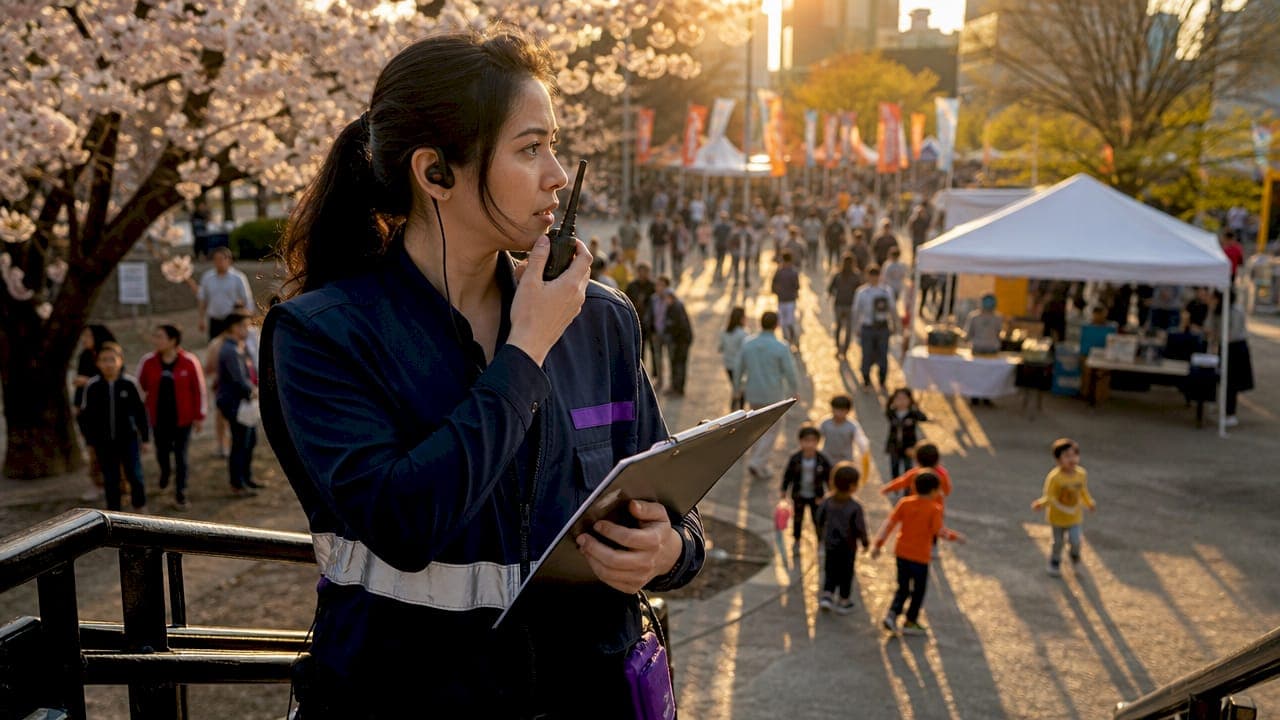
A safety officer at an event is the designated professional responsible for the overall health and safety management of the event environment. This role covers everything from pre-event risk assessments to real-time incident response on the day. In British Columbia, the role of safety officer at events is shaped by WorkSafeBC requirements and the B.C. OHS Regulation, which set clear obligations for employers and event organizers. Non-compliance carries serious consequences, including fines up to $798,867.87 per incident. Understanding what a safety officer does, and why the role matters, is the first step toward running a safer, legally compliant event in B.C.
What are the primary responsibilities of a safety officer at events?
The safety officer's responsibilities at events span planning, operations, and emergency response. The role is not limited to standing on-site and watching for hazards. It requires active coordination across every phase of the event.
Core duties include:
- Pre-event site inspections and risk assessments. The safety officer identifies physical hazards, crowd flow risks, and environmental conditions before the event opens. This includes reviewing venue layouts, access routes, and emergency exits.
- Developing a written health and safety plan. For events with 50 or more workers, or 20 or more workers in moderate to high-risk environments, B.C. OHS law requires a written program. The safety officer leads this process.
- Coordinating first aid and emergency response coverage. This includes confirming first aid attendant qualifications, positioning AED units, and working with providers like Fairsafe to match staffing levels to the event's risk profile.
- Overseeing crowd management and access control. The safety officer works with licensed security personnel to manage entry points, alcohol service zones, and high-density areas.
- Training and supervising temporary staff and volunteers. WorkSafeBC advises that temporary workers and volunteers are among the most vulnerable people at events and require targeted orientation and supervision before the event begins.
Pro Tip: Schedule a safety briefing for all temporary staff and volunteers at least 24 hours before the event. Last-minute orientations increase the likelihood of missed hazards and unclear emergency procedures.
The safety officer also holds responsibility for ensuring the event meets Special Event Permit requirements. In B.C., Form LCRB098 mandates documented plans for crowd control and liquor boundaries, emergency procedures, and guard deployment. The safety officer is the person who confirms these plans are in place and current before the permit is submitted.

How does a safety officer contribute to legal compliance and risk management?
Legal compliance is one of the most consequential parts of the safety officer's role at events in British Columbia. The B.C. OHS Regulation sets out specific obligations that event organizers must meet, and the safety officer is the person accountable for meeting them.
"A written OHS prevention program must identify hazards, assess risks, set prevention measures, and include emergency evacuation and incident reporting procedures. Without it, an employer has no documented defence in the event of a WorkSafeBC inspection or a workplace incident."
The financial stakes are significant. WorkSafeBC enforcement includes both administrative penalties and increased long-term WCB insurance premiums for employers with poor safety records. A single serious violation can affect an organization's insurance costs for years. The safety officer's documentation practices directly influence how these outcomes unfold.
| Compliance area | Safety officer's responsibility |
|---|---|
| Written OHS program | Required for 20–50+ workers depending on risk level |
| Special Event Permit (Form LCRB098) | Submit crowd control, liquor, and emergency plans |
| Incident documentation | Record timeline, participants, and actions taken |
| WorkSafeBC prime contractor duty | Confirm written OHS coordination agreements are in place |
| Staff training records | Maintain orientation and briefing records for all event workers |
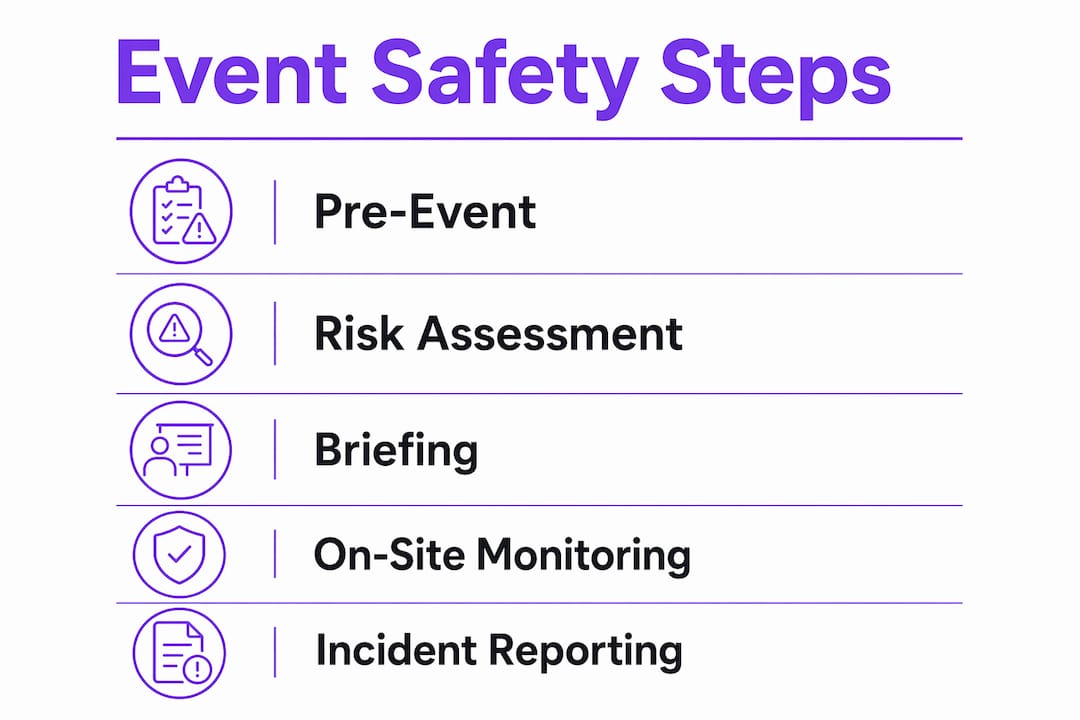
The prime contractor designation under WorkSafeBC places ultimate OHS coordination responsibility with the site owner or lead contractor. The safety officer supports this by maintaining written agreements and ensuring all contractors and subcontractors on-site follow the same safety programme. For large events in Metro Vancouver, Surrey, or Abbotsford, this coordination layer is not optional. It is a legal requirement.
Incident reporting is equally critical. Clear record keeping that captures the timeline, people involved, and actions taken protects the event organizer in the event of a liability claim or WorkSafeBC investigation. The safety officer owns this process from start to finish.
What practical steps do safety officers take on the day of an event?
Day-of responsibilities require the safety officer to shift from planning mode to active monitoring. The environment changes constantly, and the safety officer must respond in real time.
- Conduct a final walkthrough before doors open. Check all emergency exits, first aid stations, AED placements, and security posts. Confirm that licensed security guards are deployed at entry points, liquor zones, roving patrol routes, and emergency access routes.
- Monitor crowd flow at high-friction areas. Entrances, alcohol service zones, and stage fronts are the highest-risk locations at most events. The safety officer watches these areas for signs of overcrowding, aggressive behaviour, or blocked exits.
- Coordinate with first aid and security teams throughout the event. Regular radio check-ins with first aid attendants and security supervisors keep the safety officer informed of developing situations before they escalate.
- Respond to and document incidents in real time. When an incident occurs, the safety officer confirms that first aid is delivered, records the details immediately, and notifies the appropriate parties. Delayed documentation creates gaps that complicate insurance claims and WorkSafeBC reporting.
- Conduct a post-event debrief and final report. The safety officer reviews all incidents, near-misses, and observations with the event team. This report feeds directly into planning for future events and supports permit renewal applications.
Pro Tip: Assign a dedicated safety officer radio channel separate from general event communications. Mixed channels cause delays in emergency response, which is the one situation where seconds count.
The safety officer also manages the boundary between licensed security duties and volunteer or hospitality staff roles. Licensed security guards hold regulated responsibilities, including physical intervention, crowd control, and formal incident reporting. Volunteers and event staff cannot legally perform these functions. The safety officer enforces this boundary to protect both attendees and the organization.
How do safety officers collaborate with first aid and security services?
Effective event safety depends on defined roles and early communication between the safety officer, first aid providers, and licensed security teams. When these groups operate in silos, gaps appear, and those gaps become liability risks.
Key collaboration principles include:
- Start planning together early. Treating security planning as a last-minute formality is a major failure point that can delay or jeopardize event permits. The safety officer should bring first aid and security providers into the planning process at least four to six weeks before the event.
- Define roles in writing. First aid attendants handle medical care. Licensed security manages crowd control and physical intervention. The safety officer coordinates both and holds overall accountability. Written role definitions prevent confusion during incidents.
- Use incident reports to support permit compliance. Documented incident reports from first aid and security teams feed into the safety officer's overall event record. This documentation supports permit renewals and demonstrates due diligence to WorkSafeBC.
- Confirm first aid coverage matches the event's risk profile. A 200-person corporate dinner in Richmond has different first aid requirements than a 5,000-person outdoor festival in Langley. The safety officer confirms that staffing levels, equipment, and qualifications align with the actual risk. Fairsafe provides certified OFA attendants, Emergency Medical Responders, and event medics across the Lower Mainland and Fraser Valley, with equipment including AED units, oxygen equipment, and spinal supplies.
- Maintain open communication throughout the event. The safety officer serves as the central communication point between first aid, security, venue management, and emergency services. A clear communication protocol, established before the event, prevents delays when it matters most.
For cultural events and large public gatherings in B.C., this coordination layer is especially important. Multilingual crowds, complex venue layouts, and high attendance numbers increase the complexity of every safety decision the officer makes.
Key takeaways
The safety officer's role at events is the single most important factor in whether an event meets WorkSafeBC standards, protects attendees, and avoids serious legal and financial consequences.
| Point | Details |
|---|---|
| Written OHS programme is mandatory | Required for 20–50+ workers depending on risk level; the safety officer leads its development. |
| Compliance failures are costly | Non-compliance with B.C. OHS standards can result in penalties up to $798,867.87 per incident. |
| Early coordination prevents permit delays | Bring first aid and security providers into planning at least four to six weeks before the event. |
| Licensed security has defined legal duties | Only licensed guards can perform physical intervention and formal crowd control at B.C. events. |
| Documentation protects the organizer | Incident records support WorkSafeBC reporting, insurance claims, and permit renewals. |
What I've learned about event safety officers after years in B.C. workplaces
The most common mistake I see event organizers make is treating the safety officer role as a checkbox. They hire someone to satisfy a permit requirement, hand them a vest, and assume the job is done. That approach fails every time.
The safety officers who actually protect events are the ones who show up to the venue walkthrough weeks before the event, not hours before doors open. They ask uncomfortable questions about crowd capacity, alcohol service ratios, and emergency vehicle access. They push back when the venue layout creates a bottleneck near the main exit. That kind of proactive engagement is what separates a well-run event from one that ends with a WorkSafeBC investigation.
The regulatory environment in B.C. has also become more demanding. The combination of WorkSafeBC enforcement, Special Event Permit requirements, and the prime contractor designation means that safety officers now carry more documented accountability than they did five years ago. That is not a burden. It is a professional opportunity. Safety officers who build strong documentation habits and maintain relationships with certified first aid and safety providers become genuinely indispensable to event organizers.
My strongest advice is this: do not wait until the permit application to think about safety staffing. The best outcomes come from early engagement, clear role definitions, and a first aid provider who understands the specific demands of event work in British Columbia.
— FAIR A. R.
Fairsafe supports event safety officers across British Columbia
Event safety officers need reliable partners, not last-minute scrambles. Fairsafe provides certified first aid and safety temp staff for events across Metro Vancouver, the Lower Mainland, and the Fraser Valley, with WorkSafeBC registration and commercial liability insurance included.

Whether you need a single OFA attendant for a small corporate function in Burnaby or a full medical team for a large outdoor festival in Abbotsford, Fairsafe matches qualified staff to your event's specific risk profile. Our team includes certified OFA Level 3 attendants, Emergency Medical Responders, and event medics, with equipment such as AED units, oxygen supplies, and spinal gear available on request. Visit Fairsafe's event safety services to confirm staffing availability and get a quote for your next event.
FAQ
What is the role of a safety officer at events?
A safety officer at an event is responsible for overall health and safety management, including risk assessments, emergency response coordination, staff training, and regulatory compliance under WorkSafeBC and the B.C. OHS Regulation.
When is a written OHS programme required for an event in B.C.?
A written OHS programme is required when an event employs 50 or more workers, or 20 or more workers in a moderate to high-risk environment, as set out under B.C. OHS law.
What are the financial penalties for OHS non-compliance at events in B.C.?
Failing to meet B.C. OHS standards can result in administrative penalties up to $798,867.87 per incident, plus increased long-term WCB insurance premiums for the employer.
What is the difference between a safety officer and a licensed security guard at an event?
A safety officer manages overall health and safety planning and compliance. Licensed security guards hold regulated duties including physical intervention, crowd control, and formal incident reporting. Volunteers and event staff cannot legally perform security functions.
How early should a safety officer engage with first aid and security providers?
The safety officer should bring first aid and security providers into the planning process at least four to six weeks before the event. Late coordination is a leading cause of permit delays and coverage gaps on event day.