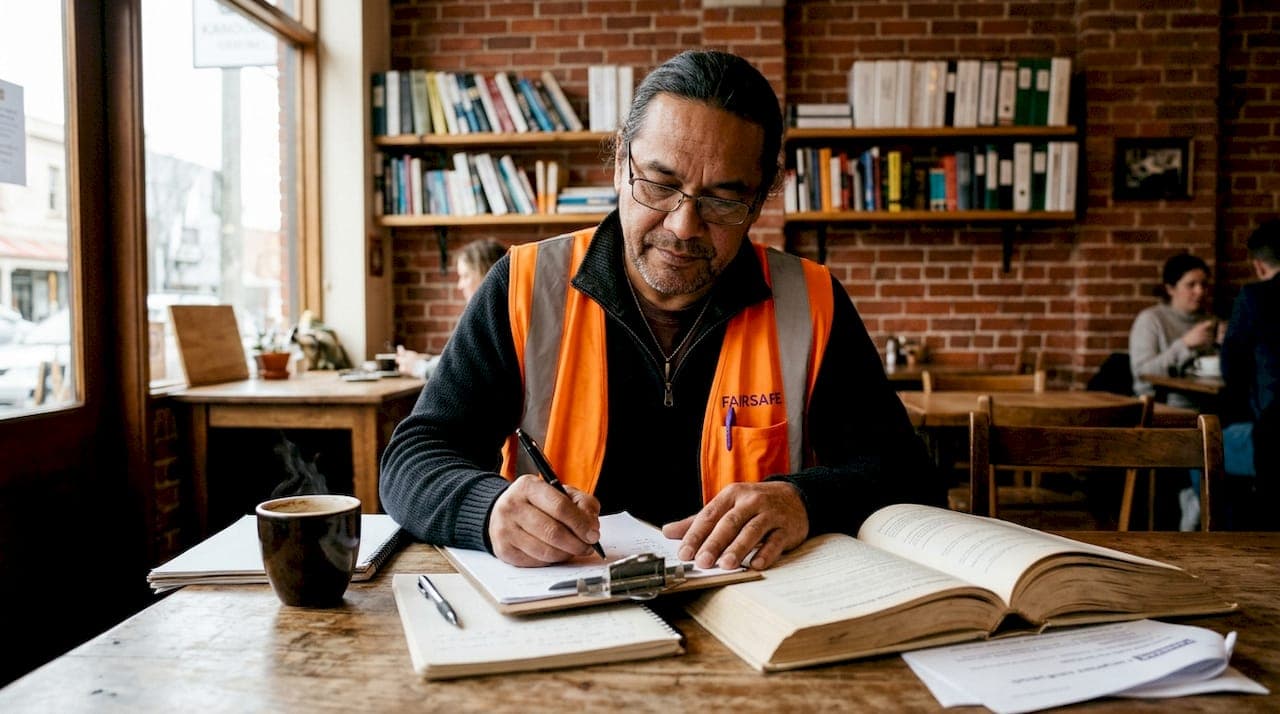
Safety personnel are defined as the individuals responsible for ensuring that workplace health and safety regulations are understood, implemented, and maintained across every level of an organisation. The role of safety personnel in compliance goes far beyond posting signs or handing out hard hats. Under the B.C. OHS Regulation and WorkSafeBC requirements, safety staff carry legal weight. Administrative penalties in British Columbia can exceed $780,000 for non-compliance in 2026. That figure makes the importance of safety personnel impossible to ignore for any employer operating in Metro Vancouver, the Fraser Valley, or anywhere across the province.
What are the core duties of safety personnel in ensuring regulatory compliance?
Safety personnel carry out the day-to-day compliance duties that keep a workplace legally protected and physically safe. Their job functions span training, inspection, documentation, and incident response. Each function connects directly to the B.C. OHS Regulation and CSA standards that WorkSafeBC enforces.
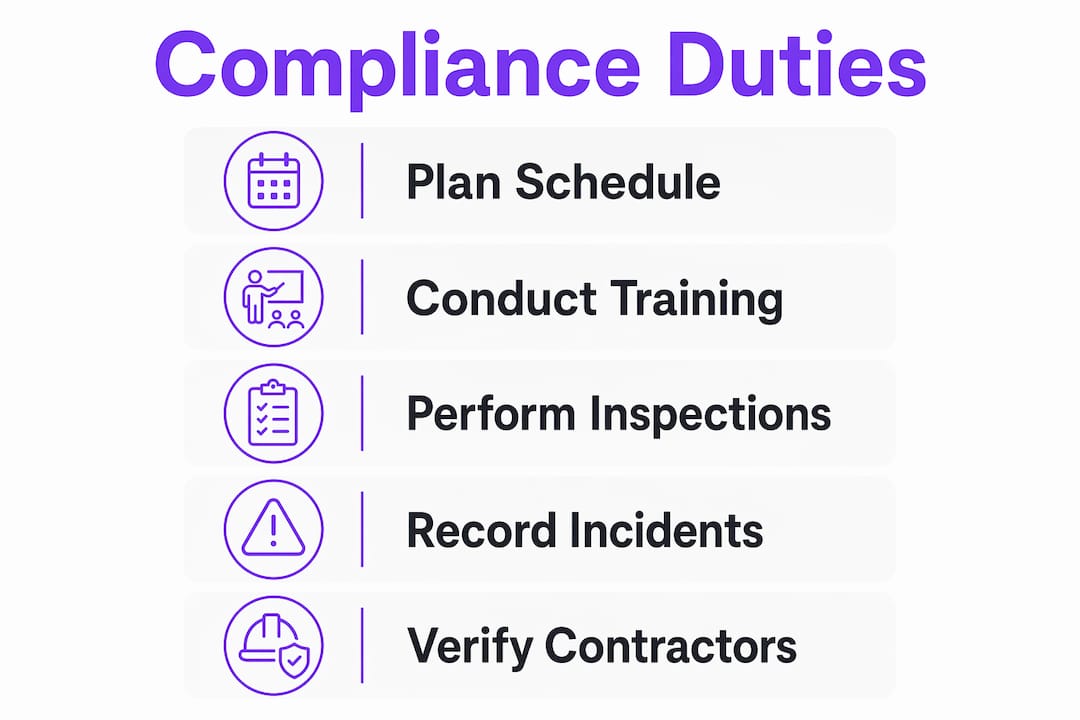
The compliance duties of safety staff fall into five core areas:
- Training and competency verification. Canadian OHS acts require employers to assign tasks only to competent workers before work begins. Safety personnel verify that workers are adequately trained, qualified, and experienced for each task. Inspectors specifically target mandatory orientation failures, and a single gap can trigger a stop-work order.
- Workplace inspections and audits. Safety officers conduct scheduled and unannounced inspections to identify hazards before they cause harm. They document findings, assign corrective actions, and track completion. This cycle is the backbone of any compliant safety programme.
- Incident investigation and corrective action. When an incident occurs, safety personnel lead the investigation to find root causes, not just surface causes. They produce written reports and implement corrective measures that prevent recurrence.
- Safety documentation and records management. Inspection logs, training records, and corrective action evidence are the primary proof of compliance during a WorkSafeBC audit. Lack of such records means, legally, that the controls did not occur. Safety personnel own this paper trail.
- Regulatory alignment. Safety officers monitor updates to WorkSafeBC regulations, the B.C. OHS Regulation, and CSA standards. They translate regulatory changes into updated procedures and communicate those changes to supervisors and workers.
Pro Tip: Build a compliance calendar that ties each safety duty to a specific date and responsible person. A calendar turns abstract obligations into concrete tasks and makes it far easier to demonstrate due diligence during a WorkSafeBC inspection.
How do safety personnel collaborate with supervisors and management to maintain compliance?

Safety personnel do not own compliance alone. Effective compliance requires clear role boundaries between safety staff, supervisors, and senior management. Blurring those boundaries creates gaps that WorkSafeBC inspectors find quickly.
The safety hierarchy for site officers shows how each level carries distinct legal obligations. Here is how those obligations break down in practice:
- Supervisors act as legal agents. Under Canadian OHS law, supervisors are legal agents of the employer. Their lack of competency training creates direct legal liability. A supervisor who cannot articulate the specific hazards on their site or explain their authority to stop unsafe work is a compliance liability waiting to surface.
- Supervisors maintain daily operational control. Safety personnel design systems and conduct audits, but supervisors enforce controls on the floor every shift. Safety personnel design; supervisors maintain daily controls. This division is not optional. It is the structure that prevents single points of failure.
- Safety personnel advise, audit, and design. Safety officers advise supervisors on hazard controls, audit whether those controls are working, and redesign systems when gaps appear. They are the technical authority, not the operational enforcer.
- Management resources and enforces policy. Senior management sets the budget for training, equipment, and staffing. Without management commitment, safety personnel cannot fulfil their compliance duties. Management also enforces consequences when supervisors or workers fail to follow safety procedures.
- Avoid unclear role definitions. When safety personnel take on operational enforcement because supervisors are disengaged, the safety programme becomes a single point of failure. Inspectors detect this pattern and treat it as a systemic compliance failure, not an individual one.
The most common pitfall in B.C. construction and industrial worksites is a safety officer who is doing everything while supervisors do nothing. That arrangement fails the moment the safety officer is absent.
What are best practices for safety personnel to ensure ongoing compliance?
Ongoing compliance requires systems, not heroics. Safety personnel who rely on memory, goodwill, or informal agreements will eventually face a WorkSafeBC inspection that exposes the gaps.
The following practices build a compliance programme that holds up under scrutiny:
- Schedule regular training refreshers. Worker competency degrades over time without reinforcement. Quebec's benchmark of up to 240 hours of paid certified training for worker safety representatives illustrates how seriously high-performing organisations treat ongoing education. B.C. employers should treat training as a recurring operational cost, not a one-time expense.
- Document everything with specificity. A training record that says "safety training completed" is nearly worthless in court. Records must name the worker, the topic, the date, the trainer, and the outcome. Due diligence requires practical evidence of training, supervision, and follow-through.
- Assign corrective actions with deadlines and owners. Every hazard identified in an inspection must be assigned to a named person with a completion date. Unassigned corrective actions are the most common documentation failure safety personnel make.
- Engage workers in hazard reporting. Workers who report hazards early prevent incidents. Safety personnel should create a reporting process that is simple, anonymous if needed, and visibly acted upon. Workers stop reporting when they see nothing change.
- Conduct gap assessments before inspections. A self-audit against the B.C. OHS Regulation and CSA standards, conducted quarterly, identifies weaknesses before a WorkSafeBC officer does. See the industrial safety deployment guide for a structured approach to gap assessments across industrial worksites.
Pro Tip: Create a "compliance snapshot" document that summarises your current training completion rates, open corrective actions, and last inspection date. Update it monthly. This single document can answer most questions a WorkSafeBC inspector will ask within the first five minutes of an audit.
The table below shows how each best practice maps to a specific compliance outcome:
| Best practice | Compliance outcome |
|---|---|
| Regular training refreshers | Maintains worker competency and satisfies WorkSafeBC orientation requirements |
| Specific documentation | Provides court-admissible evidence of due diligence |
| Named corrective action owners | Closes hazard loops and demonstrates follow-through |
| Worker hazard reporting | Surfaces risks early and builds a participatory safety culture |
| Quarterly gap assessments | Identifies regulatory weaknesses before a formal inspection |
How does contractor safety fit into the compliance role?
Contractor oversight is one of the most under-managed compliance duties of safety staff on B.C. construction and industrial sites. Many employers believe that collecting a contractor's insurance certificate and safety policy satisfies their obligation. It does not.
Collecting insurance and safety policies is insufficient. Competence-first verification, including direct observation and field audits, is required to prove contractor compliance. A contractor whose workers cannot demonstrate safe work procedures on site is a liability for the prime employer, regardless of what paperwork was submitted at the gate.
Safety personnel must verify contractor competence through direct observation, not just paperwork review. They must also align emergency procedures and hazard controls between the prime employer and all contractors on site. When multiple contractors work simultaneously, safety personnel coordinate communication so that no hazard falls between the cracks of two separate safety programmes.
The table below compares a paperwork-only approach to a competence-first approach:
| Verification method | What it proves | What it misses |
|---|---|---|
| Paperwork only (certificates, policies) | Administrative compliance | Actual worker competence on site |
| Competence-first (field audits, observation) | Real-world safe work practices | Nothing. This is the standard required. |
Regulatory trends in B.C. are moving toward greater accountability for prime employers when contractor workers are injured. Safety personnel who build field audit habits now will be ahead of enforcement changes that are already underway.
Key takeaways
Safety personnel are the operational backbone of workplace compliance, and their effectiveness depends on clear role boundaries, thorough documentation, and direct verification of competence at every level.
| Point | Details |
|---|---|
| Role clarity prevents failure | Safety personnel design systems; supervisors enforce daily controls. Blurring this boundary creates single points of failure. |
| Documentation is legal evidence | Inspection logs, training records, and corrective action files are the primary proof of due diligence in a WorkSafeBC audit. |
| Supervisor competency is a legal obligation | Supervisors are legal agents under Canadian OHS law; their training gaps create direct employer liability. |
| Contractor verification requires field audits | Paperwork alone does not prove contractor competence. Direct observation is required to meet the compliance standard. |
| Ongoing training sustains compliance | Competency degrades without refreshers. Regular, documented training keeps workers and the organisation legally protected. |
Why I think most organisations are getting the safety role wrong
The most persistent mistake I see in B.C. workplaces is treating the safety officer as the sole owner of compliance. The safety officer writes the programme, conducts the inspections, files the reports, and then wonders why nothing changes on the floor. Supervisors stay disengaged because they have learned that someone else will handle it.
That model fails the moment the safety officer is off site. WorkSafeBC inspectors know this pattern. When they interview a supervisor and that supervisor cannot name the specific hazards on their own site, the investigation shifts from individual to systemic. The employer faces penalties not because the safety officer failed, but because the organisation never built real operational ownership.
The fix is not more paperwork. The fix is construction safety compliance built into the supervisor's daily routine, with safety personnel in the auditing seat rather than the enforcement seat. Safety personnel who coach supervisors rather than replace them build programmes that survive absences, turnover, and inspections.
Competence-first verification is the other shift that matters. Certificates tell you what someone was taught. Field observation tells you what they actually do. The gap between those two things is where incidents happen.
— FAIR A. R.
Fairsafe supports your compliance programme across BC
Employers across Metro Vancouver, the Fraser Valley, and the Lower Mainland trust Fairsafe to fill the gaps in their safety and first aid coverage quickly and reliably.
Fairsafe supplies certified Occupational First Aid attendants, OFA Level 3 attendants, Emergency Medical Responders, and construction safety personnel for construction sites, industrial projects, events, and film productions. Every Fairsafe worker is selected to match the qualifications your worksite or event requires under WorkSafeBC regulations. Whether you need a single attendant for a last-minute shift or a full safety team for a multi-week project, Fairsafe provides first aid and safety coverage that keeps your programme compliant and your workers protected. Contact Fairsafe at fairsafe.ca to discuss your coverage needs.
FAQ
What is the role of safety personnel in compliance?
Safety personnel are responsible for implementing health and safety regulations, conducting inspections, verifying worker competency, and maintaining the documentation that proves due diligence. Their compliance duties span training, auditing, incident investigation, and regulatory alignment.
Are supervisors responsible for safety compliance in BC?
Yes. Under Canadian OHS law, supervisors are legal agents of the employer, and their competency gaps create direct employer liability. Safety personnel advise and audit, but supervisors hold daily operational responsibility for enforcing hazard controls.
What documentation do safety personnel need to maintain?
Safety personnel must maintain inspection logs, training records, corrective action files, and incident investigation reports. Lack of these records means, legally, that the controls did not occur, which removes the employer's due diligence defence.
Is a contractor's insurance certificate enough to prove compliance?
No. Collecting insurance and safety policies is insufficient to prove contractor compliance. Competence-first verification, including direct field observation and audits, is required to demonstrate that contractor workers can perform their tasks safely.
How often should safety training be refreshed?
Training should be refreshed regularly, with frequency based on task risk, regulatory requirements, and worker turnover. Competency degrades over time, and WorkSafeBC inspectors target mandatory orientation failures as a primary enforcement area.