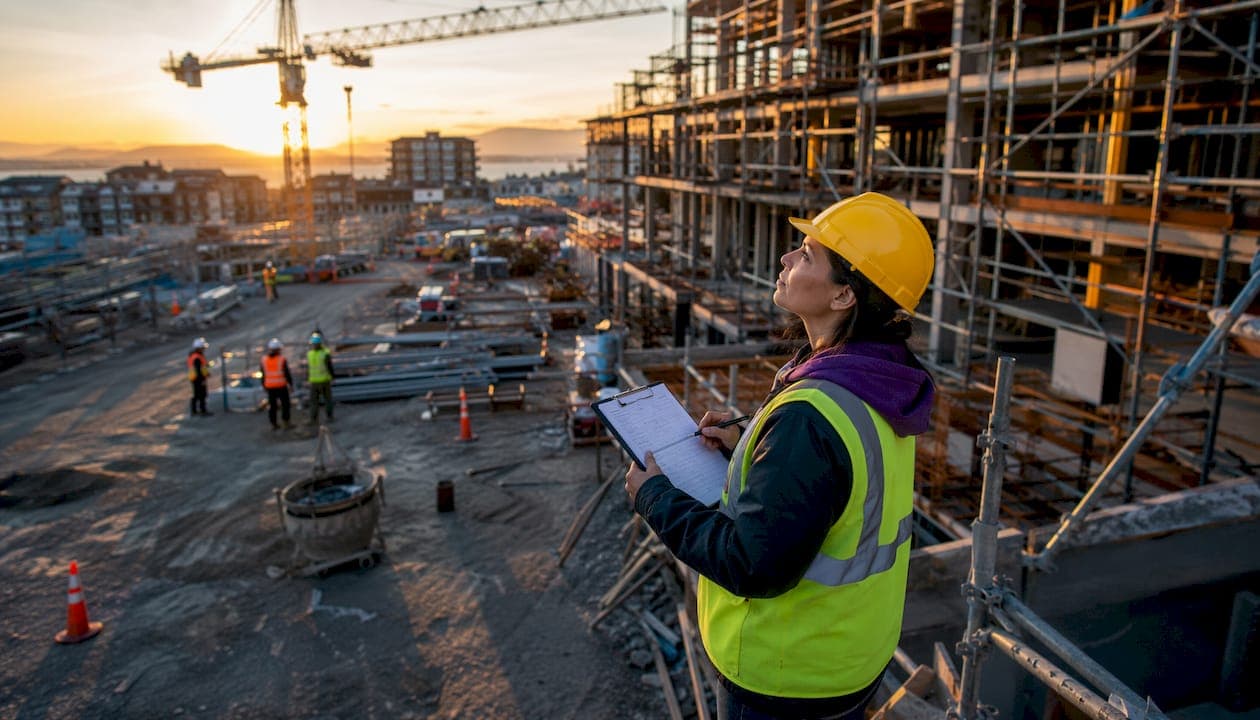
Construction fatality prevention is the systematic process of identifying, controlling, and eliminating life-threatening hazards on construction sites before they cause irreversible harm. In British Columbia, this process is governed by the B.C. OHS Regulation and enforced by WorkSafeBC, making it both a legal obligation and a moral responsibility for every employer. Construction fatality prevention explained properly means going beyond generic safety checklists. It means targeting the specific hazards that kill workers, building site cultures where stopping unsafe work is expected, and maintaining emergency readiness at every stage of a project.
Construction fatality prevention explained: what the data tells us
Construction remains one of the most hazardous industries in B.C., despite measurable progress. The injury rate fell 25% over the past decade, yet the sector still recorded 174 fatalities between 2021 and 2025, with 38,000 accepted claims including 7,400 serious injuries and costs exceeding $1.3 billion. Progress is real, but the numbers confirm that construction work carries life-or-death consequences every day.
The industry term for this discipline is "occupational fatality prevention," and it sits within the broader framework of occupational health and safety (OHS) management. Fatality prevention differs from general injury reduction in one critical way: it targets the small category of hazards with catastrophic potential, not just the everyday incidents that fill claim forms. A sprained wrist and a fatal fall from a scaffold are not the same problem, and they require different solutions.
WorkSafeBC data from 2025 shows 138 work-related deaths across all B.C. industries, with 41 caused by traumatic injuries such as falls and struck-by incidents, and 79 attributed to occupational diseases including asbestos exposure. That split matters. It tells employers that fatality prevention programmes must address both acute physical hazards and long-term disease exposures simultaneously.
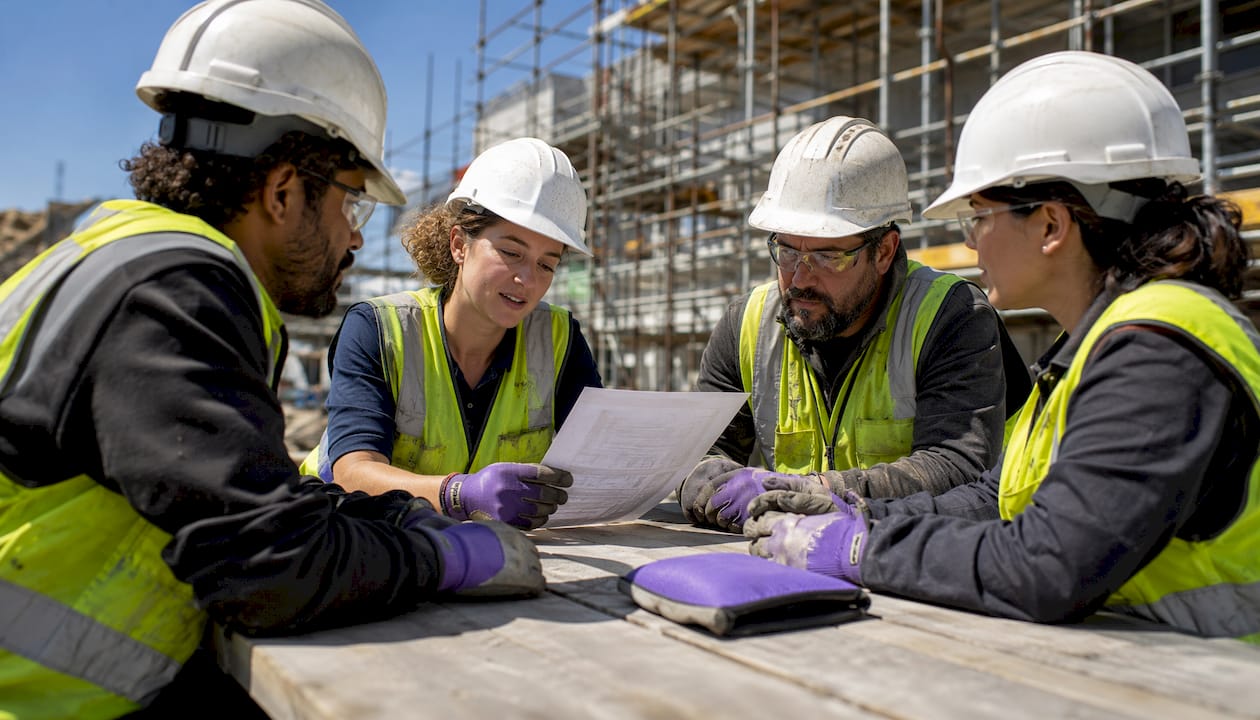
What are the leading causes of fatalities on B.C. construction sites?
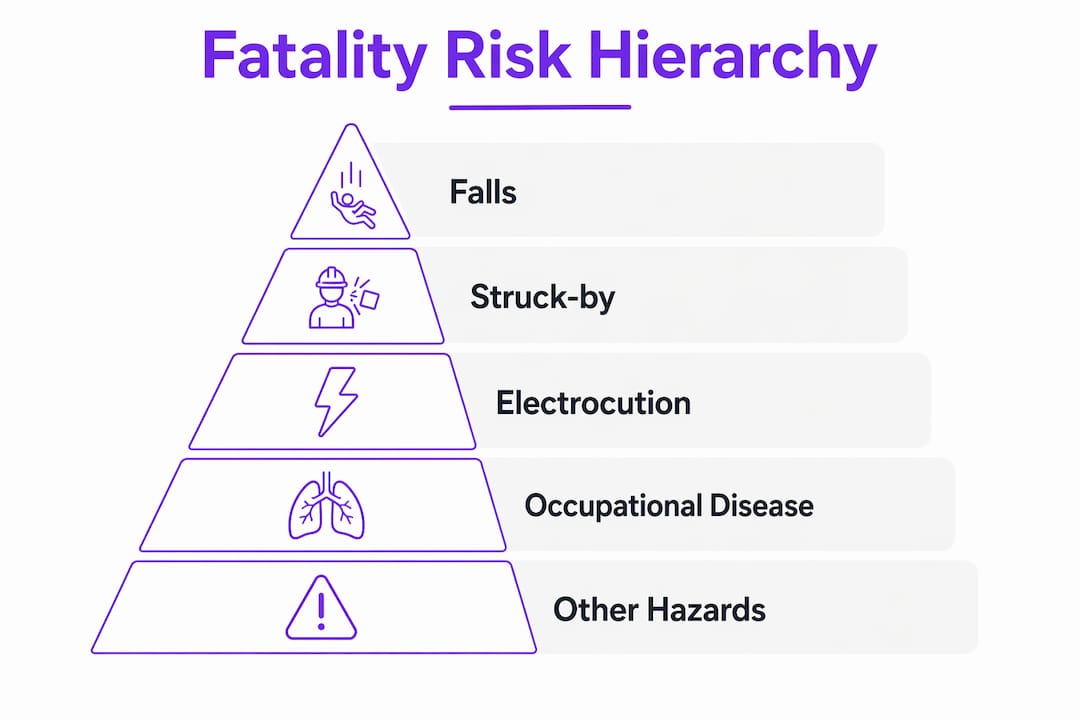
Four hazard categories account for the overwhelming majority of construction fatalities in B.C.
- Falls from heights. Falls remain the single leading cause of traumatic fatalities on construction sites. Unprotected edges, unsecured ladders, and improper scaffold assembly are the most common contributing factors.
- Struck-by incidents. Workers struck by vehicles, swinging loads, or falling objects represent the second major category. Heavy equipment operators have significant blind spots, and workers on foot must maintain eye contact or use designated spotters with hand signals to avoid these incidents. High-visibility garments alone do not guarantee operator awareness.
- Caught-in and trapped hazards. Trench collapses, unguarded machinery, and pinch points between equipment and fixed structures cause a smaller but consistent share of fatalities each year.
- Occupational disease. Asbestos exposure is the leading occupational disease killer in B.C. construction. Renovation and demolition work on pre-1990 buildings carries the highest risk, and the consequences appear decades after exposure.
The 2025 WorkSafeBC data reinforces a pattern that safety professionals in the Lower Mainland and Fraser Valley have observed for years: 134 of 138 deaths recorded in B.C. were men, reflecting the demographic reality of construction and industrial work. That concentration of risk in one workforce group strengthens the case for targeted, site-specific prevention rather than broad awareness campaigns.
| Hazard category | Primary mechanism | Key prevention control |
|---|---|---|
| Falls from heights | Unprotected edges, scaffold failures | Guardrails, fall arrest systems, written plans |
| Struck-by incidents | Equipment blind spots, falling objects | Spotters, hand signals, exclusion zones |
| Caught-in/trapped | Trench collapse, unguarded machinery | Shoring, machine guarding, lockout/tagout |
| Occupational disease | Asbestos, silica, chemical exposure | Hazmat assessments, licensed abatement, PPE |
How do B.C. regulations govern worksite fatality prevention?
The B.C. OHS Regulation sets the legal floor for construction safety measures in the province. Understanding these requirements is the starting point for any prevention programme.
- Fall protection at 3 metres and above. Fall protection is mandatory for work at heights of 3 metres or more, and at lesser heights when the risk of injury is significant. This threshold is lower than many employers assume, and it applies to roofing, formwork, steel erection, and scaffold work across Metro Vancouver and the rest of B.C.
- Written fall protection plans. A written fall protection plan must be prepared before work begins at height. The plan must identify the hazards, the controls selected, and the rescue procedures if a worker is suspended in a harness.
- Prime contractor and employer duties. On multi-employer sites, the prime contractor holds overall responsibility for coordinating safety. Each employer retains responsibility for their own workers. Gaps in this coordination are a documented contributor to fatalities on large projects in the Lower Mainland.
- Asbestos abatement licensing. Work involving asbestos requires a licensed abatement contractor and a WorkSafeBC-approved exposure control plan. Unlicensed disturbance of asbestos-containing materials is both illegal and a direct cause of long-term fatal disease.
- WorkSafeBC inspection and enforcement. WorkSafeBC inspections drive meaningful improvements in onsite hazard controls when followed by proper enforcement. Employers who treat inspections as a compliance event rather than a learning opportunity miss the full benefit.
Pro Tip: Review the construction safety hierarchy for your site before writing a fall protection plan. The hierarchy determines which controls to select first, and regulators expect to see that logic documented.
The B.C. OHS Regulation also requires employers to investigate serious incidents and near misses. That requirement exists because close-call data is the most reliable predictor of future fatalities. Sites that suppress near-miss reporting to protect their safety statistics are operating blind.
What practical strategies reduce fatality risks on construction sites?
Reducing everyday minor injuries does not automatically reduce fatalities. The BCCSA advises that prevention must focus on high-risk activities such as work at heights, heavy equipment operation, and trenching, using strong controls and learning from close calls. That distinction separates effective fatality prevention from programmes that look good on paper but miss the hazards that kill.
Pre-task planning that workers actually use
Pre-task planning works best when it is simple. A checklist that fits on one page encourages use, promotes critical thinking, and avoids box-ticking. Workers complete it collaboratively at the start of each shift, identifying the specific hazards for that day's tasks. The result is a living document, not a filing exercise.
Worker involvement in hazard identification is not a courtesy. Workers have the most direct knowledge of site-specific hazards, and their input produces more effective prevention programmes than top-down assessments alone. Improved construction safety management practices, including worker involvement and psychological safety, have measurably reduced injury rates over the past decade in B.C.
Engineering controls before personal protective equipment
The hierarchy of controls places engineering solutions above personal protective equipment (PPE) for good reason. Guardrails prevent falls entirely. Harnesses arrest falls after they begin. Harness fall arrest is not a substitute for guardrails; it is a last resort when guardrails are not practicable. Rescue procedures must also be established before fall arrest work begins, because suspension trauma can incapacitate a worker within minutes of harness arrest.
For struck-by hazards, physical exclusion zones around heavy equipment are more reliable than high-visibility vests. Spotters with clear hand signals and direct eye contact with operators are the standard that WorkSafeBC expects on active sites in Surrey, Burnaby, Abbotsford, and across the province.
Supervision, auditing, and stop-work authority
Supervisors should audit hazard assessments by physically verifying controls on site, not just reviewing documents in a site trailer. A supervisor who walks the work area and confirms that guardrails are installed and equipment exclusion zones are marked is performing the function that prevents fatalities. Document review alone does not.
Every worker on a B.C. construction site has the right to refuse unsafe work under the B.C. OHS Regulation. Stop-work authority is most effective when site leadership actively reinforces it. When workers see a supervisor respond to a stop-work call with support rather than frustration, the culture shifts toward prevention.
Pro Tip: Build a close-call log into your weekly safety meeting agenda. Reviewing near misses as a team, without blame, is one of the most cost-effective fatality prevention tools available to any construction employer.
How does first aid readiness support fatality prevention on construction sites?
First aid readiness is a direct component of fatality prevention in construction. When a fall or struck-by incident occurs, the speed and quality of the initial response determines whether a worker survives. WorkSafeBC sets occupational first aid (OFA) requirements based on the number of workers, the distance from hospital, and the hazard level of the work.
Key first aid requirements for construction employers in B.C. include:
- OFA Level certification matching site hazard level. High-hazard construction sites require OFA Level 3 attendants. Lower-hazard or smaller sites may require OFA Level 1 or 2. The specific requirement depends on the WorkSafeBC assessment table.
- On-site first aid attendants during all working hours. A certified attendant must be present whenever workers are on site. Gaps in coverage, such as during shift changes or when the attendant is off site, create unacceptable risk.
- Rescue procedures integrated with fall arrest plans. Any site using fall arrest harnesses must have a documented rescue plan and trained personnel capable of executing it. Suspension trauma is a medical emergency, and calling 911 is not a rescue plan.
- Coordination with emergency services. Remote or large sites in the Fraser Valley or Interior B.C. require pre-planned coordination with local emergency services, including site access routes and GPS coordinates for first responders.
- Site-specific first aid equipment. AED units, oxygen equipment, spinal equipment, and patient assessment supplies must match the hazards present. A site with heavy equipment and work at heights needs more than a basic first aid kit.
Fairsafe provides certified OFA Level 3 attendants, Emergency Medical Responders, and construction safety personnel to construction employers across Metro Vancouver, the Lower Mainland, and the Fraser Valley. When a regular attendant is absent or a project requires additional coverage, Fairsafe delivers qualified first aid temp workers quickly and without the delays common to larger staffing agencies.
Key takeaways
Construction fatality prevention requires targeting the specific hazards that kill workers, not just reducing the volume of minor injuries across a site.
| Point | Details |
|---|---|
| Target high-risk hazards first | Focus prevention efforts on falls, struck-by incidents, trenching, and occupational disease exposures. |
| Meet B.C. OHS Regulation requirements | Written fall protection plans, licensed asbestos abatement, and prime contractor coordination are legal obligations. |
| Use engineering controls before PPE | Guardrails prevent falls; harnesses only arrest them. Select controls in hierarchy order and document the rationale. |
| Involve workers in hazard identification | Workers identify site-specific risks more accurately than supervisors reviewing documents alone. |
| Maintain first aid readiness at all times | OFA-certified attendants, rescue plans, and site-matched equipment are required components of a prevention programme. |
What I've learned about the gap between policy and practice on B.C. sites
The most dangerous construction sites I have encountered are not the ones with no safety programme. They are the ones with an excellent safety programme on paper and a completely different reality on the ground. The fall protection plan is filed. The pre-task checklist is signed. The guardrail is missing.
That gap exists because safety systems are often designed to satisfy an inspection, not to prevent a fatality. Supervisors who treat audits as a documentation exercise rather than a physical verification step are the single biggest point of failure I see on multi-employer projects in the Lower Mainland. Coordination between prime contractors and subcontractors on large sites is where accountability gets lost, and that is precisely where fatalities cluster.
Worker engagement is the variable that separates sites with genuine safety cultures from sites that perform safety. When a labourer on a Burnaby high-rise feels confident enough to stop work because a guardrail is missing, and knows the superintendent will back that decision, the site is operating the way the B.C. OHS Regulation intends. Building that confidence takes consistent leadership, not a poster on the site trailer wall.
The 25% reduction in B.C. construction injury rates over the past decade is real progress. It should not make employers complacent. With 174 fatalities in four years, the work is far from finished.
— FAIR A. R.
Fairsafe supports B.C. construction employers with first aid and safety coverage
Construction schedules change without warning. A certified first aid attendant calls in sick the morning a concrete pour begins. A project expands and the existing OFA coverage no longer meets WorkSafeBC requirements. These are the situations where having a reliable local provider matters.
Fairsafe provides certified OFA Level 3 attendants, Advanced First Aid attendants, and construction safety personnel to employers across Metro Vancouver, the Lower Mainland, Surrey, Langley, Abbotsford, and the Fraser Valley. Our staff are WorkSafeBC compliant, and we can provide a clearance letter when required. Whether you need single-shift coverage or a long-term safety team for a large project, Fairsafe responds quickly and matches qualified workers to your site's specific hazard level. Contact Fairsafe at fairsafe.ca to discuss your construction first aid and safety staffing needs.
FAQ
What is construction fatality prevention?
Construction fatality prevention is the systematic process of identifying and controlling hazards that can cause worker deaths, including falls, struck-by incidents, trenching collapses, and occupational disease exposures. It differs from general injury prevention by targeting the specific, high-consequence hazards that kill rather than just reducing claim volumes.
What height requires fall protection in B.C.?
Fall protection is mandatory in B.C. for work at heights of 3 metres or more, and at lesser heights when the risk of injury is significant under the B.C. OHS Regulation. A written fall protection plan must be completed before work begins.
What are the most common causes of construction fatalities in B.C.?
Falls from heights, struck-by incidents involving heavy equipment, and occupational diseases such as asbestos exposure are the leading causes of construction fatalities in B.C. WorkSafeBC recorded 41 traumatic injury deaths and 79 occupational disease deaths across all B.C. industries in 2025.
What OFA level is required on a B.C. construction site?
The required OFA level depends on the number of workers, the distance from hospital, and the hazard classification of the work under WorkSafeBC's occupational first aid requirements. High-hazard construction sites typically require an OFA Level 3 attendant on site during all working hours.
How does worker involvement reduce construction fatalities?
Workers have direct knowledge of site-specific hazards that supervisors and safety managers often miss. Involving workers in pre-task planning and hazard identification produces more accurate risk assessments and stronger controls, which is a documented contributor to B.C.'s 25% reduction in construction injury rates over the past decade.