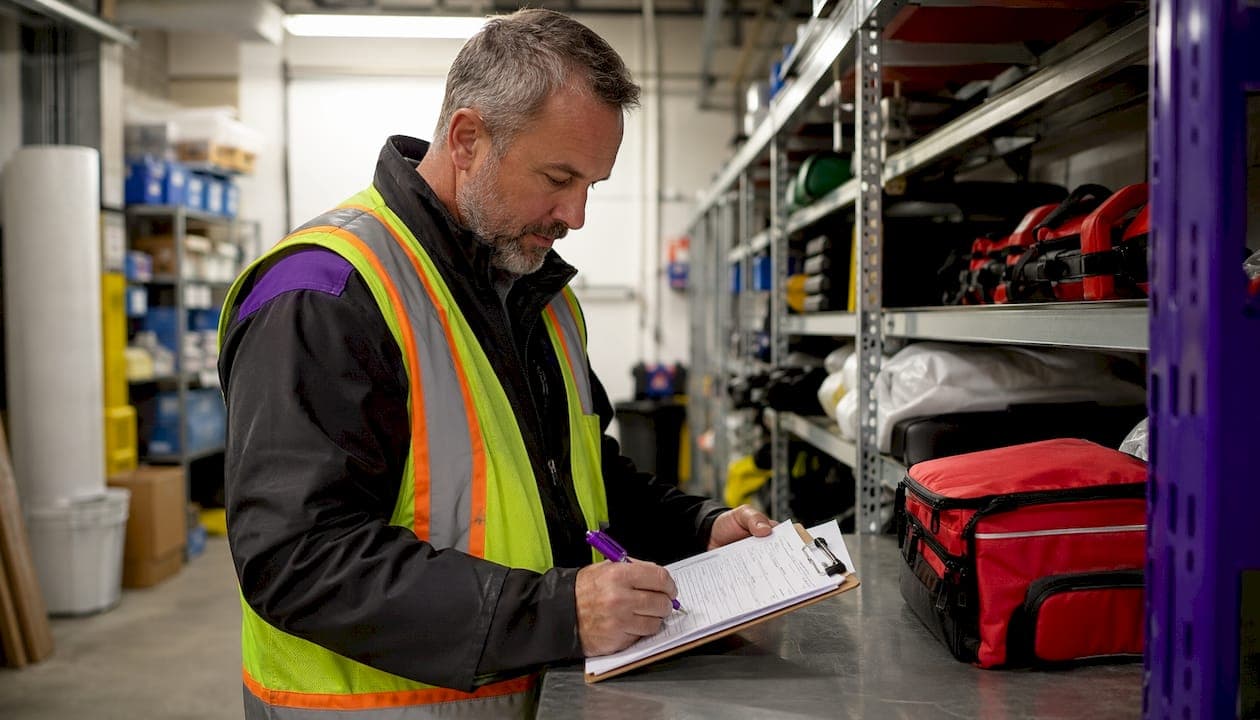
Deploy compliant temporary first aid coverage at your BC industrial or construction site by completing three actions before the first shift: confirm your Schedule 3‑A minimum requirements, assess site barriers that may raise those minimums, and contract a vetted First Aid Temp Agency with verified equipment and clear handover documentation.
Step 1 — Confirm your Schedule 3‑A inputs. Pull three numbers: maximum workers on site, your assigned hazard rating, and your workplace class (accessible, less accessible, or remote). WorkSafeBC's Schedule 3‑A tables convert those inputs into a required kit level, attendant certification (OFA Level 1, Level 3, or EMR), and whether emergency transport is mandatory.
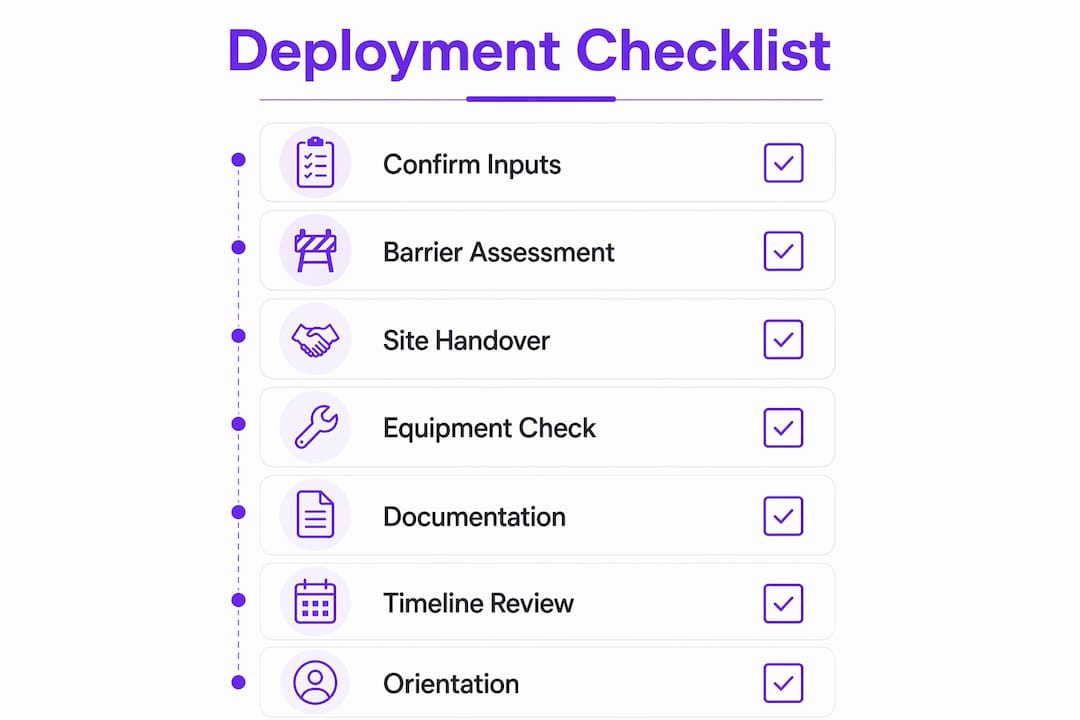
Step 2 — Assess barriers and raise minimums where needed. Under Section 3.16, meeting Schedule 3‑A is necessary but not sufficient. If ambulance response normally exceeds 30 minutes, your site is classified remote and minimums increase. Locked gates, heavy equipment traffic, and multi-level structures are barriers that can push a Level 1 minimum to a Level 3 requirement in practice.
Step 3 — Vet your First Aid Temp Agency. Before signing, confirm:
- Valid WorkSafeBC clearance letter
- Current OFA Level 1, OFA Level 3, Advanced First Aid, or EMR certification matching your Schedule 3‑A requirement
- Equipment verified compliant with post‑November 1, 2024 OHS amendments — a legacy kit is not acceptable at audit
- Commercial general liability and professional liability insurance
- References from comparable industrial or construction sites
Step 4 — Complete the site handover before the first shift. Written first aid procedures must name the attendant, state their authority to direct care, and confirm transport arrangements and prearranged routes. If air transport is possible, provide GPS coordinates and radio frequencies. This handover is a frequent audit point and should be written into the temp contract.
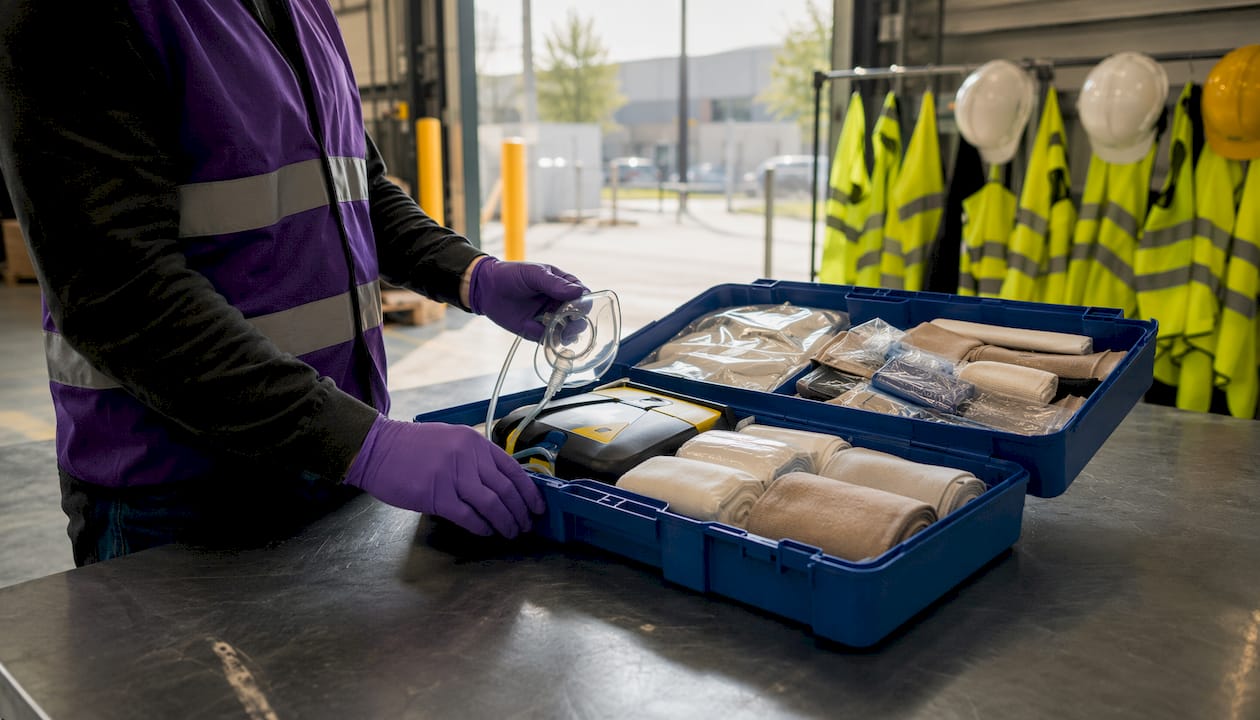
Step 5 — Verify equipment by OFA level. Minimum kit type, AED presence, oxygen equipment, spinal boards, and patient assessment supplies all vary by attendant level. Confirm the temp provider's kit against your site requirement before the attendant arrives, not after.
Step 6 — Lock in documentation. Your written first aid assessment must record worker counts, hazard rating, barriers, transport timing, and the joint committee or worker representative consulted. Treatment records must be retained for at least three years. Assign record-keeping responsibility in the contract, and include a clause requiring the temp to transfer all notes if they leave mid-engagement.
Step 7 — Confirm timeline and cost checkpoints. Discuss minimum shift lengths, standby charges, and emergency transport vehicle (ETV) costs before booking. For short-notice temp staffing, confirm the provider's response time in writing. Scheduling gaps are one of the most common causes of compliance lapses on multi-shift industrial sites; reviewing common scheduling challenges before finalising rotations helps avoid them.
Step 8 — Orient and integrate the temp. A 30–60 minute on-site orientation is the minimum for any temp attendant. Cover communication protocols, radio channels, muster points, and the emergency response drill schedule. The construction emergency response process in BC requires the attendant to know BCEHS contact procedures and prearranged transport routes before work begins. Review your first aid assessment annually or after any significant operational change.
Pro Tip: During the booking call, ask the temp directly about your site's specific hazards — confined spaces, fall risk, chemical exposure. Require a 30–60 minute paid on-site orientation as a written contract condition. Temps who have not walked the site cannot respond effectively.
Have ready for the temp on arrival:
- Written first aid assessment (signed and dated)
- Site map with muster points and first aid station location
- Emergency contact list (supervisor, BCEHS, nearest hospital)
- Hazardous materials locations and SDS binder access
- Vehicle access and egress instructions for ambulance or ETV
Table of Contents
- When do Schedule 3‑A minimums fall short?
- What happens if temporary first aid coverage lapses?
- Fairsafe provides verified First Aid Temp Agency services across BC
- Key takeaways
When do Schedule 3‑A minimums fall short?
The two-part duty under Section 3.16 is the part most employers underestimate. Schedule 3‑A gives you a floor, not a ceiling. Three site conditions routinely push requirements above that floor.
Remote sites. If ambulance response normally exceeds 30 minutes, the site is remote and an on-site emergency transport vehicle is typically required. The ETV must reach the incident scene within 10 minutes and be suited to the terrain. If air transport is the only option, prearranged service, GPS coordinates, and compatible radio frequencies are all mandatory before work starts.
High-hazard operations. Demolition, confined space entry, blasting, and work near energised electrical systems all carry injury profiles that a Level 1 attendant cannot manage alone. An OFA Level 3 attendant or EMR is the appropriate response when the likely injury type exceeds basic first aid scope.
Multiple shifts and coverage gaps. A single attendant covering a 10-hour day shift leaves the night crew uncovered. WorkSafeBC requires first aid coverage for every shift with workers present. Overlapping shifts and crew rotations are where temp staffing gaps most often appear during audits. Consult your joint committee or worker representative when setting shift coverage — that consultation is itself a regulatory requirement.
What happens if temporary first aid coverage lapses?
A coverage lapse is not a paperwork issue. Under the BC OHS Regulation, an employer who fails to provide required first aid services is in violation regardless of whether an incident occurs. WorkSafeBC officers can issue orders, stop-work orders, and administrative penalties. If a worker is injured during a lapse, the employer faces significantly greater liability exposure, including potential civil claims and regulatory fines.
Contracting a First Aid Temp Agency does not transfer the employer's legal duty. You remain responsible for confirming the attendant's qualifications, the equipment's compliance, and the completeness of the handover documentation. A provider who arrives with an out-of-date certification or a pre-November 2024 kit puts the liability squarely back on you.
The most common audit failures are missing written assessments, unverified attendant credentials, and incomplete record-keeping. Assign record ownership in the contract. If the temp leaves mid-engagement, the employer must have immediate access to all treatment records and a plan for continuous coverage.
Fairsafe provides verified First Aid Temp Agency services across BC
Fairsafe is the direct alternative to scrambling for last-minute coverage on your own. As a WorkSafeBC-registered First Aid Temp Agency based in BC, Fairsafe supplies OFA Level 1, OFA Level 3, Advanced First Aid, and EMR temp workers for industrial and construction sites across Metro Vancouver, the Lower Mainland, the Fraser Valley, and beyond.
Every Fairsafe temp comes with verified certifications, equipment confirmed compliant with post-November 1, 2024 OHS standards, and a WorkSafeBC clearance letter available on request. Fairsafe carries commercial general liability and professional liability insurance, and can support your written handover documentation and record-keeping requirements. Single-shift cover, multi-day rotations, standby ETV arrangements, and longer contracts are all available. For short-notice requests, contact Fairsafe directly to confirm response times.
Your two-part duty under Section 3.16 stays with you as the employer. Fairsafe's role is to supply qualified, compliant temp staff and equipment so you can meet that duty without delay. Contact Fairsafe at fairsafe.ca to request a quote or book a verified attendant for your next industrial or construction shift.
Key takeaways
A compliant industrial first aid deployment in BC requires confirmed Schedule 3‑A minimums, a barrier assessment that may raise those minimums, and a vetted First Aid Temp Agency with verified credentials, compliant equipment, and contractual record-keeping obligations.
| Point | Details |
|---|---|
| Schedule 3‑A is the starting point | Confirm worker count, hazard rating, and workplace class before booking any temp attendant. |
| Barriers can raise your minimums | Remoteness over 30 minutes, locked access, or high-hazard work often requires a higher attendant level than Schedule 3‑A alone specifies. |
| Equipment must meet 2024 standards | Post-November 1, 2024 OHS amendments apply; request written confirmation of kit compliance from any temp provider. |
| Records must be retained three years | Assign record-keeping responsibility in the temp contract and include a transfer clause if the attendant leaves mid-engagement. |
| Fairsafe covers BC industrial sites | Fairsafe supplies WorkSafeBC-registered OFA and EMR temps with compliant equipment and clearance documentation for industrial and construction sites across BC. |