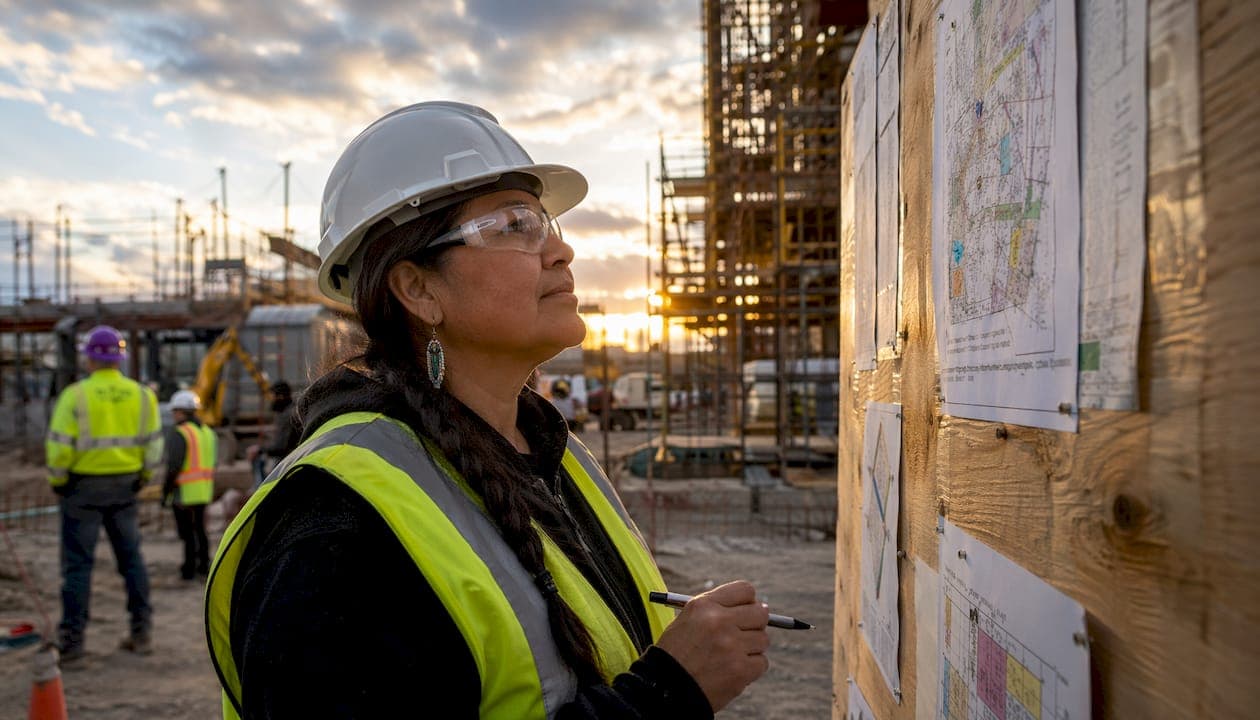
Construction emergency response is the coordinated set of site-specific procedures designed to manage accidents and incidents effectively on B.C. construction sites. Under the B.C. OHS Regulation, WorkSafeBC requires employers to maintain a written OHS program that includes tailored emergency response and evacuation procedures accessible to every worker on site. The industry term for this is an Emergency Response Plan, or ERP. Getting construction emergency response explained clearly matters because a poorly structured ERP costs lives, not just compliance points. This guide covers what a compliant ERP must contain, how to implement and maintain it, and where BC construction professionals most commonly fall short.
What does construction emergency response actually require in BC?
Construction emergency response is a formal, site-specific plan that defines how your team identifies hazards, alerts workers, evacuates safely, and coordinates with external responders. It is not a generic template downloaded from a government website. The B.C. OHS Regulation treats emergency preparedness as a legal obligation, not a best practice. WorkSafeBC mandates that your written OHS program include signed policies, hazard assessments, incident reporting procedures, and site-based emergency protocols.
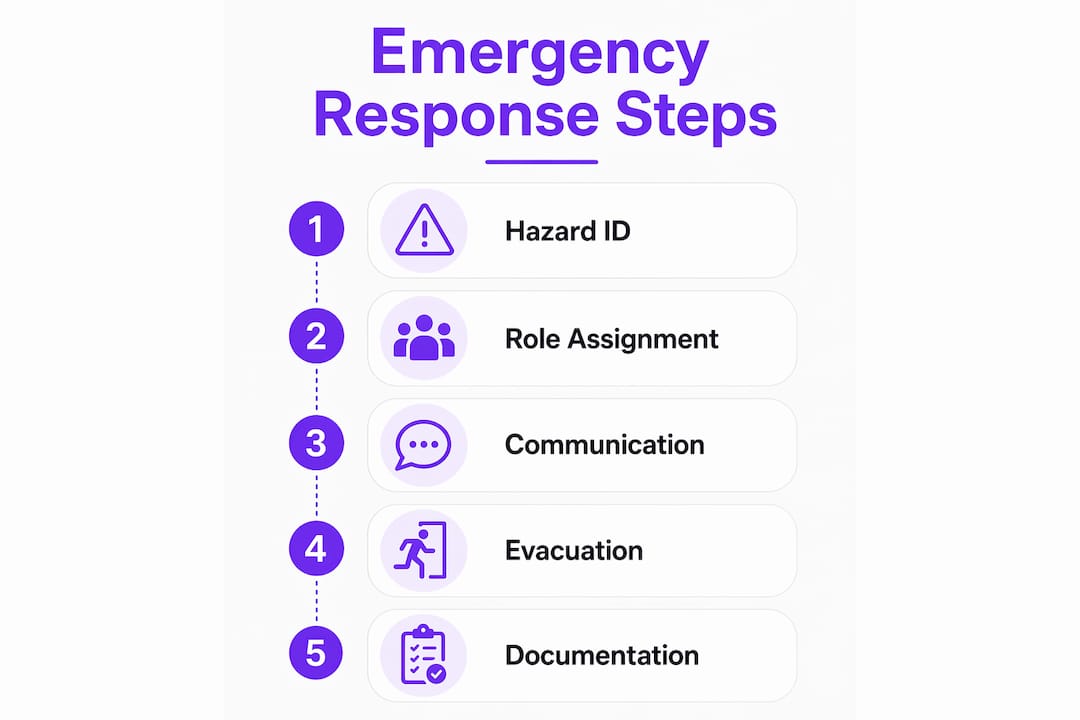
The four pillars of any effective ERP are clear roles, reliable communication, defined evacuation routes, and documented incident procedures. Each pillar must be tailored to your specific site, not copied from a previous project. A high-rise framing project in Surrey carries different hazards than a utility trench in Abbotsford. Your ERP must reflect that difference explicitly.
What are the key components of an effective construction emergency response plan?
A compliant ERP for a BC construction site covers seven core areas. Each one addresses a specific failure point that has caused preventable injuries or fatalities on Canadian worksites.
- Hazard identification. Construction sites change daily. Your hazard register must account for excavation depth, overhead work, electrical proximity, and material storage. Update it whenever the site layout changes significantly.
- Emergency contacts and site address. Every ERP must list the full civic address of the site, the names and numbers of key personnel, and the contact details for local emergency services. First responders in Metro Vancouver and the Fraser Valley need a precise address, not a project name.
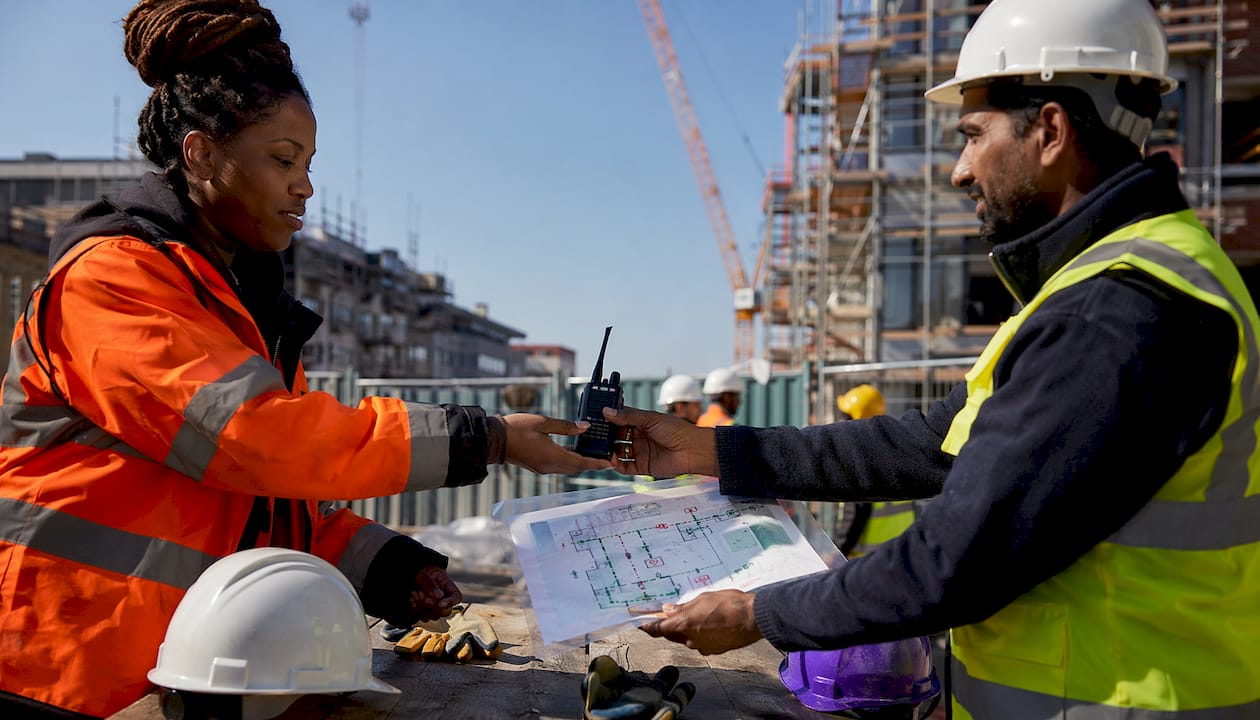
- Communication systems. Sirens, two-way radios, and mass notification tools each serve a different function. Your plan must specify which system activates first and who is responsible for each channel.
- Designated emergency roles. Roles must be assigned by name before any incident occurs. Standard roles include Incident Commander, Assembly Point Warden, First Aid Lead, and Emergency Services Liaison. Every person, including subcontractors, must know their duties before they set foot on site.
- Evacuation routes and assembly points. Routes must be posted, lit, and kept clear at all times. Assembly points must sit away from emergency vehicle access routes so that arriving responders are never blocked.
- Emergency equipment inventory. First aid kits, AED units, oxygen equipment, spinal boards, and fire extinguishers must be inventoried, inspected on schedule, and located where workers can reach them within seconds.
- Incident response procedures. Your ERP must include specific procedures for the most likely emergencies on your site: fall from height, structural collapse, fire, chemical spill, and medical emergency.
The table below summarises the legal and operational requirements for each component.
| Component | Requirement |
|---|---|
| Hazard identification | Site-specific, updated with layout changes |
| Emergency contacts | Civic address, key personnel, local emergency services |
| Communication systems | Primary and backup channels named and assigned |
| Emergency roles | Named individuals, including subcontractors, assigned before incidents |
| Evacuation routes | Posted, lit, clear, and updated after layout changes |
| Equipment inventory | Inspected on schedule, locations known to all workers |
| Incident procedures | Specific to the most likely hazards on that site |
Reviewing the construction site first aid level requirements for your project type is a practical starting point when building the equipment and staffing sections of your ERP.
How do you implement and maintain site-specific emergency response protocols?
A site-specific ERP requires active management, not a one-time document. The following steps reflect current BC practice and WorkSafeBC compliance expectations.
- Conduct a thorough site risk assessment before work begins. Walk the site with your safety officer and identify every hazard category relevant to the scope of work. Document findings and attach them to the ERP.
- Map the physical layout. Mark evacuation routes, muster points, emergency equipment locations, and the designated emergency services rendezvous point on a site plan. Post this map at site entrances and in the site office.
- Assign named roles with deputies. Every primary role must have a named backup. If your Incident Commander is off site, the deputy takes over without discussion. This prevents the most common failure mode in construction emergencies: no one knowing who is in charge.
- Implement communication protocols suited to your site. Construction noise regularly exceeds 85 dB, which makes verbal communication unreliable. Communication must function through sirens, radios, or mass notification systems, with a documented escalation chain for each scenario.
- Establish accountability procedures. After evacuation, a named Assembly Point Warden conducts a headcount against the current site sign-in sheet. Discrepancies are reported to the Incident Commander immediately.
- Review and update the plan after every significant change. A new phase of construction, a change in subcontractors, or a near-miss all require a plan review. Emergency plans are living documents and must evolve with the site.
- File required notices with WorkSafeBC. Projects exceeding $100,000 or involving professional engineers require a Notice of Project filed at least 24 hours before major construction begins. High-risk activities such as deep trenching carry a 48-hour notice requirement.
Pro Tip: Laminate the one-page site map showing evacuation routes, muster points, and emergency contacts. Post it at every site entrance and inside portable site offices. Workers who are new to the site can orient themselves in under 30 seconds.
When multiple employers share a site, the prime contractor's duty to coordinate includes harmonising emergency procedures, muster points, and communication chains across all subcontractors. Sites with more than five workers from multiple employers require a qualified coordinator to manage overlapping risks. Reviewing industrial safety deployment best practices helps safety officers understand how to structure those responsibilities clearly.
What are the best practices for training, drills, and communication?
Training is the mechanism that converts a written ERP into a practised response. A plan that workers have never rehearsed is a plan that will fail under pressure.
- Onboard every new hire and subcontractor on emergency protocols. Orientation must cover evacuation routes, muster points, their assigned role, and how to report an emergency. This applies to day labourers and long-term crew members equally.
- Hold full-scale evacuation drills at least twice a year. Drills must include all subcontractors and should test different scenarios, such as a fire on the lower floor versus a medical emergency at height. Muster points must be positioned away from emergency vehicle routes.
- Run tabletop exercises for leadership. Incident Commanders and their deputies benefit from scenario-based discussions that test decision-making without stopping site operations. These sessions surface gaps in the plan that drills alone do not reveal.
- Maintain backup communication systems. Cell coverage is unreliable on remote BC sites and in underground work areas. Two-way radios and site-wide alarm systems must be tested monthly, not just during drills.
- Debrief after every drill and every real incident. Document what worked, what failed, and what the plan needs to address. Psychological support resources should be available to workers after traumatic incidents.
- Use technology to improve notification speed. Mass notification platforms can alert all workers on a large site simultaneously. They also create a timestamped record of when alerts were issued, which supports post-incident investigation.
Pro Tip: After each drill, ask three workers at random to explain what they would do if the Incident Commander was unreachable. Their answers reveal whether your deputy assignment process is working or just exists on paper.
Documenting drill outcomes and training records is not optional. WorkSafeBC inspectors can request these records during a site inspection, and gaps in documentation are treated as gaps in compliance.
What are the common challenges in construction emergency response management?
Generic templates are the most common and most costly mistake in construction emergency response management. A template built for a commercial interior fit-out does not address the hazards of a deep excavation project in Coquitlam or a remote pipeline site in northern BC. Site-specific plans consistently outperform generic ones because they reflect actual hazards, actual routes, and actual personnel.
The second most common failure is neglecting the emergency services rendezvous point. On a large or complex site, arriving paramedics or firefighters cannot locate the incident without guidance. Failing to designate a rendezvous point and assign a responsible person to meet responders is a documented cause of delayed treatment and worse outcomes. Every ERP must name this person and this location explicitly.
Communication barriers across multi-contractor sites create a third category of risk. Workers from different subcontractors may speak different languages, use different radio channels, or be unfamiliar with the site layout. The prime contractor's ERP must address language accessibility and cross-contractor communication chains directly.
BC-specific risks add another layer of complexity. The B.C. OHS Regulation does not require a standalone wildfire plan, but wildfire and heat stress risks must be integrated into the broader ERP for remote or high-risk sites. Sites in the Interior, the Fraser Canyon, and northern BC face seasonal wildfire exposure that Lower Mainland projects do not.
Near-misses are the most underused source of plan improvement on construction sites. Every near-miss reveals a gap in communication, resources, or procedures that a drill or audit would likely miss. Reviewing the ERP after every near-miss is not a regulatory formality. It is the most reliable way to prevent the next serious incident.
Key takeaways
A compliant, site-specific Emergency Response Plan is the single most effective tool for protecting workers and meeting WorkSafeBC obligations on BC construction sites.
| Point | Details |
|---|---|
| Site-specific plans are mandatory | Generic templates do not meet WorkSafeBC requirements or reflect actual site hazards. |
| Named roles prevent confusion | Assign Incident Commander, Assembly Point Warden, First Aid Lead, and Emergency Services Liaison before any incident occurs. |
| Drills must happen twice yearly | Full-scale evacuations including all subcontractors reveal gaps that written plans cannot. |
| Plans are living documents | Review and update the ERP after every near-miss, layout change, or workforce change. |
| Rendezvous points save response time | Assign a named person to meet and guide emergency responders at every complex site. |
What I've learned about emergency response readiness on BC construction sites
The most dangerous ERP is the one that was written once, filed in a binder, and never touched again. I've seen sites in the Lower Mainland where the muster point on the posted map was physically blocked by a material staging area that had been there for months. Nobody updated the plan. Nobody moved the materials. The plan existed on paper and nowhere else.
Assigning named roles with deputies before an incident is the single change that produces the most immediate improvement in site readiness. When workers know their role before the alarm sounds, they act. When they don't, they wait for someone else to decide. That waiting period is where serious injuries become fatalities.
Multi-contractor sites in Metro Vancouver and the Fraser Valley present the hardest coordination problems. The prime contractor's responsibility to harmonise emergency procedures is clear in the B.C. OHS Regulation, but execution requires deliberate effort. I recommend a joint emergency briefing with all subcontractor supervisors at the start of every new project phase. Thirty minutes at the beginning saves hours of confusion during an actual emergency.
Technology helps, but it does not replace trained people. Mass notification systems are only as good as the contact lists behind them. Keep those lists current. The role of first aid in construction is often underestimated until the moment it matters most. Build your first aid capacity into the ERP from day one, not as an afterthought.
— FAIR A. R.
How Fairsafe supports construction emergency response readiness in BC
Construction safety officers across Metro Vancouver, the Lower Mainland, and the Fraser Valley rely on qualified first aid and safety personnel to back up their Emergency Response Plans on site.

Fairsafe provides certified Occupational First Aid attendants, OFA Level 3 attendants, Emergency Medical Responders, and construction safety personnel for single shifts, multi-day projects, and long-term assignments throughout BC. Our staff are registered with WorkSafeBC and arrive equipped with first aid kits, AED units, oxygen equipment, and spinal equipment matched to your site requirements. Whether you need coverage for a scheduled shutdown, a last-minute absence, or a remote worksite, Fairsafe responds quickly and reliably. Contact Fairsafe to discuss first aid staffing that supports your ERP and meets your WorkSafeBC obligations.
FAQ
What is a construction emergency response plan?
A construction emergency response plan is a written, site-specific document that defines hazard identification, emergency roles, communication protocols, evacuation routes, and incident procedures for a construction site. WorkSafeBC requires this plan as part of a compliant OHS program.
How often should construction emergency drills be conducted?
Evacuation drills should be held at least twice a year and must include all subcontractors on site. Each drill should test a different scenario, and outcomes must be documented and used to update the plan.
Who is responsible for emergency response on a BC construction site?
The prime contractor holds overall responsibility for coordinating emergency procedures across all employers on site. Sites with more than five workers from multiple employers require a qualified coordinator to manage overlapping hazards and communication chains.
What roles must be assigned in a construction ERP?
Every construction ERP must name an Incident Commander, Assembly Point Warden, First Aid Lead, and Emergency Services Liaison before any incident occurs. Each role requires a named deputy to cover absences.
Does a BC construction ERP need to address wildfire risk?
BC regulations do not require a standalone wildfire plan, but wildfire and heat stress risks must be integrated into the broader Emergency Response Plan for remote or high-risk sites. This applies particularly to sites in the Interior, Fraser Canyon, and northern BC regions.