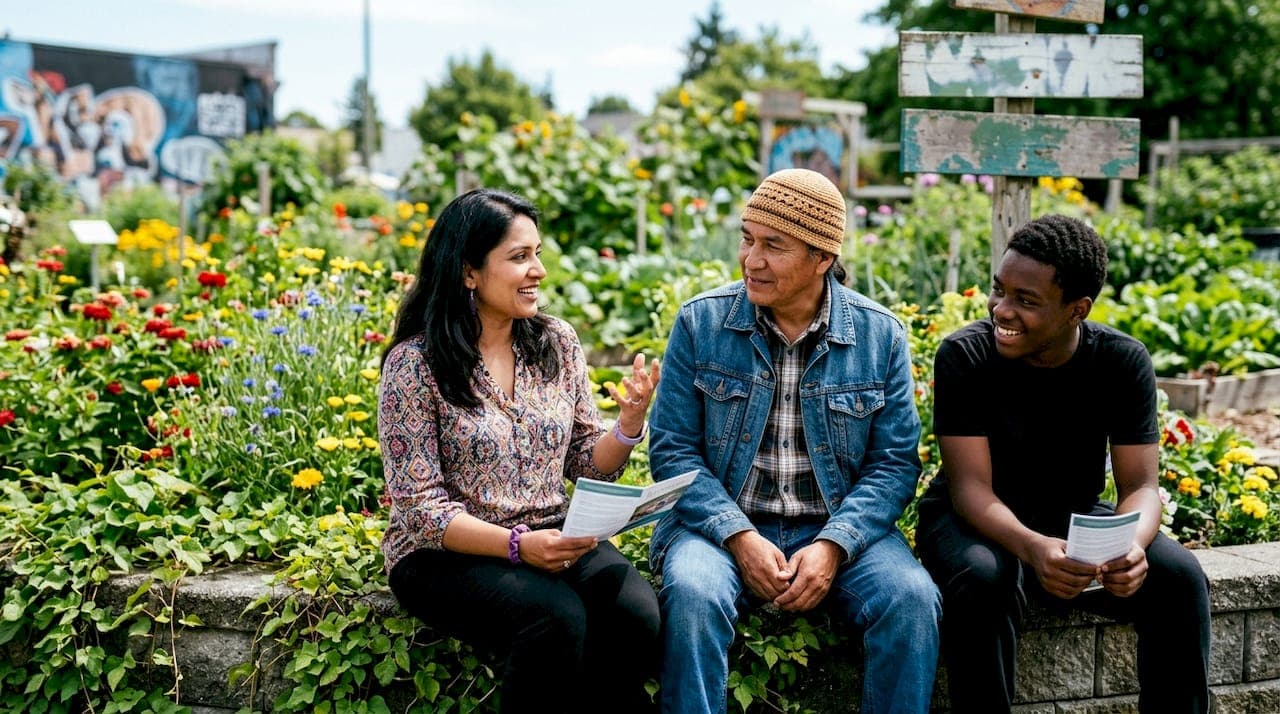
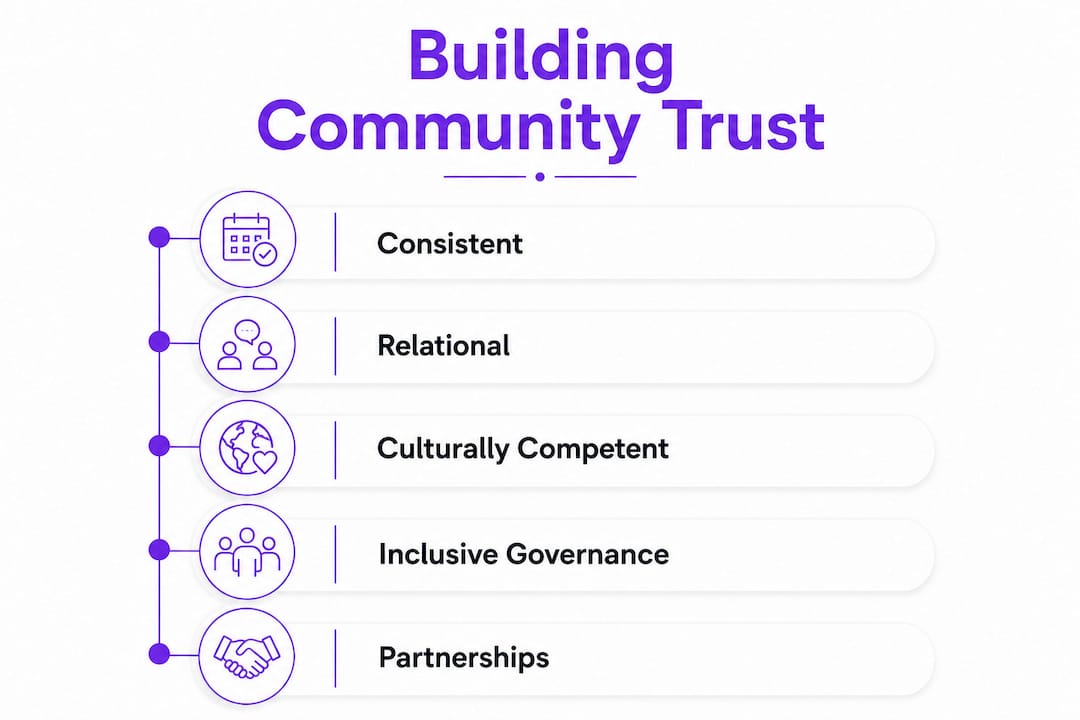
Safety builds community trust not through visibility alone, but through consistent, human-centred presence that communities can rely on before, during, and after incidents. In British Columbia, this understanding shapes how WorkSafeBC-registered providers, municipal safety teams, and Indigenous-led programmes approach their work. The role of safety in community trust is relational at its core: it depends on shared responsibility, cultural competence, and transparent accountability rather than enforcement alone.
Key foundations of safety-driven community trust:
- Consistent presence: Familiar safety personnel build rapport over time, not just during emergencies.
- Shared responsibility: Trust is defined by mutual cooperation and reciprocity between safety professionals and residents.
- Cultural competence: Trauma-informed, anti-racist practices are necessary to engage diverse and historically marginalised communities meaningfully.
- Dynamic engagement: Trust requires continuous relational work, not one-off outreach events.
- Governance frameworks: Canada's Community Safety and Well-being (CSWB) Framework and programmes like the Aboriginal Community Safety Planning Initiative guide locally-led, culturally grounded safety planning.
Why community safety matters beyond crime reduction
Community safety does far more than reduce crime statistics. It creates a shared sense of belonging, wellbeing, and inclusion that holds neighbourhoods together. When residents feel safe, they participate more actively in civic life, attend community events, and invest in their local areas. That participation, in turn, reinforces the social fabric that makes communities resilient.
Visible, approachable safety personnel play a direct role in this. Their presence signals that the community is cared for, not just monitored. But presence without cultural awareness falls short. Safety efforts must address root social determinants, including poverty, housing instability, and intergenerational trauma, to be genuinely effective.
Canada's Aboriginal Community Safety Planning Initiative illustrates what a holistic approach looks like in practice. Facilitators work alongside communities to identify safety and wellness priorities, producing culturally relevant, long-term safety plans rather than generic programmes imposed from outside.
- Safety efforts must address root social determinants, not only immediate threats.
- Community-defined goals produce more durable outcomes than externally imposed standards.
- Trauma-informed interventions respect lived experience and build genuine confidence in safety systems.
- Indigenous-led safety planning in Canada demonstrates that locally grounded approaches outperform generic models.
Pro Tip: For event organisers and safety managers in Metro Vancouver and the Fraser Valley, engaging community members in safety planning before an event, not just on the day, produces measurably better outcomes and stronger public confidence.
How community policing builds lasting trust in neighbourhoods
Community policing works when it is built on legitimacy, procedural justice, and genuine partnership with residents. Authority earned through respectful, consistent engagement carries far more weight than authority derived from enforcement alone. Without that legitimacy, communities do not cooperate with safety personnel, and problem-solving stalls.
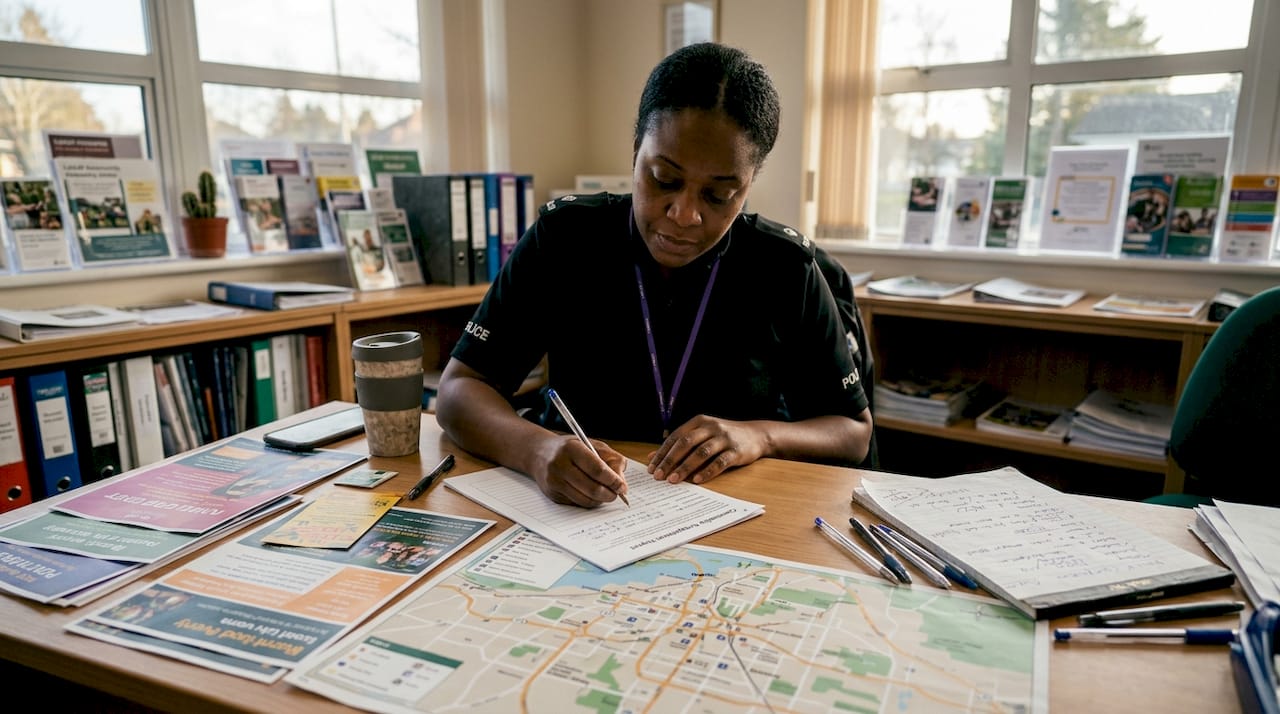
Frequent, non-enforcement interactions are where trust actually forms. Foot patrols, school engagement programmes, and participation in local events give officers and safety personnel the opportunity to build rapport before a crisis demands it. Officer continuity matters too: when the same personnel show up consistently in a neighbourhood, residents learn their names, share concerns, and begin to see them as partners rather than outsiders.
Cultural awareness is not optional in diverse communities like Surrey, Burnaby, or Abbotsford. Officers who understand the cultural practices of the communities they serve make better judgements and earn deeper trust from residents who might otherwise remain guarded.
- Legitimacy and procedural justice build police authority in the eyes of the community.
- Non-judgmental, frequent contact creates the rapport that makes residents willing to share information.
- Officer continuity in specific geographic areas deepens community connections over time.
- School-based and youth engagement programmes increase positive interactions with young people.
- Community representation on safety task forces increases confidence and the effectiveness of outreach.
How governance and partnerships sustain community safety
Effective community safety depends on inclusive governance structures that bring diverse stakeholders to the table. When safety agencies, local leaders, residents, and service providers share responsibility, accountability becomes visible and trust follows. Partnerships built on transparency and equal standing produce outcomes that no single agency can achieve alone.
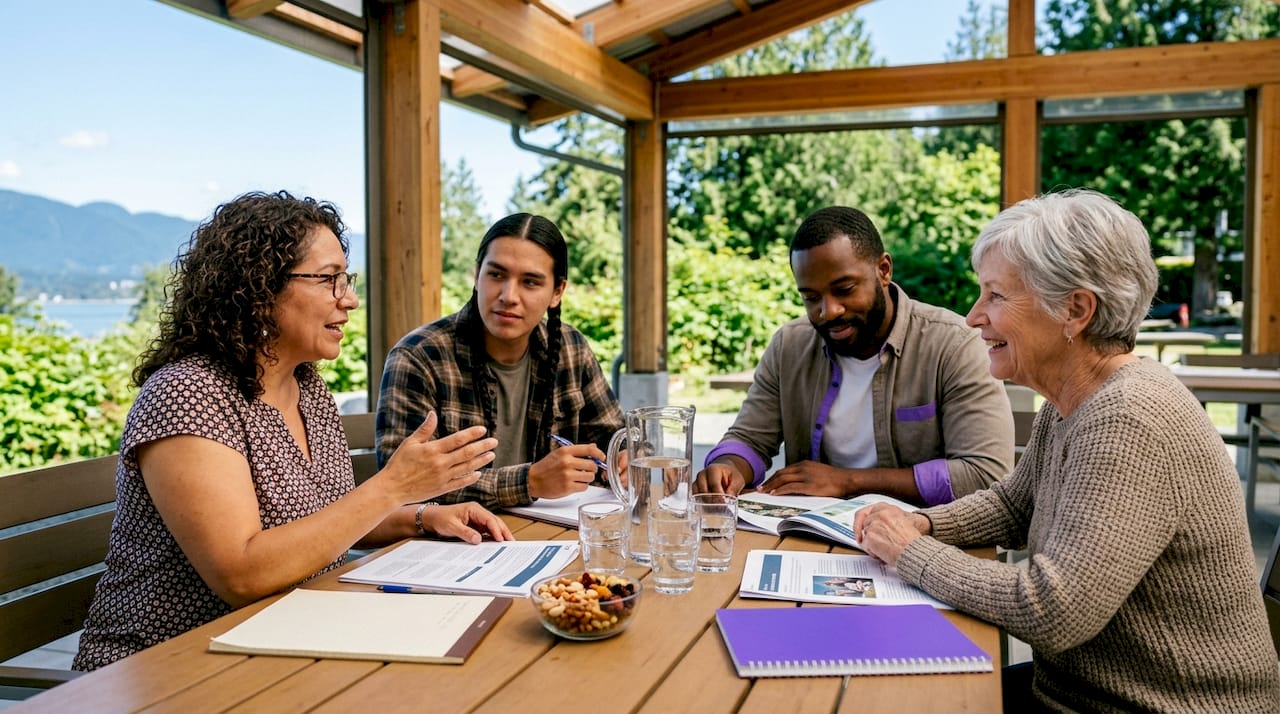
Formal agreements, accessible community offices, and clear reporting mechanisms give residents concrete ways to participate. The Samson Cree Nation's Hub model demonstrates this well. Representatives from community wellness, probation, youth justice, housing, education, and policing meet weekly to identify elevated-risk situations and mobilise coordinated responses within 24–48 hours, before harm occurs rather than after.
That model works because it is built on community readiness, mutual buy-in, and cultural grounding. It does not replace existing services; it coordinates them. Indigenous-led safety planning across Canada reflects the same principle: communities that define their own safety goals, with support rather than direction from outside, produce plans that residents actually trust and follow.
- Inclusive governance involves diverse stakeholders and distributes accountability across partners.
- Formal Hub-style models coordinate agencies to address risk proactively, not reactively.
- Accessible reporting mechanisms give residents a genuine voice in safety decisions.
- Indigenous-led planning, grounded in self-determination, produces community-endorsed safety outcomes.
- Shared responsibility empowers residents to contribute actively rather than wait for authorities to act.
Trust building as a continuous community process
Trust is not established at a single training session or community meeting. It accumulates through repeated, positive human interactions over time, and it erodes quickly when those interactions are inconsistent or disrespectful. Professionalism, transparency, and accountability are the daily practices that keep trust intact, particularly in communities with historical reasons to be cautious of authority.
Safety programmes that integrate interdependence and reciprocity, where citizens and professionals genuinely share responsibility, produce stronger social cohesion than those that position safety personnel as external enforcers. Measuring trust requires community-engaged methods: surveys, focus groups, and qualitative feedback that capture lived experience alongside quantitative data.
Statistic: Over 90 First Nations, Métis, and Inuit communities across Canada have completed Community Safety Plans through the Aboriginal Community Safety Planning Initiative, with more joining every year.
That figure reflects something concrete: when communities are given the tools and support to define safety on their own terms, they do. The role of first aid in workplace culture follows the same logic at the organisational level: certified, present, and approachable safety personnel signal that an employer takes responsibility seriously.
- Trust is built through repeated positive interactions, not assumed after a single positive event.
- Transparency and continuous professional development sustain police and safety legitimacy over time.
- Mixed-method measurement, combining surveys with qualitative community feedback, captures the full picture of trust.
- Reciprocity between safety personnel and residents creates the interdependence that makes communities genuinely safer.
- Community pride and connection reduce fear-based narratives, giving residents confidence to act collectively.
Key takeaways
Safety builds community trust through consistent, relational, and culturally competent engagement, not through enforcement or visibility alone.
| Point | Details |
|---|---|
| Relational presence matters most | Familiar, approachable safety personnel build trust before incidents occur, not only during them. |
| Cultural competence is required | Trauma-informed, anti-racist practices are necessary to engage diverse and historically marginalised communities. |
| Governance must be inclusive | Hub-style models and Indigenous-led planning show that shared responsibility produces stronger, community-endorsed outcomes. |
| Trust is dynamic, not fixed | Professionalism, transparency, and accountability must be practised daily to maintain community confidence. |
| Over 90 Indigenous communities | More than 90 First Nations, Métis, and Inuit communities have completed Community Safety Plans through Canada's Aboriginal Community Safety Planning Initiative. |
Fairsafe supports trusted safety in B.C. communities
Across Metro Vancouver, Surrey, Burnaby, Richmond, Delta, Langley, Coquitlam, Abbotsford, and the Fraser Valley, Fairsafe provides certified Occupational First Aid attendants, OFA Level 3 attendants, Emergency Medical Responders, and event medics for construction sites, industrial worksites, community events, and film productions. Every Fairsafe temp worker is selected to meet the specific requirements of your worksite or event, and our company is registered with WorkSafeBC with a valid clearance letter available on request.
Whether you need community event coverage for a single shift or a full safety team for a multi-day project, Fairsafe is ready to respond. Contact us at fairsafe.ca to discuss your staffing needs.