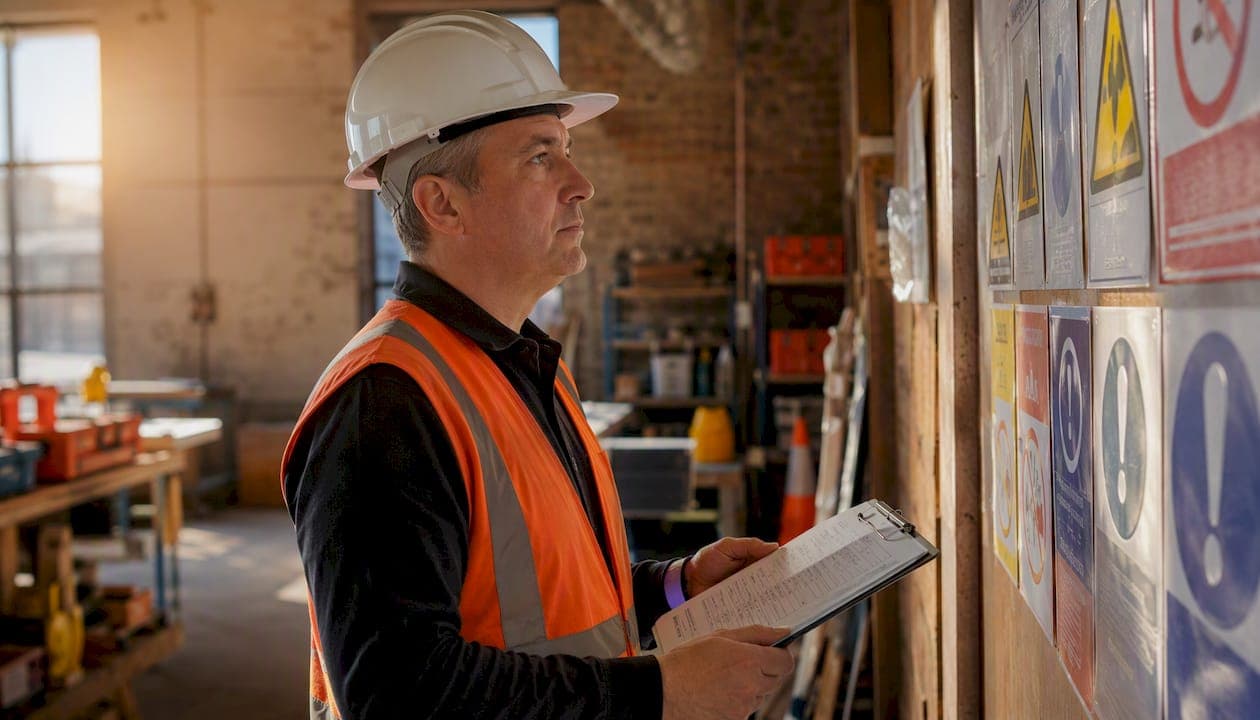
A non-compliant posted construction safety plan is usually obvious once you know what to look for. The most common signs: the building permit number is missing, there is no 24/7 emergency contact, the sign is faded or obstructed, the posting is on plain office paper, or hazard-specific signs for excavations and confined spaces are absent entirely. Any one of these can trigger an inspector's order in British Columbia.
Quick non-compliance checklist — scan this before your next site walk:
- No civic address or building permit number on the posted plan
- Missing or outdated 24/7 contact information for the constructor, owner, or Construction Safety Officer (CSO)
- Posted plan printed on standard office paper (not durable, weather-resistant material)
- Sign dimensions below practical minimums (Vancouver guidance references at least 600 mm x 600 mm for durable outdoor signage)
- Posting location not visible from the site entrance or main pedestrian access point
- Faded, torn, water-damaged, or vandalized signage still in place
- Hazard-specific signs absent: excavations deeper than 1.5 metres, confined spaces, high-voltage zones, PPE-required areas
- No illumination where workers or the public access the site after dark
- Signage obstructed by equipment, scaffolding, or material stockpiles
- Emergency contact numbers no longer in service or not verified recently
Do this now if you spot any of the above:
- Re-post the building permit and site address immediately.
- Tape a temporary laminated replacement over any damaged or illegible sign.
- Verify all 24/7 contact numbers are current and answered.
- Add a battery-powered or plug-in light to any unilluminated posting.
- Move or remove any obstruction blocking a required sign.
Table of Contents
- Which rules require posting a construction safety plan in B.C.?
- What must appear on a posted construction safety plan?
- How does non-compliance actually look on site?
- Where do inspectors look, and what makes a sign pass?
- How to run a practical on-site signage audit
- What to do when you find a non-compliant item
- What enforcement outcomes look like in British Columbia
- Key takeaways
- Primary sources and further reading
Which rules require posting a construction safety plan in B.C.?
WorkSafeBC and municipal building authorities both require posted safety plans and hazard signage on construction sites in British Columbia, and the two sets of rules operate independently of each other.
At the provincial level, the B.C. OHS Regulation Part 20 governs construction, excavation, and demolition work. Under section 20.61, visual or audible signalling devices must be provided and used wherever tensioning operations or restricted-movement areas exist, and those devices must remain in working, legible condition throughout the project. Responsibility sits with either the owner or the person engaged by the owner as prime contractor. That means if you are the prime contractor on a Metro Vancouver or Fraser Valley site, the posting obligation is yours, not a subcontractor's.
At the municipal level, the City of Vancouver's bulletin 2019-007-BU sets specific requirements for how and where a construction safety plan must be posted. The bulletin applies to projects requiring a building permit in Vancouver and specifies content, durability, and placement standards that go beyond the provincial baseline. Other Lower Mainland municipalities may have comparable requirements, so confirming local rules with the relevant building department before breaking ground is worth the call.
Construction street-use permits in Vancouver may add further posting and signage conditions when work affects public property, including sidewalks and lanes. These permit conditions are separate from the building permit posting requirement, and missing either one can trigger a building inspector visit independent of any WorkSafeBC inspection.
The Canadian Centre for Occupational Health and Safety (CCOHS) provides supplementary guidance on hazard communication and signage best practices that aligns with provincial requirements, and it is a reliable reference when your team needs to verify whether a specific sign format meets current expectations.
What must appear on a posted construction safety plan?
The City of Vancouver bulletin 2019-007-BU sets the clearest minimum content standard for posted plans in the Lower Mainland. Three items are non-negotiable: the site's civic address, the building permit number, and 24/7 contact information for the constructor, the owner or owner's representative, and the CSO where one is appointed.
Beyond those three, a complete posted plan and associated site signage package typically includes:
- Project identification (project name, general contractor name)
- Emergency procedures summary (evacuation routes, muster points)
- Nearest hospital and EMS contact information
- First aid station location and the name of the designated first aid attendant
- Key competent persons on site (site superintendent, safety officer)
- Street-use permit number where public property is affected
- Hazardous materials inventory or GHS labelling reference where applicable
Format matters as much as content. Plain office paper is not acceptable for outdoor posting in Vancouver. The bulletin expects durable materials capable of withstanding B.C.'s wet weather, with practical minimum dimensions of approximately 600 mm x 600 mm. Signs using outdated symbol formats may also fail inspection: ANSI Z535 sets current colour, symbol, and signal-word standards, and older signs that pre-date those conventions can be cited even when the underlying message is correct.
For first aid station signage and attendant posting obligations, the WorkSafeBC occupational first aid requirements add another layer of mandatory content that must be visible and current.
| Item | Why inspectors check it | Regulatory reference |
|---|---|---|
| Civic address | Confirms the posted plan matches the permitted site | City of Vancouver bulletin 2019-007-BU |
| Building permit number | Links the posted plan to the approved permit on file | City of Vancouver bulletin 2019-007-BU |
| 24/7 constructor contact | Allows inspectors and emergency services to reach a responsible person at any hour | City of Vancouver bulletin 2019-007-BU |
| CSO contact (where applicable) | Identifies the qualified safety officer accountable for site conditions | City of Vancouver bulletin 2019-007-BU |
| First aid station location | Confirms workers can locate first aid without delay in an emergency | WorkSafeBC OHS Regulation |
| Durable material and minimum dimensions | Verifies the posting will remain legible through weather exposure | City of Vancouver bulletin 2019-007-BU |
| ANSI Z535-compliant sign format | Confirms hazard signs use current colour and symbol conventions | ANSI Z535 standard |
How does non-compliance actually look on site?
The most common construction site safety violations are not dramatic failures. They are gradual, incremental problems that accumulate between inspections. Knowing what each one looks like in the field is the difference between catching it yourself and having an inspector catch it for you.
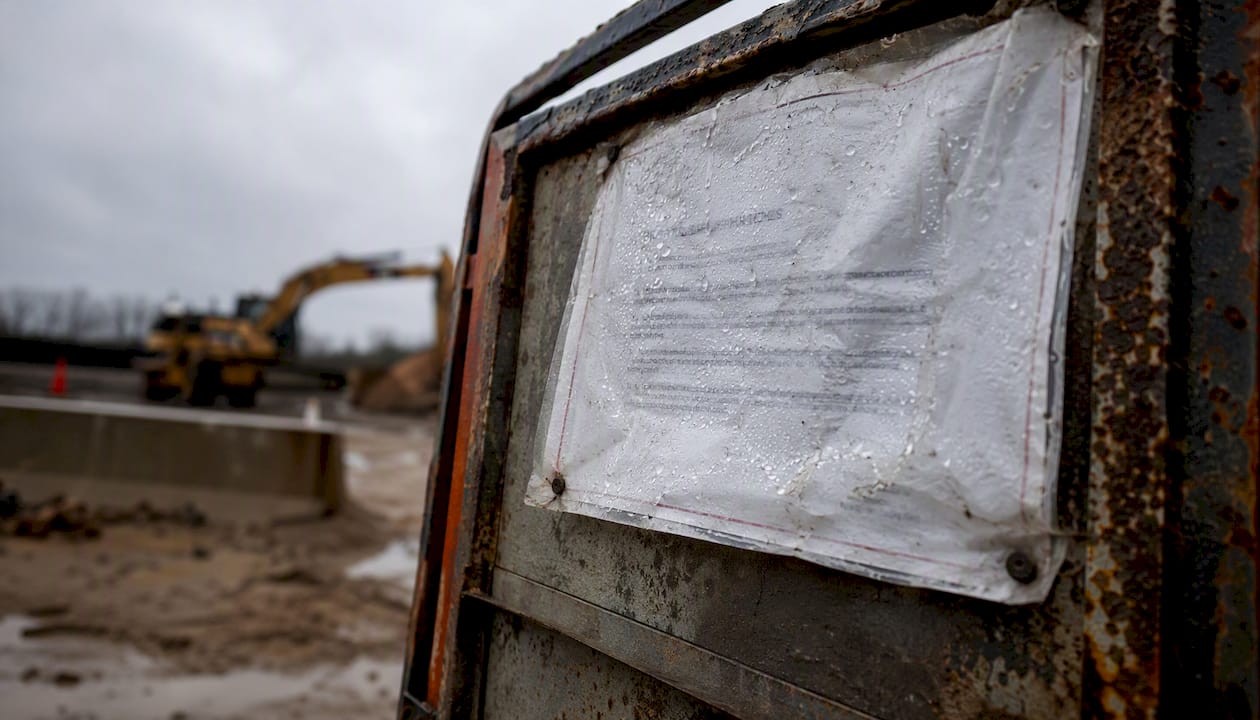
Faded or illegible signage. A sign that was perfectly readable in April may be washed out by October rain and UV exposure. The functional test is simple: can a worker read the full message from a safe distance before entering the hazard zone? If the answer is no, the sign is non-compliant regardless of whether it is physically present. Inspectors treat faded, obstructed, or weather-damaged signs as non-compliant even when the sign itself has not been removed.
Signs mounted at the wrong height or behind obstructions. A PPE-required sign mounted at knee level behind a pallet of rebar serves no one. Inspectors check whether signage is at eye level, unobstructed from the approach direction, and visible before a worker commits to entering the zone.
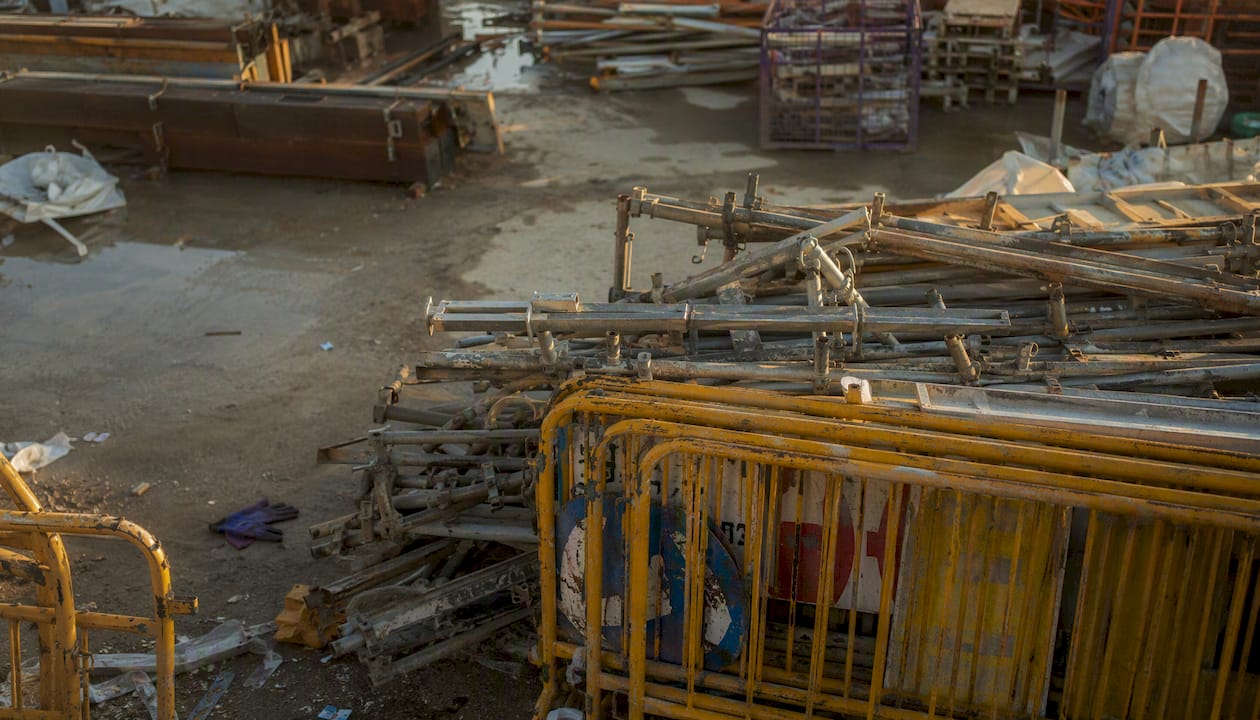
Non-durable materials. A laminated office print taped to a hoarding board will not survive a Lower Mainland winter. Inspectors in Vancouver specifically look for weather-resistant materials and adequate dimensions. A small, curling printout is a citation waiting to happen.
Missing hazard-specific signs. This is where construction site hazard categories become directly relevant to your posting obligations. Excavations deeper than approximately 1.5 metres require area-specific precaution signs. Confined spaces need entry-permit signage. High-voltage areas, crane swing zones, and PPE-required entry points each have their own required sign type. A site that has a compliant posted plan but is missing any of these hazard-specific signs is still non-compliant.
Outdated or wrong-format signs. Signs using obsolete colour schemes or symbol formats that pre-date ANSI Z535 may not meet current hazard communication expectations, even if the text is accurate.
Pro Tip: Walk the site as if you are a delivery driver arriving for the first time. Start at the main vehicle entrance and note every sign you can read before you step out of the cab. Any required sign you cannot read from that position is effectively absent, and an inspector will see it the same way.
Where do inspectors look, and what makes a sign pass?
Inspectors assess three things on every site visit: placement, visibility, and condition. Getting all three right on day one is straightforward. Maintaining all three through a six-month project takes a deliberate system.
Placement means signs are positioned where a worker or member of the public will encounter them before reaching the hazard, not after. The posted construction safety plan belongs at the primary site entrance, at a height and location where it is readable from the approach path. Hazard-specific signs belong at the perimeter of the hazard zone, not inside it. Under the City of Vancouver bulletin, the main posted plan must be at the entrance to the construction site, facing the street or primary access point.
Visibility covers two dimensions: sightlines during the day and illumination at night. A sign hidden behind a concrete pump truck at 8 AM fails the sightline test. The same sign, perfectly placed but unlit at a 24-hour site, fails the illumination test. The B.C. OHS Regulation Part 20 requires signalling devices to remain in working condition, which extends to lighting where workers are present outside daylight hours.
Condition and legibility come down to the reading-distance rule. A sign must be sized so a worker can read it from a preemptive distance, before they are in danger. A sign that is only legible at arm's length has failed its functional purpose and can be cited even if it is present and undamaged. Font size, contrast, and material condition all feed into this assessment.
The sightline test from the previous section is worth repeating here as a formal step: assign someone unfamiliar with the site to walk each access point and note every sign they can read before crossing into a work zone. Any gap they find is a gap an inspector will find.
How to run a practical on-site signage audit
A short, repeatable audit done daily or at shift handover is the most effective way to prevent signage non-compliance from accumulating between formal inspections. The goal is not a lengthy bureaucratic process. It is a disciplined habit that takes under 15 minutes when done consistently.
Step-by-step audit checklist:
- Verify the posted plan is present and complete. Confirm the civic address, building permit number, and all 24/7 contacts are visible, current, and legible from the entrance approach.
- Check physical condition. Look for fading, tearing, water damage, graffiti, or curling edges. Replace any sign that fails a quick legibility test from three metres away.
- Confirm placement and sightlines. Walk each site entrance and work-zone boundary. Verify no equipment, scaffolding, or material has been placed in front of a required sign since the last check.
- Test illumination. At sites with after-hours activity, confirm lighting on all posted plans and hazard signs is functional.
- Check hazard-specific signs. Confirm excavation, confined space, high-voltage, crane zone, and PPE-required signs are present at each active hazard location.
- Verify multilingual adequacy. Where your crew includes workers whose primary language is not English, confirm critical safety messages are posted in the relevant language or use internationally recognised symbols.
- Confirm emergency contact numbers are live. Call or text the posted 24/7 numbers at least weekly to verify they reach a person who can respond.
- Log the audit. Record the date, time, auditor name, any deficiencies found, and corrective actions taken.
Recommended frequency: a quick visual check at every shift handover, a full step-by-step audit weekly, and an immediate re-audit after any significant weather event (wind, heavy rain, snow) that could have displaced or damaged signage.
Assign audit responsibility clearly: the site superintendent owns the daily check, the CSO or a designated Safety Temp owns the weekly detailed audit. Certified temp safety staff can be scheduled specifically for audit shifts, which is particularly useful during peak construction periods or when your regular safety officer is absent.
Pro Tip: Document every audit with timestamped photos on your phone. A photo log showing the posted plan in good condition on the morning of an inspection is one of the most effective ways to demonstrate due diligence and reduce the risk of escalated enforcement.
What to do when you find a non-compliant item
Correct the hazard, restore readable signage, document the fix, and notify the relevant authority when the deficiency involves a permit or safety-plan discrepancy. That sequence covers the legal obligation and limits your exposure.
Immediate corrective actions (same shift):
- Replace a damaged or illegible sign with a temporary laminated version of the correct format and dimensions.
- Re-post the building permit and site address if either has been removed or damaged.
- Move or secure any material or equipment obstructing a required sign.
- Install a temporary battery-powered light on any unilluminated posting at an active after-hours site.
- Update the posted 24/7 contact numbers if any have changed.
Medium-term fixes (within the week):
- Order durable, weather-resistant replacement signs in the correct format and minimum dimensions.
- Update the posted plan file with any project changes (new CSO, updated emergency contacts, revised permit conditions).
- Review your hazard-specific sign inventory against the current site conditions, particularly after scope changes that introduce new excavation, confined space, or electrical work.
When to notify the building department or WorkSafeBC: if the deficiency involves a missing or incorrect building permit posting, contact the City of Vancouver (or the relevant municipal building department) to confirm the correct permit is on file and re-post it. For occupational safety signage deficiencies that have already been cited by a WorkSafeBC officer, respond in writing within the timeframe specified in the order. Workers and members of the public can also report suspected non-compliance directly to WorkSafeBC or the municipal building department, and those reports can prompt unannounced inspections.
For construction emergency response planning, keep a sign replacement log as part of your site records. It shows inspectors a pattern of proactive maintenance rather than reactive scrambling, and it correlates sign condition with any near-miss or incident reports.
What enforcement outcomes look like in British Columbia
Inspectors in B.C. have a clear escalation path, and it moves faster than most site managers expect. A written order is the most common first outcome. Stop-work orders follow when the deficiency creates an immediate risk or when a previous order has not been addressed.
Common inspection findings that trigger enforcement:
- Missing posted plan or building permit at the site entrance
- Illegible safety signage (faded, torn, or obstructed)
- Absent hazard-specific signs for active excavations, confined spaces, or electrical zones
- Outdated or unreachable 24/7 emergency contacts
- Posted plan printed on non-durable material or below minimum dimensions
- Signage not illuminated at an active after-hours site
A building inspector and a WorkSafeBC officer can both visit the same site and issue separate orders for overlapping deficiencies. Missing permit posting can prompt a building department visit that results in a stop-work order until the permit is correctly displayed. A WorkSafeBC officer finding illegible hazard signs can issue an improvement order requiring correction within a specified timeframe, with a follow-up inspection to verify compliance.
Willful neglect is the enforcement outcome that carries the most serious consequences. When an inspector finds evidence that a site manager knew signage was required but left it in an unreadable state, the response is rarely a simple written order. Documented audits and a sign replacement log are the clearest evidence that your team was not neglecting the obligation.
Rapid remediation, combined with a documented audit trail, consistently reduces the likelihood of escalated enforcement. An inspector who arrives to find a deficiency already corrected and logged is in a different position than one who finds the same deficiency that appeared in a previous order.
Key takeaways
A non-compliant construction safety plan is almost always a maintenance and placement failure, not an intent failure. The fixes are straightforward when you catch them early.
| Point | Details |
|---|---|
| Daily checks prevent escalation | A quick shift-handover check catches fading, obstruction, and contact errors before an inspector does. |
| Durable materials are mandatory | Plain office paper fails Vancouver's weather and municipal bulletin requirements; use weather-resistant signs at minimum 600 mm x 600 mm. |
| Presence does not equal compliance | A faded, obstructed, or unlit sign is treated as non-compliant even when it is physically in place. |
| Document every fix | Timestamped photos and a sign replacement log are your strongest defence against willful-neglect findings. |
| Fairsafe provides certified Temp safety staff | Fairsafe can supply WorkSafeBC-registered Safety Temps and OFA attendants for audit shifts, sign remediation, and first aid coverage across the Lower Mainland and Fraser Valley. |
The most common signage failures are not what you think
Most sites that fail a signage inspection did not skip the posting step. They posted a plan on day one, then let it deteriorate for six months without a single check. The permit number is there. The contact information was accurate in March. The sign was the right size when it was printed. None of that matters if the posting is unreadable by the time an inspector walks through the gate.
The reading-distance rule is the most consistently overlooked standard in the Lower Mainland. A sign that is technically present but only legible at arm's length has failed its purpose. Inspectors know this, and they test it by standing at the approach point, not by walking up to the sign. Sites that pass this test reliably are the ones where someone has been assigned to walk the site from the outside in, not from the inside out.
Temp staffing is an underused solution for this problem, and engaging professional construction management can ensure project-level coordination helps maintain posted-plan accuracy and emergency contact updates. Scheduling a Safety Temp or OFA attendant specifically for a weekly audit shift, rather than expecting an already-stretched site superintendent to add it to their list, is the most practical way to maintain consistent compliance on a busy project. It also creates a documented audit record that carries real weight with inspectors.
The other failure worth naming: outdated contact numbers. A 24/7 contact that rings through to a voicemail or a disconnected line is not a 24/7 contact. Verifying those numbers weekly takes two minutes and eliminates one of the most common citation triggers.
Fairsafe supplies certified Temp safety staff for signage audits and compliance coverage in B.C.
When your site is short-staffed and a signage audit is overdue, the fastest path to compliance is a certified Temp safety professional who can walk the site, document deficiencies, and coordinate immediate fixes the same day. Fairsafe provides WorkSafeBC-registered Safety Temps and OFA attendants across Metro Vancouver, the Lower Mainland, Surrey, Burnaby, Richmond, Delta, Langley, Coquitlam, Abbotsford, and the Fraser Valley, available for single audit shifts, multi-day coverage, or ongoing compliance support.

Fairsafe's temp staff can handle posting verification, sign condition checks, reading-distance assessments, emergency contact verification, and first aid station coverage, all in one shift. Every temp worker is selected for the qualifications your site requires, and Fairsafe can provide a valid WorkSafeBC clearance letter when needed. For on-call safety personnel across B.C., Fairsafe is a dependable, fair-rate option with no long-term contract required.
Contact Fairsafe at fairsafe.ca to book a Temp safety audit shift or discuss ongoing compliance coverage for your project.
Primary sources and further reading
The sources below are the authoritative references for construction safety plan posting and signage compliance in British Columbia. Consult them directly when verifying requirements for your specific project or municipality.
| Source | What it covers | Why it matters for signage compliance |
|---|---|---|
| City of Vancouver bulletin 2019-007-BU | Minimum content, durability, dimensions, and placement for posted construction safety plans in Vancouver | The primary municipal standard for posted-plan compliance in the Lower Mainland |
| B.C. OHS Regulation Part 20 | Provincial requirements for signalling devices, restricted areas, and construction site safety | Sets the baseline legal obligation for all B.C. construction sites |
| City of Vancouver — construction street-use permits | Additional posting and signage conditions where work affects public property | Relevant when hoarding, scaffolding, or equipment occupies a sidewalk or lane |
| WorkSafeBC OHS Regulation — Part 20 | WorkSafeBC's searchable version of Part 20, including signalling and restricted-area requirements | Useful for confirming current regulatory text and enforcement basis |
| CCOHS — Canadian Centre for Occupational Health and Safety | National guidance on hazard communication, sign formats, and occupational health standards | Supplements provincial rules with practical guidance on sign design and worker communication |
This article provides general information about construction safety plan posting requirements in British Columbia. It is not legal advice. Confirm current requirements with WorkSafeBC, your municipal building department, or a qualified safety professional before making compliance decisions for your specific project.